
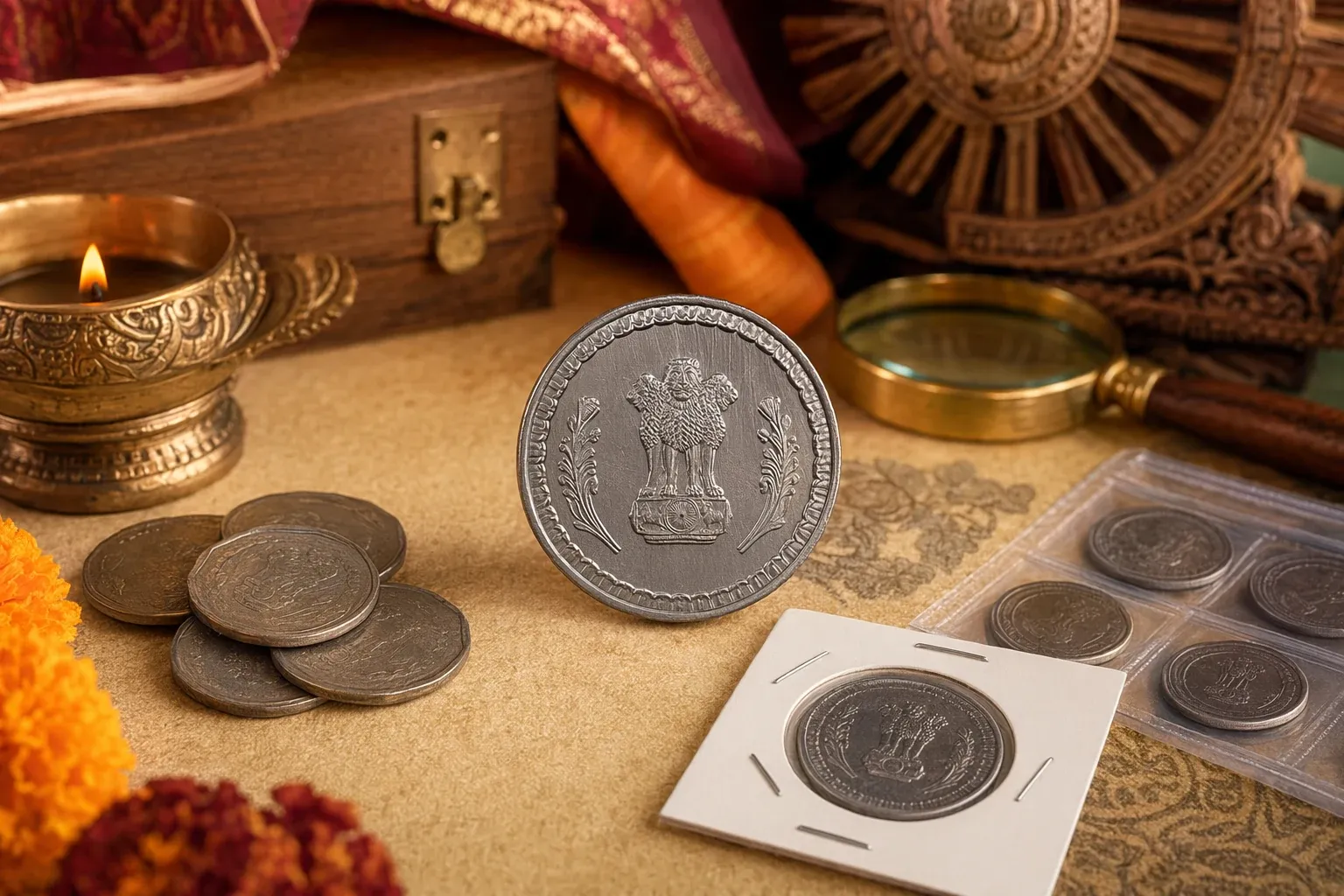
The 1 rupee coin is easy to overlook because it is so familiar. It has passed through bus conductors’ bags, tea stalls, school canteens, temple donation boxes, shop counters, piggy banks, and trouser pockets for generations. Yet this small coin carries a long story. It connects older silver rupees, colonial currency, independent India’s decimal system, changing metal costs, minting technology, national symbols, and the habits of everyday exchange.
A beginner should first separate two ideas: the rupee as a monetary unit and the modern 1 rupee coin as a circulating object. The rupee has a much older history, associated with silver coinage in the subcontinent and later standardised under different rulers. The modern 1 rupee coin of the Republic of India belongs to a more recent currency system, but it inherits the name and symbolic weight of that longer past.
From silver rupee to modern coin
Historically, rupee coins were often silver or linked to a silver standard. Sher Shah Suri is commonly associated with reforms connected to the silver rupiya, and Mughal coinage helped make the rupee a major unit. Later, British Indian currency standardised rupee coinage under colonial rule. These earlier rupees were very different from today’s small base-metal coins; they had significant metal value and circulated in a different economy.
After independence, India continued using rupees but gradually changed designs, symbols, and denominations. The Lion Capital of Ashoka became a major emblem of the Indian state. In 1957, decimalisation made one rupee equal to 100 paise. This was a major change in everyday calculation because older systems of annas and pice gave way to decimal paise.
Early republic designs
Early coins of independent India reflected the new nation’s identity. The Ashoka emblem, agricultural motifs, and clear denomination markings helped make coins recognisable. The 1 rupee coin appeared in different forms over time, and designs changed as minting needs, metal prices, and public usage shifted.
Some older 1 rupee coins are larger and heavier than recent coins. Their feel in the hand can surprise younger collectors. This is a reminder that coin design is practical as well as symbolic. A coin must be durable, affordable to produce, distinguishable from other denominations, and acceptable to the public.
Materials used in 1 rupee coins
Modern Indian 1 rupee coins have been made in different alloys across periods. Earlier post-independence rupee coins included nickel or nickel-bearing alloys in some issues. Later coins used stainless steel and other base-metal compositions as metal costs and production requirements changed. Stainless steel became common because it is durable, corrosion-resistant, and relatively economical.
The material of a coin affects weight, colour, magnetic response, and wear. A stainless steel coin may look pale and resist corrosion, while older alloys may tone differently. Beginners should avoid assuming that a coin is valuable simply because it is heavier or older-looking. Material is only one part of value.
Designs and symbols
The 1 rupee coin usually shows the denomination clearly and carries national symbols such as the Lion Capital of Ashoka. Some designs include grain motifs, unity themes, or other decorative elements. Commemorative 1 rupee coins may honour events, personalities, or institutions. These special designs are interesting, but not all are rare.
Look carefully at both sides. The date tells the year of minting. The emblem or design identifies the issue type. The script may include English and Indian language elements. The overall style reflects its period. A coin from the 1970s, 1990s, and 2010s will not feel exactly the same because minting standards and design preferences changed.
Mint marks and where the coin was made
Indian coins are produced by government mints. Mint marks help identify the mint. On many modern coins, a small symbol near the date indicates the mint. Mumbai often uses a diamond mark, Hyderabad has used a star or other marks depending on issue, Noida has used a dot, and Kolkata traditionally may show no mint mark. Details can vary, so collectors should check reliable catalogues for a specific coin.
Mint marks are exciting for beginners because they turn an ordinary coin into a small puzzle. You may find the same year and denomination from different mints. Building a set by year and mint mark is an affordable way to begin collecting modern Indian coins.
Face value and collector value
Most common 1 rupee coins found in circulation are worth their face value: one rupee. Some may have modest collector interest if they are older, in excellent condition, from a less common mint, or part of a commemorative issue. Rare errors, unusual varieties, or proof coins can be worth more, but beginners should be cautious. Online rumours often exaggerate values wildly.
A coin’s collector value depends on condition, scarcity, demand, authenticity, and variety. A dirty or damaged common coin is usually not valuable. A coin kept in uncirculated condition may be more attractive to collectors. Proof and uncirculated sets sold officially are different from ordinary circulated coins.
Error coins and online myths
Many people hear that a certain 1 rupee coin with a specific date, mark, or symbol is worth a huge amount. Sometimes rare varieties do exist, but most viral claims are misleading. A minor scratch, stain, or weak strike is not automatically a valuable error. Genuine mint errors are judged by specialists and depend on type, clarity, and demand.
Do not clean, polish, or chemically treat a coin in the hope of increasing value. Cleaning often damages the surface. If you think you have something unusual, compare it with reliable catalogues, consult experienced numismatists, or ask a reputable coin dealer. Good information protects beginners from disappointment.
The 1 rupee coin in daily memory
Beyond collector value, the 1 rupee coin has cultural value. It has been used in temple offerings, wedding envelopes, school savings, bus fares, small purchases, and symbolic gifts. In many Indian customs, adding one rupee to a gift amount, such as 101 or 501, suggests auspicious continuation. The coin becomes more than money; it becomes a sign of blessing and good intent.
This cultural role explains why people keep old rupee coins even when they are not rare. A coin found in a grandparent’s box may matter because of family memory. Numismatics should leave room for this emotional value. Not every meaningful coin needs a high market price.
Beginning a 1 rupee collection
A simple collection can start with one coin from each decade. Then add mint marks, design types, commemorative issues, and condition grades. Keep the coins in labelled holders. Write the year, mint mark, metal if known, source, and any story connected with the coin. Over time, the collection becomes both educational and personal.
Bhaktilipi’s broader beginner guide to Indian coins can help place the 1 rupee coin within the larger history of Indian money. Once you understand the general map, the humble rupee becomes easier to appreciate.
A small coin with a long life
The 1 rupee coin shows how currency adapts. It moved from a long heritage of silver rupees to modern base-metal circulation. It changed size, weight, design, and alloy as India changed. It may not buy what it once did, but it still carries memory. For a collector, student, or curious reader, the coin is a practical lesson in history: authority on one side, value on another, and countless human journeys in between.