
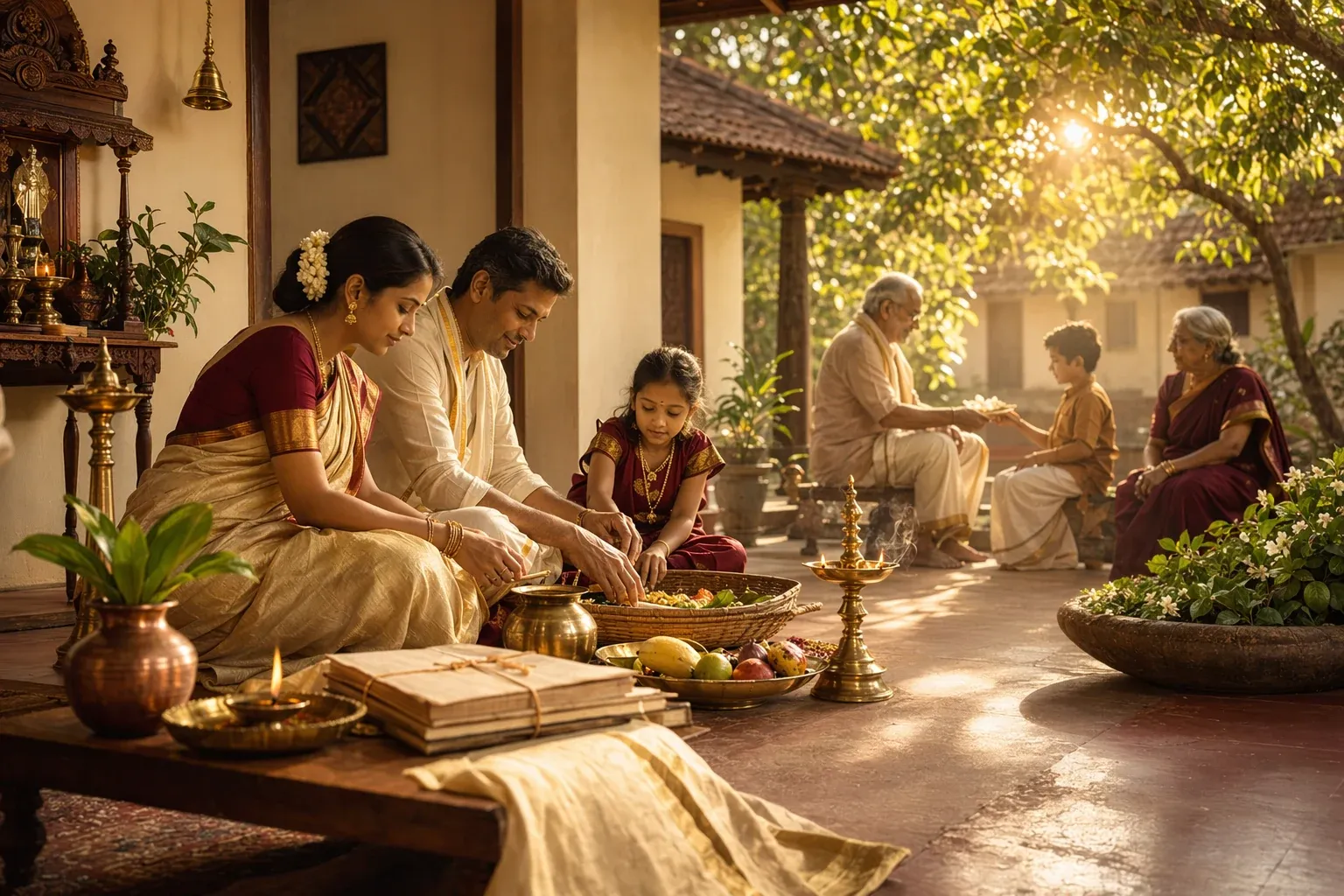
Grihastha ashrama is the householder life in the Hindu ashrama system. It is the period associated with family, livelihood, social responsibility, hospitality, and practical service. Many people think spiritual life means moving away from ordinary duties, but grihastha shows a different truth: daily responsibility can itself become a sacred path.
The householder supports a family, earns resources, welcomes guests, gives charity, honors ancestors, and contributes to society. In many traditional texts, this ashrama is treated as the support of the others because students, forest dwellers, renouncers, elders, and guests may all depend on household generosity.
What grihastha means
Grihastha literally points to one who lives in a home. But the ashrama means more than having a house. It refers to an ethical way of living with relationships, resources, and duties. A householder is expected to earn honestly, care for dependents, maintain social bonds, and use wealth in a responsible way.
This makes grihastha a demanding path. It asks a person to balance affection, money, desire, duty, and spiritual values. The test is not whether one can speak about patience in isolation. The test is whether patience survives in family life, work, conflict, and obligation.
Why the householder path is respected
Grihastha is respected because society cannot survive on renunciation alone. Food must be grown or bought. Children must be protected. Elders need care. Guests need hospitality. Temples, teachers, festivals, and charitable activities require support. The householder makes much of this possible.
This is why the householder is not treated as spiritually useless. A person who earns ethically and gives generously participates in dharma. If you want a simple introduction to that idea, read What Is Dharma?. In grihastha, dharma is practiced through ordinary actions: feeding, earning, speaking truthfully, resolving disputes, and honoring commitments.
Family duty and emotional maturity
Family life can reveal both love and ego. It asks people to share space, make sacrifices, forgive mistakes, and care for needs that may not be convenient. Grihastha therefore trains emotional maturity. It teaches that love is not only feeling; it is responsibility.
This does not mean unhealthy family situations should be romanticized. Duty should not be used to excuse cruelty or injustice. The deeper teaching is that relationships require steadiness, honesty, and care. A householder should protect dignity, not merely preserve appearances.
Honest livelihood and the use of wealth
Artha, or material support, becomes especially important in grihastha. Wealth is not automatically condemned in Hindu thought. The question is how it is earned and used. Money gained through dishonesty, exploitation, or greed damages dharma. Resources earned fairly and shared wisely can support family and community.
A householder may enjoy comfort, art, beauty, and celebration, but these are meant to remain within moral limits. The home should not become a place of selfish accumulation. Ideally, it becomes a place where resources are transformed into care.
Hospitality and service
Traditional descriptions of grihastha place great value on hospitality. The guest is honored because the home is not only private property; it is a place of welcome. Feeding a guest, helping a traveler, supporting a teacher, or giving to someone in need turns domestic life into service.
This value still matters. A modern householder may not follow every old custom, but the principle remains powerful. A home becomes meaningful when it shelters generosity. The size of the home matters less than the spirit with which it is used.
Grihastha and the other ashramas
The ashrama system includes brahmacharya, grihastha, vanaprastha, and sannyasa. For the full overview, see What Is the Ashrama System?. Grihastha connects the others because it receives the trained student, supports society during active adulthood, and later gives way to reflection.
It also prepares the person for detachment. By fulfilling duties sincerely, one gradually learns both the value and the limits of worldly life. Household life can teach that possessions, praise, and control are temporary. That insight becomes important when life turns toward vanaprastha and sannyasa.
A modern reading of grihastha
Today, grihastha can include many kinds of responsible adult life. The heart of the teaching is not only a traditional marriage pattern. It is the ethical use of relationship, work, and resources. Anyone caring for family, supporting others, earning responsibly, and contributing to society is living close to the spirit of grihastha.
A simple conclusion
Grihastha ashrama matters because it makes spirituality practical. It says that duty, money, affection, food, shelter, and community are not outside religious life. They are places where character is tested. The householder path teaches that a good home is not built only with walls; it is built with truth, care, generosity, and responsibility.
The inner challenge of household life
The householder path is sometimes misunderstood as ordinary and therefore easy. In reality, it can be one of the hardest fields of practice. A householder must make decisions when duties conflict. Time may be limited. Money may be uncertain. Family members may need different kinds of care. Social expectations can become heavy.
This is exactly why grihastha has spiritual value. It asks for truth when lying would be convenient, generosity when hoarding would feel safer, and patience when frustration rises. The home becomes a training ground for dharma because every day brings small choices. A respectful word, an honest earning, a shared meal, or a duty performed without praise can all become meaningful acts.
A simple way to remember grihastha is this: the householder turns personal resources into shared wellbeing. Food becomes hospitality, income becomes support, and affection becomes dependable care. That is why this ashrama remains central to any discussion of Hindu social life.