
Simple answer
The Bhakti Movement taught loving devotion to the Divine, remembrance of the divine name, humility, surrender, spiritual sincerity, and the idea that devotion is not limited by social status.
It was not one single doctrine. Different saints and traditions explained bhakti in different ways, but the shared mood was love, longing, and closeness to God.
Bhakti as loving devotion
Bhakti is not only “belief” in a dry sense. It is love in action: singing, remembering, serving, surrendering ego, and trying to live with compassion. A devotee may see God as beloved, child, parent, friend, master, or inner presence.
This emotional richness made bhakti easy to feel. People could bring tears, joy, pain, hope, and questions into devotion rather than pretending to be spiritually perfect.
Personal connection with the Divine
Many bhakti traditions taught that a person can build a direct relationship with the Divine. A devotee may approach Rama, Krishna, Shiva, Devi, Vishnu, Vithoba, or the formless reality with love.
This does not mean teachers, temples, scriptures, or rituals disappeared. It means they were often understood through the heart’s relationship with God.
Naam, kirtan, poetry, and remembrance
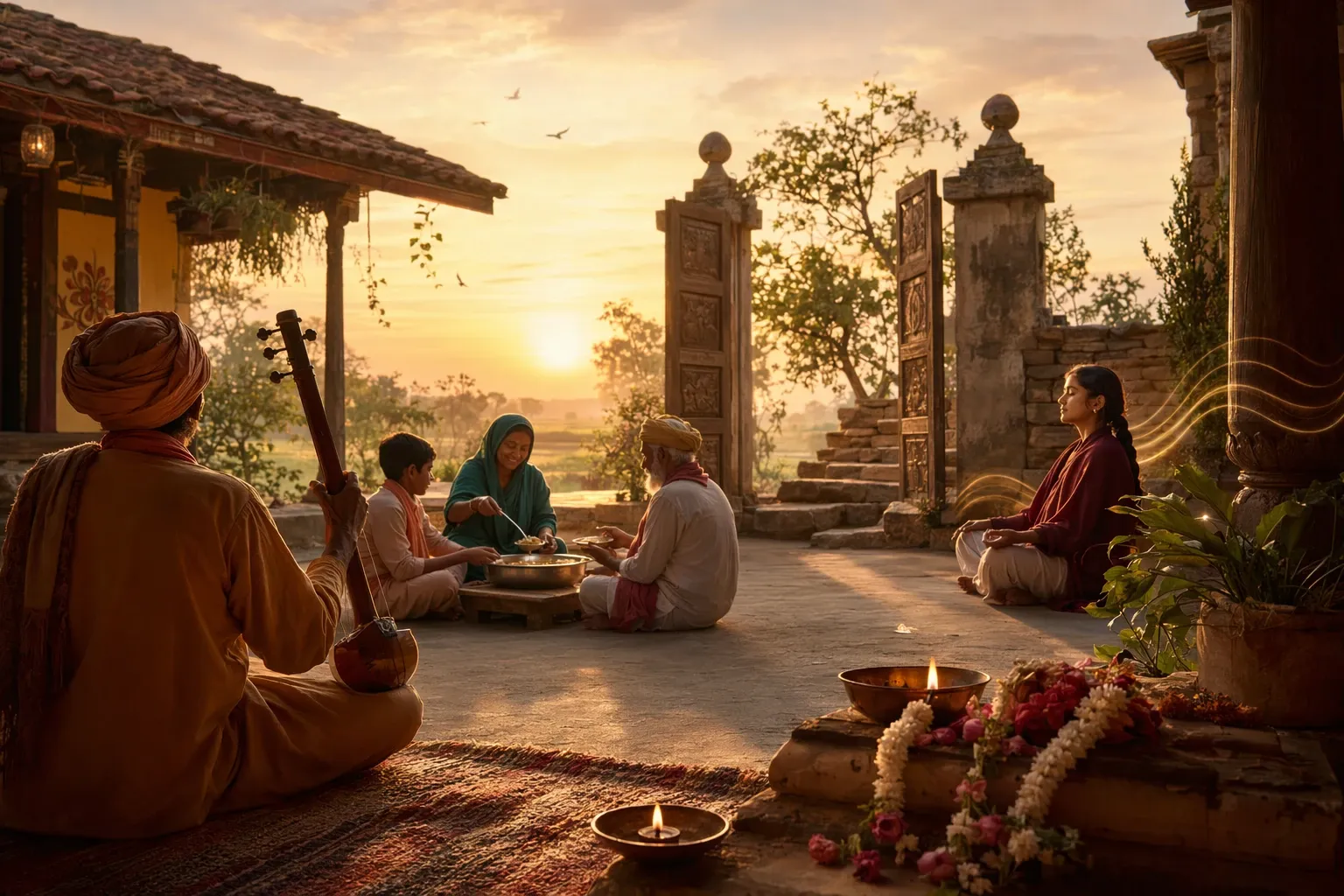
Naam-smaran, or remembrance of the divine name, became central in many bhakti paths. Bhajan, kirtan, abhang, and poetry helped people remember sacred ideas while working, walking, gathering, or celebrating.
For beginners, this is important: bhakti is not only sitting with a book. It can be sung, heard, repeated, danced, and lived.
Equality of sincere devotion
Many saints emphasized that pride in caste, wealth, learning, beauty, or power cannot replace sincere devotion. This idea challenged social arrogance, even though actual social change varied by region and period.
A careful view should say both things: bhakti gave strong language to spiritual equality, and historical society did not become perfectly equal overnight.
Saguna and Nirguna
Saguna bhakti loves the Divine with name, form, qualities, story, and image. Nirguna bhakti points toward the formless and beyond-description Divine. Both shaped Indian devotional history.
Young readers should not treat this as a team rivalry. It is better to see how many doors Indian spirituality has opened for different temperaments.
Additional beginner context
The next sections add plain-language context so the article is more useful as a complete beginner guide.
A beginner-friendly way to read this
This guide is mainly about What Did the Bhakti Movement Teach? Key Principles in Simple Words. The useful way to read it is not as a final verdict, but as a beginner-friendly map: learn the key idea, notice the context, and then connect it with the wider Indian cultural world. Important terms in this article include Did, Bhakti, Movement, Teach, Key. The central angle is: Focus on ideas: love/devotion, surrender, naam-smaran, equality of devotion, guru-saint traditions, Saguna/Nirguna as later sub-angle. Avoid sectarian ranking.
The Bhakti movement is best understood as many regional devotional streams rather than a single organisation with one founder. Saints, poets, singers, temple communities, vernacular languages, and personal devotion all played roles across different centuries and regions.
What to remember
A careful article should avoid making every saint say the same thing. Some emphasised love for Vishnu, Shiva, Rama, Krishna, Vitthala, Devi, or a formless divine reality. Some challenged social pride; some worked within temple traditions; many used local languages so ordinary people could sing, remember, and participate.
For modern readers, the safest approach is to keep curiosity and humility together. A tradition can be meaningful without being reduced to a slogan, and a complex topic can be made simple without pretending that every region, family, school, or teacher follows the exact same wording.
For beginners, bhakti becomes easier when seen as devotion made personal and poetic. Its cultural impact is visible in music, literature, festivals, pilgrimage, social memory, and the emotional language of Indian spirituality.
Where to go next
For a wider base before going deeper, read our Bhakti Movement beginner guide. It gives the surrounding context so this article feels less isolated.
More context for careful readers
Common misunderstandings to avoid
A common mistake is to treat What Did the Bhakti Movement Teach? Key Principles in Simple Words as only one sentence or one social-media definition. In reality, Bhakti tradition topics usually carry many layers: language, practice, regional memory, family tradition, teacher explanation, and modern interpretation. A beginner guide should simplify the entry point, but it should not erase that depth.
Another mistake is to assume that one version explains every community. Indian traditions often travel through many regions and languages, so examples may differ. That does not make the topic confused; it means the tradition is alive and has been remembered in more than one way.
The safest reading habit is to keep the main idea clear and hold details gently. Start with what the word means, then notice where it appears, who practices or discusses it, and what value it is trying to teach. This makes What Did the Bhakti Movement Teach? Key Principles in Simple Words easier to remember without forcing a narrow answer.
Why this matters today
This topic still matters because young readers are meeting Indian culture through school, family stories, social media, travel, music, health conversations, and festival posts. Without context, the same idea can look either too mysterious or too casual. A clear explanation helps readers respect the subject without feeling lost.
For Bhaktilipi readers, the practical value is not just information. The goal is better cultural literacy: knowing enough to ask good questions, avoid lazy stereotypes, and recognise why earlier generations preserved these ideas through stories, songs, rituals, debates, art, and daily habits.
Good learning also means knowing the limits of a short article. This guide gives a reliable starting point, but deeper study can come from teachers, trusted books, temple or community elders, museums, performances, and careful reading of primary traditions where possible.
Simple takeaway
If you remember only one thing, remember this: What Did the Bhakti Movement Teach? Key Principles in Simple Words becomes meaningful when the definition, the cultural setting, and the human purpose are read together. That balanced view protects the topic from both blind rejection and blind romanticisation.
Use this article as a first map. Revisit the key words, compare them with real examples, and keep learning patiently. Dharma-oriented learning is not about collecting facts quickly; it is about understanding what those facts ask us to value and practice.