
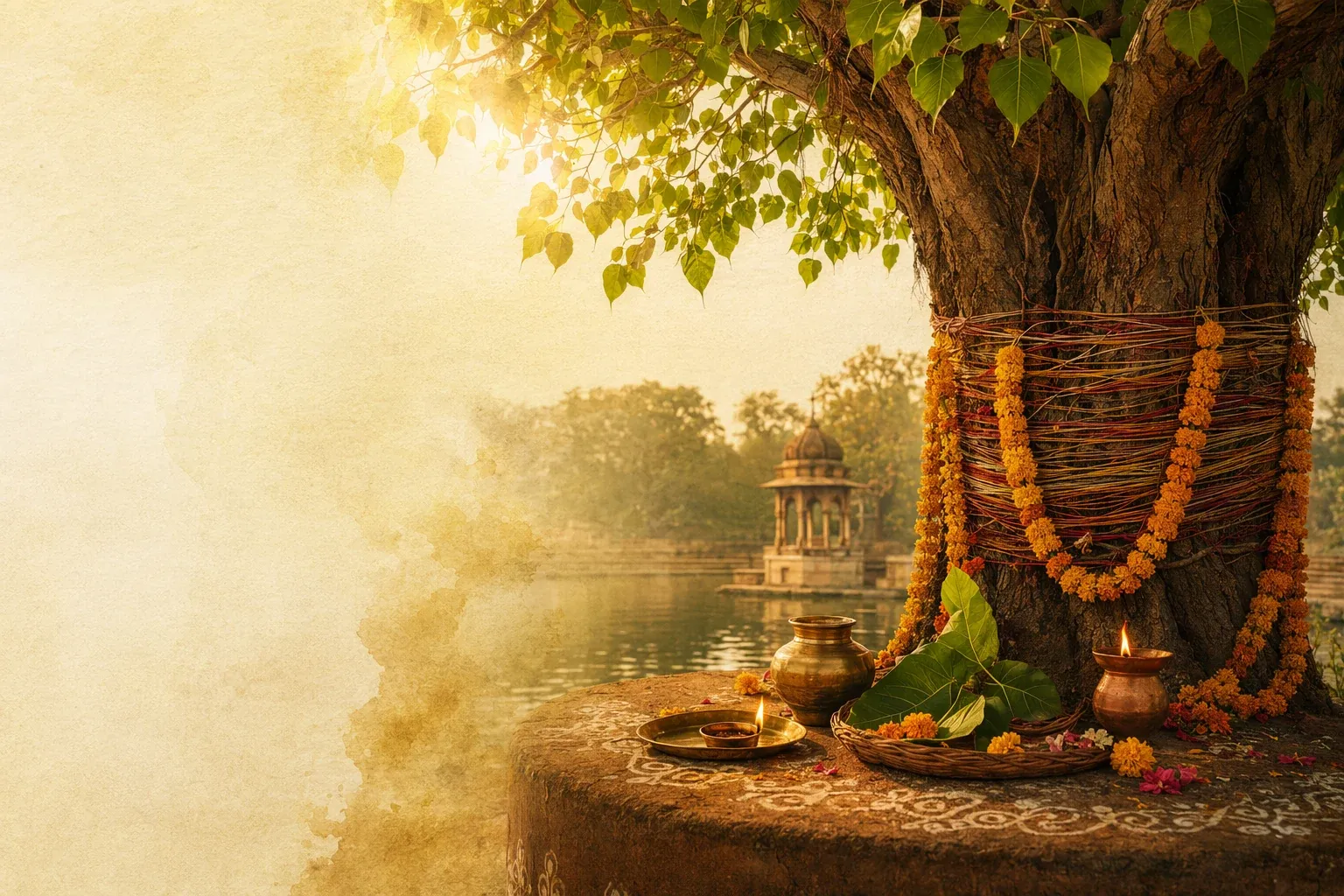
Trees are sacred in Indian culture because they touch almost every part of life: survival, shade, food, medicine, worship, memory, community, and imagination. In a hot climate, an old tree is not a small thing. It can cool a street, mark a village centre, shelter birds, hold soil, protect a water source, provide leaves or fruit, and become the place where people gather. Over centuries, this practical importance became cultural reverence.
Indian traditions often express gratitude through sacredness. A river that nourishes life becomes a mother. A mountain that holds forests and pilgrimage routes becomes holy. A tree that gives shade without asking for payment becomes worthy of respect. This is not difficult to understand. If something silently supports life every day, a culture may teach people to bow before it, protect it, and remember it through stories.
Shade, food, medicine, and daily survival
Before electric fans, packaged food, highways, and modern hospitals, trees were even more central to ordinary life. A banyan or peepal could provide shade for travellers. Mango, coconut, jackfruit, tamarind, amla, and many regional trees gave food or flavour. Neem, tulsi, bael, and many other plants entered household and traditional medicine systems. Leaves became plates, flowers became offerings, wood became tools, and groves helped protect water and soil.
When a community depends on a tree, respect becomes practical wisdom. If every useful tree is cut for short-term gain, the village loses shade, birds, fruit, fuel balance, soil strength, and beauty. Sacred customs gave people a reason to restrain themselves. A taboo against cutting a tree near a shrine may sound religious, but it can also protect a micro-ecosystem.
Trees as homes of deities and guardians
Many Indian traditions connect trees with divine presence. The tree may be treated as a seat of a deity, a symbol of a deity’s qualities, or a place where a local guardian is present. The bael or bilva leaf is linked with Shiva worship. Tulsi is loved in Vaishnava households. The peepal is revered in multiple Indian-origin traditions. Shami is worshipped in some Dussehra customs. Sacred groves may be connected with village deities, serpent guardians, mother goddesses, ancestors, or nature spirits.
These connections differ from region to region. A grove in Meghalaya, a kavu in Kerala, a devrai in Maharashtra, and a sarna grove in parts of eastern and central India do not all share one identical story. But they share a broad cultural pattern: the living landscape is not empty. It is inhabited, protected, remembered, and approached with care.
Stories make values memorable
Stories help people remember why a tree matters. The Bodhi Tree at Bodh Gaya is important in Buddhist tradition because the Buddha is said to have attained enlightenment under a sacred fig. The banyan appears as a symbol of long life, shelter, and continuity. The wish-fulfilling kalpavriksha appears in Indian imagination as a tree of abundance. Krishna traditions remember kadamba in playful and devotional settings. Shiva worship gives the bilva leaf a special place.
Such stories should be read with sensitivity. A story is not always trying to be a botanical textbook. It may be teaching gratitude, restraint, devotion, wisdom, fertility, protection, or the connection between inner life and outer nature. A sacred tree becomes a classroom where culture speaks through image and habit.
Sacred groves turned reverence into rules
One of the strongest examples of tree reverence in India is the sacred grove. A sacred grove is a patch of vegetation protected by community custom and religious feeling. In many places, people traditionally avoided cutting trees, hunting animals, or disturbing the grove without permission or ritual reason. Some groves protected ponds, springs, medicinal plants, old trees, and rare species.
Modern conservation language often describes biodiversity, habitat, and water recharge. Older community language may speak of a goddess, naga, ancestor, spirit, or guardian. Both languages can point toward a similar behaviour: do not treat the grove as a pile of resources. Treat it as a living place with limits.
The dharmic lesson of restraint
Indian culture often teaches that human life should not be driven only by desire. Dharma asks people to consider right action, responsibility, relationship, and consequences. Sacred trees fit into this idea beautifully. A tree grows slowly. It serves quietly. It cannot argue in court. If humans become careless, the tree suffers first and the community suffers later.
By making trees sacred, society created emotional protection for beings that cannot defend themselves. Tying a thread around a trunk, lighting a lamp near a tulsi plant, or walking around a peepal may look simple, but the habit says something important: pause, acknowledge, and do not consume everything thoughtlessly.
Ecology without using modern words
Many older customs protected ecological relationships even without modern scientific vocabulary. A large tree shelters birds, bats, insects, lichens, creepers, and small animals. Its roots hold soil. Its canopy lowers heat. Its leaves become organic matter. A grove can protect moisture and create a cooler local environment. When communities preserved sacred trees, they also preserved these relationships.
This does not mean every practice was perfect or every sacred site remained safe. Sacred groves can be damaged by urbanisation, roads, overuse, construction, and even excessive shrine-building. But the basic cultural instinct remains valuable: reverence can support conservation when it is guided by care rather than display.
Tradition, interpretation, and history
It is important to keep a balanced view. Tradition tells us that people worshipped or protected certain trees. Interpretation explains why: the tree may represent life, wisdom, fertility, protection, or spiritual growth. Historical and ecological study asks how the practice worked in real communities and how it changed over time.
This balance protects us from two mistakes. One mistake is blind exaggeration, such as claiming every sacred tree has miraculous powers. The other mistake is arrogant dismissal, as if all reverence for nature is foolish. The mature view is more interesting: sacred trees show how Indian communities used culture, story, and ritual to build relationships with the natural world.
Questions people ask
Why are trees considered sacred?
Trees are considered sacred because they support life, provide shade and food, carry religious stories, mark community spaces, support biodiversity, and symbolise values such as patience, shelter, wisdom, purity, and gratitude.
Are trees sacred in India?
Yes, many trees and plants are sacred in Indian traditions, but the list changes by region and community. Peepal, banyan, tulsi, bael, neem, amla, shami, kadamba, coconut, banana, and trees in sacred groves are common examples.
Is sacred-tree worship superstition?
It can become superstition if people make unsupported claims or act without understanding. But at its best, sacred-tree reverence is a cultural way to express gratitude, protect nature, remember stories, and practise restraint.
The simple answer
Trees are sacred in Indian culture because they are life-givers. They feed, shade, heal, cool, protect, and gather communities. Indian traditions responded by giving them stories, rituals, names, and protection. The message is still useful today: if something keeps life alive, treat it with respect before it disappears.