
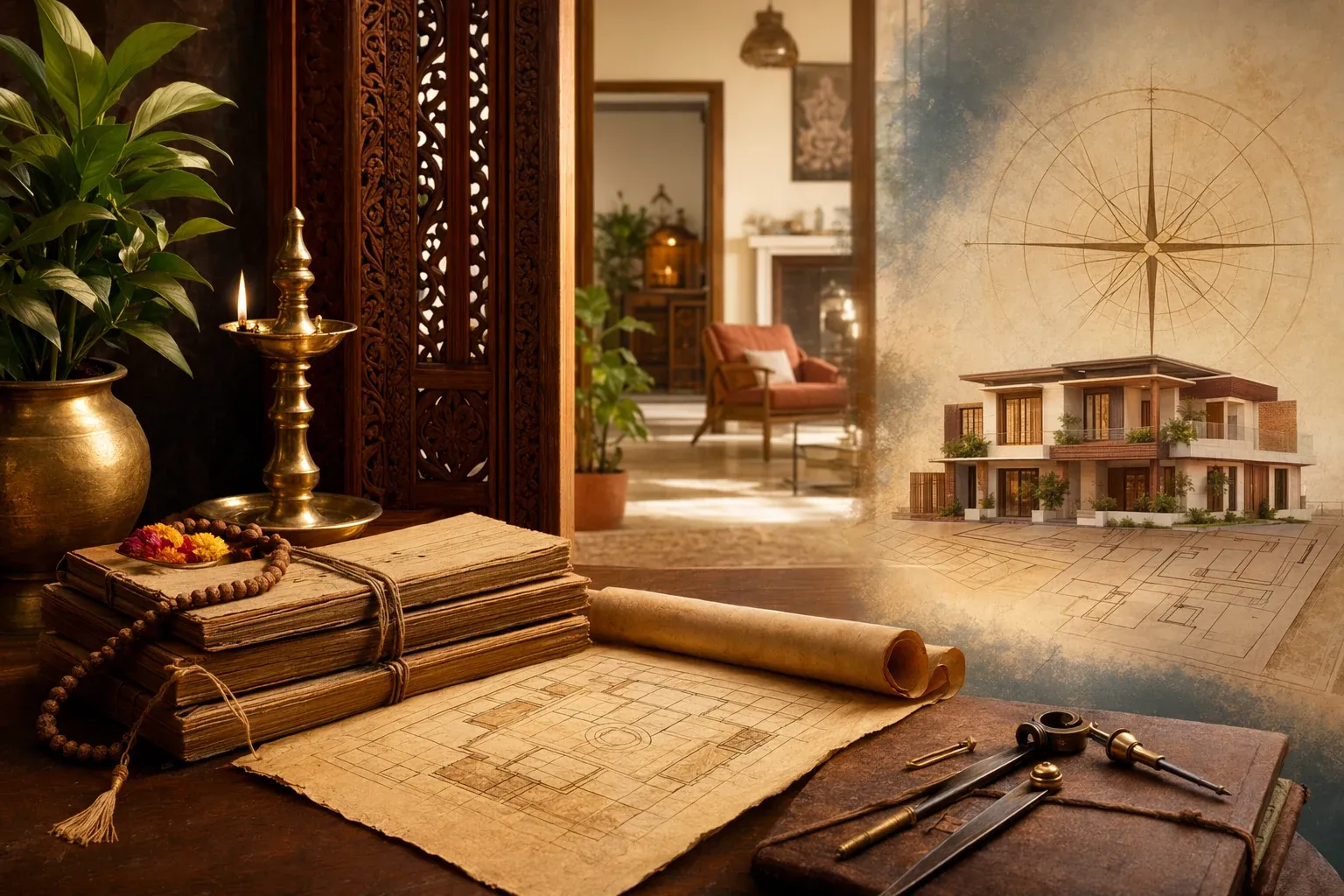
The history of Vastu Shastra is not the story of one person suddenly inventing a rulebook for houses. It is better understood as a long Indian architectural and spatial tradition shaped by texts, temple building, town planning ideas, ritual practice, craft lineages, and regional interpretation.
That is why the question “Who wrote Vastu Shastra?” has a layered answer. There are important classical texts and names associated with Vastu, but the tradition is broader than a single author.
The simple answer
The history of Vastu Shastra is not the story of one person suddenly inventing a rulebook for houses. It is better understood as a long Indian architectural and spatial tradition shaped by texts, temple building, town planning ideas, ritual practice, craft lineages, and regional interpretation.
How to understand this calmly
A helpful way to read Vastu is to keep three layers separate. The first layer is practical: light, air, movement, privacy, cleanliness, storage, noise, and safety. The second layer is cultural: directions, sacred spaces, daily rhythm, and the feeling that a home should support a good life. The third layer is belief: families may attach spiritual meaning to certain placements or habits. Problems start when all three layers are mixed into one frightening claim.
For young readers and first-time learners, the balanced approach is simple. Learn the vocabulary, understand why people care, notice the practical design ideas, and avoid anyone who uses fear to sell instant fixes. Vastu can be studied as part of Indian architecture and home culture without promising that one object or direction will automatically create wealth, marks, health, marriage, or happiness.
Did one person write Vastu Shastra?
No single writer can honestly be called the only author of the whole tradition. Vastu ideas appear across Sanskrit architectural and ritual literature, and different texts discuss sites, measurements, building types, temples, icons, towns, and homes. Some works are connected with names such as Mayamata, Manasara, Samarangana Sutradhara, and sections of larger Puranic or architectural traditions.
A beginner should therefore avoid fake certainty. It is more accurate to say Vastu Shastra is a textual and practical tradition with many sources.
Where did the tradition develop?
Vastu belongs to the wider world of Indian building knowledge. Its ideas are visible most strongly in discussions of temples, sacred architecture, town layout, site selection, proportions, and ritual preparation of space. Home Vastu is one part of that larger conversation, not the whole thing.
As with many Indian knowledge systems, the history includes written texts, oral teaching, craftspeople, patrons, regional styles, and living customs. A temple in Odisha, a South Indian shrine, a Rajasthan haveli, and a modern apartment may all raise different design questions.
How old is Vastu Shastra?
The tradition is old, but exact dating depends on which text or practice we are discussing. Some ideas grew from ancient and early medieval architectural thinking; many surviving texts were compiled, edited, copied, and interpreted across time. Instead of chasing one dramatic date, it is better to understand Vastu as an evolving knowledge stream.
Modern online content often flattens this history into “ancient science proves everything” or “all superstition.” Both shortcuts are weak. History is more interesting than either slogan.
How to use these ideas in a real home
The best way to use Vastu ideas is to move from simple, low-risk improvements toward bigger decisions only when they are truly needed. Start with cleanliness, light, air, calm movement, safe electrical points, uncluttered corners, and a respectful prayer or study space if your family uses one. These changes do not require panic, demolition, or expensive purchases, and they usually make a home easier to live in even when people disagree about belief.
For rented flats, hostels, and small apartments, treat Vastu as a guide to arrangement rather than a demand for perfection. You may not control the building, the main door, the road, the shaft, or the room sizes. You can still control daily order, how you use corners, how you sleep, how clean the entry feels, and whether the home supports study, rest, cooking, guests, and devotion.
Red flags to avoid
Be careful with advice that begins by frightening you. Claims that one direction will ruin every relationship, one object will block all money, or one room placement explains every health issue are not responsible. They may sound dramatic online, but real homes and real lives are more complex.
Also be careful with costly fixes that are sold before anyone understands your layout, budget, family needs, structural limits, and safety. A responsible suggestion should explain the reason, the trade-off, and the expected benefit. If a recommendation creates shame, conflict, debt, or constant anxiety, it is not helping the household.
A practical beginner checklist
Keep entrances clean and easy to use; improve light and ventilation where possible; reduce clutter in corners and under beds; make the sleeping area calmer; keep kitchen surfaces hygienic and safe; give sacred items a clean, intentional place; avoid blocking doors and pathways; and do not ignore maintenance problems such as dampness, leaks, pests, unsafe wiring, or poor drainage.
This checklist is not a magical formula. It is a grounded way to connect cultural respect with everyday care. When a traditional idea supports cleanliness, discipline, hospitality, prayer, or rest, it can be meaningful. When it becomes a source of fear, slow down and return to common sense.
Common beginner questions
Who wrote Vastu Shastra?
There is no single author of the entire Vastu tradition. Different classical texts, teachers, architects, ritual specialists, and craft lineages contributed over time.
Is Vastu only about houses?
No. Older Vastu discussions include temples, towns, sites, measurements, icons, and sacred architecture. Modern home Vastu is only one part of the larger tradition.
Should beginners download random Vastu PDFs?
Be careful. Many online PDFs are pirated, inaccurate, or contextless. Use legitimate books, libraries, teachers, and public educational material instead.
A calm takeaway
The most useful Vastu conversation begins with respect and ends with calm action. A home is not a superstition machine. It is a place where people study, rest, cook, pray, work, argue, forgive, and grow. If a traditional suggestion helps you create more light, order, quiet, respect, or mindful living, it may be worth considering. If it creates panic, shame, wasteful spending, or family pressure, pause and rethink it.
Use Vastu as cultural knowledge, not as a weapon. Keep what improves daily life, ask qualified people before major changes, and remember that ethics, care, health, safety, and good relationships matter more than perfect placement.
Related reading on Bhaktilipi
For nearby background, read Ancient Indian Cave Temples and Hindu Philosophy and the Temple System on Bhaktilipi.