
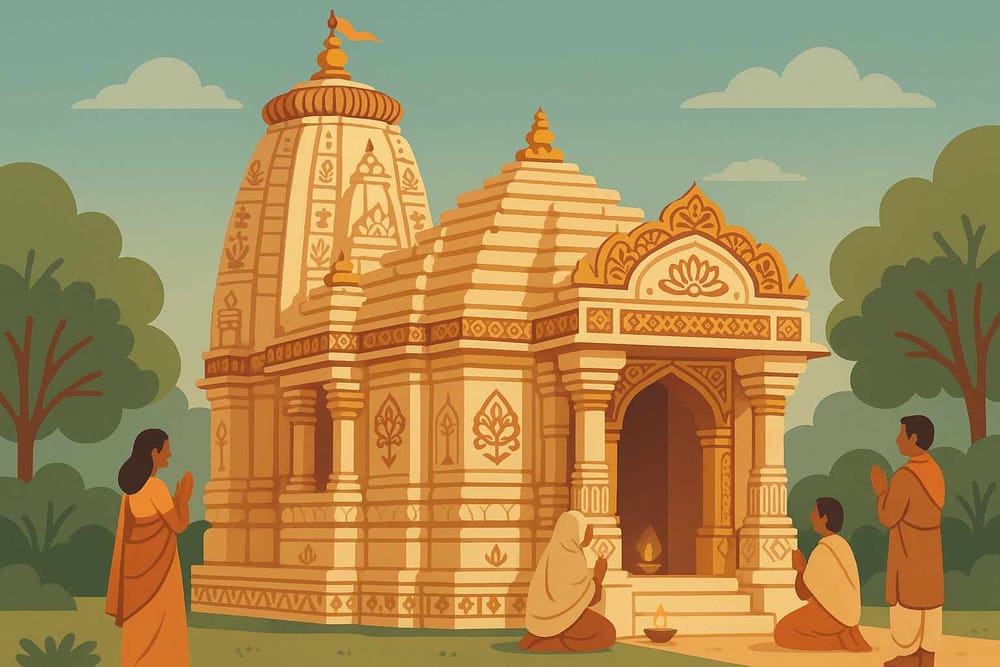
Tirthesvara Siva Temple : Architecture Reveals Ancient Artistry
Imagine walking through the vibrant, narrow lanes of Talabazar in Old Bhubaneswar. The air is thick with the aroma of incense and the gentle hum of daily life. It’s here, on the sacred path from Bindusagar Lake to the grand Lingaraja Temple, that you find a hidden treasure, a place where time seems to slow down – the Tirthesvara Siva Temple. This isn't just a monument of stone; it's a living, breathing sanctuary where prayers still echo, a testament to centuries of unwavering faith.
Built in the 14th century during the glorious Ganga dynasty, this temple is a beautiful chapter in Odisha's spiritual story. It’s more than just a place of worship; it’s a canvas where our ancestors painted their devotion for Lord Shiva, and it continues to inspire all who visit.
A Legacy Carved in Stone: The Temple's History and Heart
Every stone of the Tirthesvara Siva Temple tells a story. It stands as a proud symbol of the Ganga dynasty's deep reverence for spirituality and art. Bhubaneswar, our beloved 'Temple City,' is a garland of over 500 temples, and Tirthesvara is one of its most fragrant flowers. Its importance isn't just historical; it’s deeply cultural. This sacred space is a focal point for the community, especially during festivals like Maha Shivaratri, when the temple comes alive with chants, lights, and the collective energy of devotees.
For centuries, it has been a center for rituals, a place where traditions are not just preserved but passed on with love from one generation to the next. Even today, surrounded by homes and the bustle of the bazaar, the temple maintains its serene and powerful presence, a true spiritual anchor for the local community.
The Marvel of Kalinga Architecture: Where Art Meets the Divine
The first thing that strikes you about the Tirthesvara Siva Temple is its stunning form. It's a classic example of Kalinga architecture, a style that is both grand and incredibly detailed. The temple has two main parts: the vimana (the towering main shrine) and the jagamohana (the assembly hall where devotees gather).
But what truly makes the temple's design so special? Let's look closer:
- Masterful Craftsmanship: The walls, built from sandstone and covered in a traditional lime plaster with a red wash, are adorned with breathtaking carvings. As you approach the entrance, look closely at the doorjambs. You’ll see powerful Saiva dvarapalas (gatekeepers), standing guard with a trident and sword, their presence both protective and awe-inspiring.
- Symbols of Auspiciousness: Above the entrance, on the lintel (lalatabimba), is a beautiful carving of Gaja Laxmi. The goddess of fortune, flanked by elephants, bestows her blessings upon all who enter. Just above her, the architrave is intricately carved with the figures of the nine planets (navagrahas), a common feature in Kalinga temples meant to protect the shrine and its devotees. For a deeper dive into its design, you can explore the architectural grandeur of Tirthesvara Siva Temple.
Whispers of Symbolism in Every Curve
The art at Tirthesvara Siva Temple is not just for decoration; it’s a spiritual language. The carvings of celestial beings, mythical animals, and floral patterns all carry deep meaning. Lotus motifs, for example, represent purity and spiritual awakening, while depictions of Lord Shiva as Nataraja remind us of the cosmic dance of creation and destruction, the eternal rhythm of the universe.
Inside the sanctum sanctorum, the heart of the temple, rests the Siva lingam within a circular Yonipitha. This is the central point of worship, a powerful symbol of divine energy. Every element, from the spire reaching for the heavens to the motifs on the walls, is designed to guide the devotee's mind towards self-knowledge and unity with the divine. It's a journey not just into a temple, but into oneself.
The question often arises: why should one make the journey to see this temple? The answer is simple. To visit Tirthesvara Siva Temple is to witness a beautiful harmony of history, art, and living faith. It’s an opportunity to connect with the ancient wisdom and artistic genius that defines our culture. You can learn more about its sacred structure by reading about how the Tirthesvara Siva Temple's architecture reveals ancient artistry.
About Bhaktilipi: Your Companion in Devotion
Feeling moved by the profound heritage of places like the Tirthesvara Siva Temple? At Bhaktilipi.in, we are dedicated to bringing these timeless stories and the essence of bhakti traditions to you. We believe in preserving this rich wisdom and sharing it in a way that connects with today’s world, with beauty and respect.
Stay Connected with Our Spiritual Community
Join our journey of discovery! Subscribe to our newsletter for more insights into our incredible temples, devotional literature, and spiritual stories. Follow our journey on social media for your daily dose of inspiration:
- Facebook: BhaktilipiOfficial
- Instagram: bhakti_lipi
- YouTube: Bhaktilipi
Let's celebrate and preserve India’s profound devotional traditions together!
A passionate group of people dedicated to preserving India's knowledge of Dharma, Karma, and Bhakti for ourselves and the world 🙏.
Comments
Related in

Tirthesvara Siva Temple's Mystique: Culture and History Explore
Imagine walking through the old, winding lanes of Bhubaneswar, where every corner seems to hold a story from centuries past. The air is thick with the scent of incense and history. It is here, nestled near the tranquil waters of the Kotitirtha Tank, that you find a haven of peace
Tirthesvara Siva Temple: Explore its Mystique
In the winding, ancient lanes of Bhubaneswar's Old Town, where every stone seems to hold a secret, there are places that call out to your soul. It’s a feeling many of us know—a quiet pull towards something timeless and sacred. Following one such pull, I found
Tirthesvara Siva Temple: Explores Sacred Architecture
In the bustling lanes of Old Town Bhubaneswar, tucked away near the serene Bindusagar Lake, lies a place where time seems to stand still. It's a place where every stone holds a prayer, and the air is thick with centuries of devotion. This is the Tirthesvara Siva Temple,