

Jyotirlinga: Meaning, Story and the 12 Sacred Shrines
A respectful beginner guide to Jyotirlingas: what they mean, why twelve shrines are famous, the Shiva tradition, pilgrimage context, and how to understand them.
A respectful beginner guide to Jyotirlingas: what they mean, why twelve shrines are famous, the Shiva tradition, pilgrimage context, and how to understand them.

Ayurvedic skin and hair care is popular, but beginners should combine tradition, gentle habits, product caution, and medical common sense.

Ayurveda and allopathy should be combined only with professional guidance, because herbs and medicines can interact and conditions vary.

An Ayurveda consultation should be with a qualified professional who explains diagnosis, medicines, safety, follow-up, and limits clearly.

Ayurvedic herbs and products can be powerful, so beginners should treat them with respect, caution, label-checking, and qualified guidance.
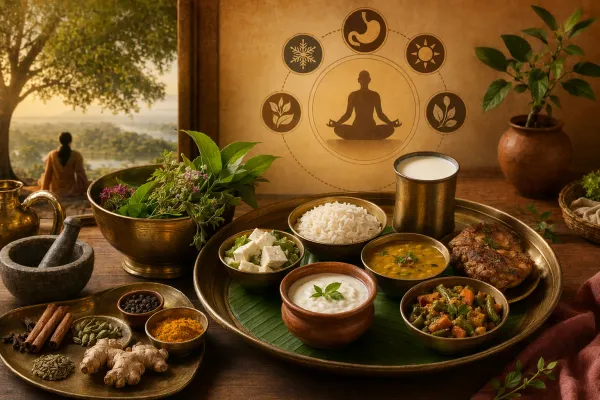
Ayurveda looks at food through digestion, season, constitution, preparation, quantity, and context—not just rigid yes/no rules.

Dinacharya means daily routine in Ayurveda: small repeated habits that support steadiness, digestion, rest, and balance.

Ayurveda was not invented by one modern founder; it developed in India through long observation, teaching, texts, and medical traditions.

Vata, Pitta and Kapha are Ayurveda’s three doshas: traditional patterns used to understand movement, transformation, structure, and balance.