
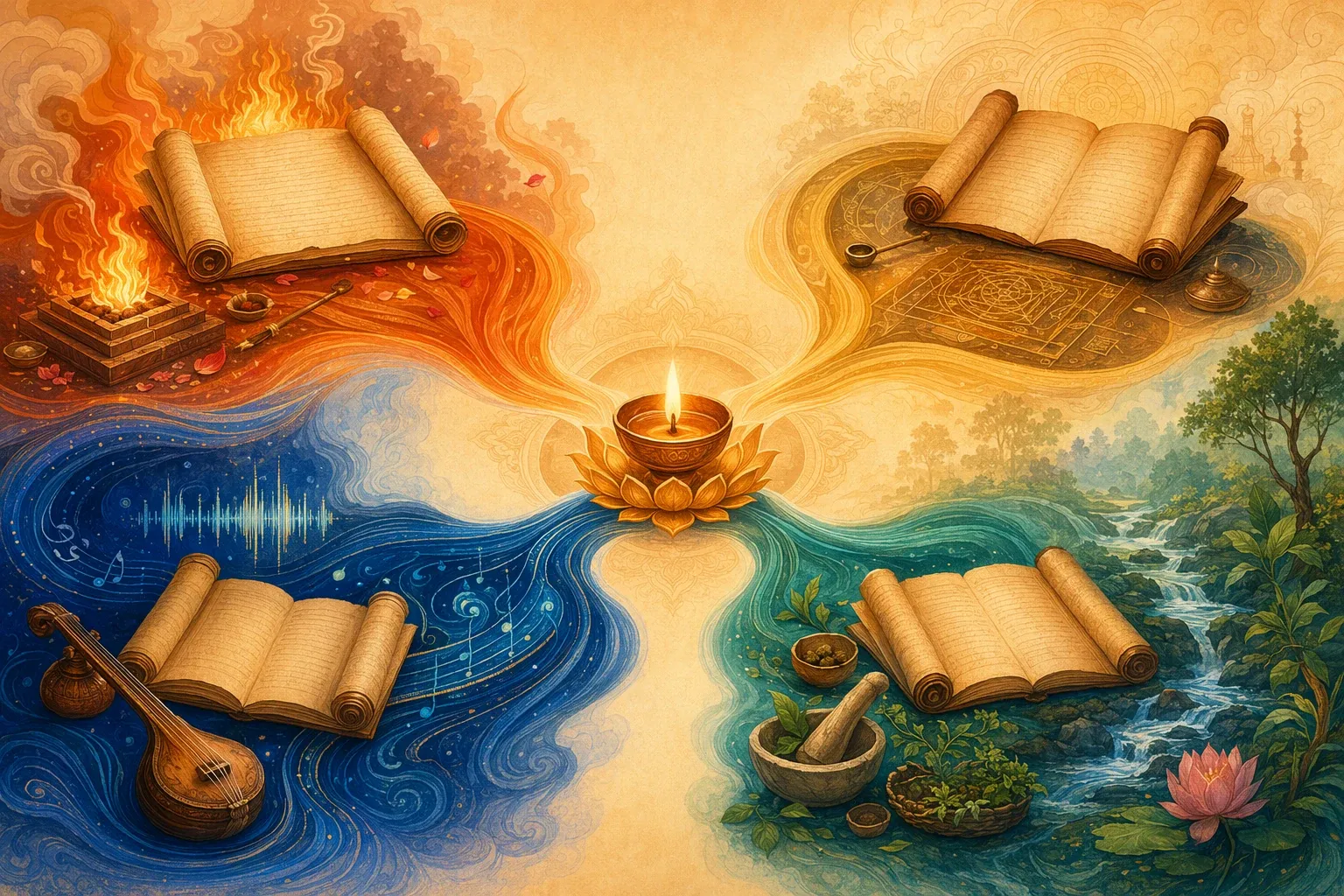
If you searched for '4 vedas name', this guide is for you. We will keep it simple, respectful, and beginner-friendly.
Related reader questions behind this guide include: vedas types, which vedas are there, which vedas contains what, what are the 4 vedas, are there 4 or 5 vedas.
Quick answer
The four Vedas are Rigveda, Yajurveda, Samaveda, and Atharvaveda. These are the main Vedic collections respected in Hindu tradition.
A simple memory hook is: Rigveda is hymns, Yajurveda is ritual formulas, Samaveda is musical chanting, and Atharvaveda includes prayers and knowledge connected with daily life, healing concerns, protection, and reflection.
1. Rigveda: the Veda of hymns
Rigveda is often introduced first because it contains many ancient hymns addressed to deities such as Agni, Indra, Varuna, Usha, and others. These hymns are poetic, layered, and deeply tied to the Vedic world.
For a beginner, Rigveda shows how early Vedic people expressed wonder toward fire, dawn, rain, order, power, and the mystery of existence. It is not a simple storybook, so reading with commentary helps.
2. Yajurveda: the Veda of ritual formulas
Yajurveda is strongly connected with yajna, the Vedic ritual or sacrifice. It contains prose and verse formulas used by priests during ritual actions.
If Rigveda feels like sacred poetry, Yajurveda often feels more like instructions and spoken formulas for ritual performance. It reminds us that Vedic tradition was practiced through sound, action, timing, and discipline.
3. Samaveda: the Veda of chant and melody
Samaveda is famous for chant. Many of its verses are drawn from Rigveda, but they are arranged for singing in ritual settings. This is why it is often linked with music and sacred sound.
For young readers, the key idea is that the same words can become a different experience when sung in a traditional pattern. Samaveda shows how sound itself became a path of worship and memory.
4. Atharvaveda: prayers and everyday concerns
Atharvaveda contains many kinds of material: prayers, reflections, charms, healing-related concerns, household hopes, and philosophical passages. It often feels closer to everyday human worries and wishes.
This does not mean it is only “medical” or only “magical.” It is a broad collection, and its meanings should be handled with context rather than modern assumptions.
To connect this with nearby ideas, see Are the Vedas Shruti or Smriti? Simple Meaning of Sacred Text Categories and Can Anyone Read the Vedas? Women, Caste, and Learning Today.
Are there four or five Vedas?
In the canonical sense, Hindu tradition speaks of four Vedas. Sometimes texts, arts, or epics are called a “fifth Veda” as an honorific way of saying they carry sacred or cultural knowledge to more people.
So the safe beginner answer is: there are four Vedas, and “fifth Veda” is usually a special cultural title, not a replacement for the fourfold Vedic canon.