
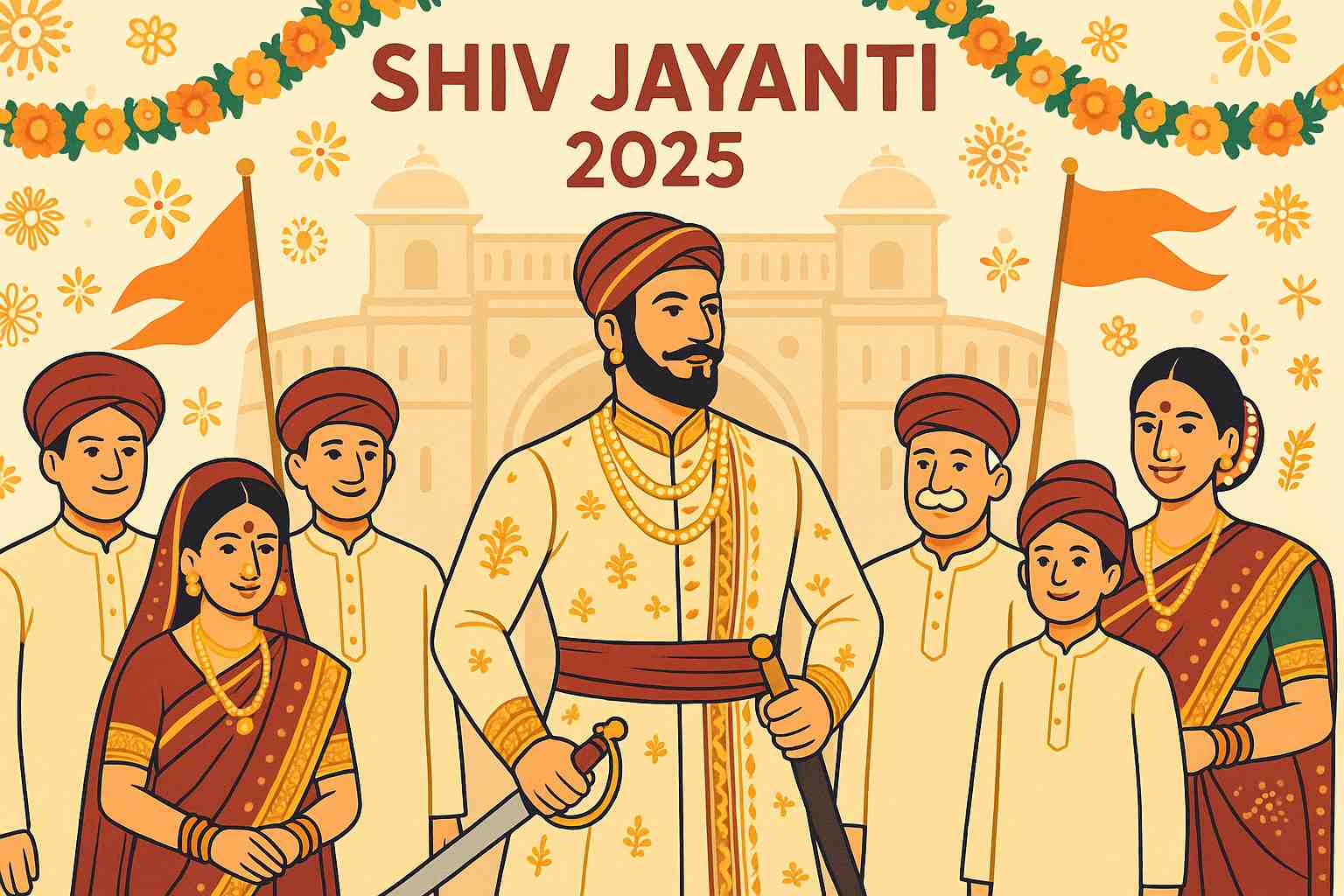
For Chhatrapati Shivaji Maharaj Jayanti, many people choose Maharashtrian clothing such as a kurta with pyjama or dhoti, a saree, a pheta or other regional dress. The best outfit is respectful, comfortable for the actual event and honest about whether it is festive clothing, stage costume or researched historical reconstruction.
There is no compulsory religious dress code for every Shiv Jayanti programme. Schools, community organisations, forts, processions and formal government events may each set different expectations. Ask the organiser before buying or assembling an elaborate outfit.
Shiv Jayanti is not Mahashivratri
Shiv Jayanti here means the birth anniversary of Chhatrapati Shivaji Maharaj, observed officially in Maharashtra on 19 February. Mahashivratri is a Hindu festival dedicated to Lord Shiva and follows a lunar calendar. Similar shorthand names can cause confusion, so invitations and clothing searches should use the full name.
Maharashtra Tourism describes celebrations including rallies, cultural programmes, plays, storytelling and events at forts. Clothing should support the kind of programme being attended rather than turn the occasion into a generic “warrior costume” display.
Simple outfit ideas for men and boys
- Kurta and pyjama: a comfortable, accessible option for school or community events.
- Kurta and dhoti: suitable when the wearer already knows how to secure and move safely in a dhoti.
- Kurta with waistcoat: useful for a formal programme without claiming to reproduce seventeenth-century court dress.
- White or neutral cotton clothing: practical for a long daytime event, with a coloured stole or properly tied pheta.
- Regional family dress: often more meaningful than a commercially packaged costume.
Do not call every kurta, jacket or turban “the exact dress of Shivaji Maharaj.” Portraits, sculptures, later paintings, theatre and modern popular images belong to different dates and visual traditions.
Simple outfit ideas for women and girls
- Nauvari saree: a well-known Maharashtrian drape, best worn with help from someone experienced if the wearer is new to it.
- Paithani or another Maharashtrian saree: appropriate for formal cultural programmes, provided valuable textiles are protected from crowds and weather.
- Salwar-kurta or kurta set: comfortable for school, travel, volunteering and long events.
- Parकर-पोलका or regional children's dress: suitable where it reflects family or programme tradition and allows safe movement.
- Simple cotton saree: often more practical than heavy festive fabric for fort visits, summer heat or processions.
Jewellery can be kept minimal. Nath, necklaces, bangles and hair ornaments may be used in some presentations, but no accessory is required to show respect. Avoid describing modern jewellery sets as verified Maratha-period replicas unless a museum or specialist source supports that claim.
The pheta: colour, tying and context
Pheta is a broad term for forms of Maharashtrian turban. Styles and names vary by region, community and occasion. A ready-made pheta can be convenient, while a cloth pheta should be tied by someone who knows the chosen style.
Choose a colour that suits the organiser's theme without claiming that one colour is mandatory for everyone. The cloth should not cover the eyes, restrict hearing, create excessive pressure or come loose in a crowd. Do not use pins where they can injure the wearer.
Traditional does not mean historically exact
“Traditional Maharashtrian,” “festival wear,” “stage costume” and “seventeenth-century reconstruction” are four different descriptions. A historically serious reconstruction would require evidence about date, rank, region, fabric, weave, tailoring, dye, headgear, footwear and the limits of surviving visual sources.
Popular images of Chhatrapati Shivaji Maharaj were often made after his lifetime and have been reinterpreted in print, sculpture, theatre and cinema. They are culturally important, but copying one image does not automatically create a documented historical outfit.
For an educational programme, label the clothing honestly: “Maharashtrian-inspired school costume” is better than “exact clothes worn in 1674” when the evidence has not been checked.
Safe outfit ideas for children
- Use light, breathable fabric and footwear the child can walk in.
- Keep capes, sashes, jewellery and dhoti folds away from feet and playground equipment.
- Use soft, clearly theatrical props only if the school permits them.
- Never give a child a real sword, sharpened metal object, heavy shield or functioning weapon.
- Avoid tight turbans, sharp brooches, loose pins, flammable decoration and face paint of unknown composition.
- Write the child's name and guardian contact on an internal tag, not visibly on public photos.
- Allow the child to remove an uncomfortable costume; participation should not depend on enduring heat or pain.
Ideas by event type
School speech or assembly
A neat kurta set, saree or school-prescribed costume is enough. Prioritise clear speaking and accurate content. If portraying a historical person, the script should state which details are documented and which are dramatic presentation.
Procession or outdoor rally
Wear breathable layers, secure footwear, sun protection and a firmly tied head covering. Keep emergency access and crowd movement in mind. Heavy jewellery and trailing fabric are poor choices.
Fort visit or heritage cleanup
Use walking shoes, modest practical clothing, water and weather protection rather than ceremonial footwear. Do not climb walls, attach flags to masonry, leave fabric or plastic, or stage photographs in restricted areas.
Formal cultural programme
A saree, kurta-pyjama, waistcoat or regionally appropriate formal dress works well. Follow venue instructions and avoid props that security staff could reasonably treat as weapons.
Online programme
A simple, well-fitted upper garment and pheta or saree can read clearly on camera. Obtain consent before publishing children's images and avoid sharing school, location or identity details unnecessarily.
Colours and symbols
Saffron is prominent in many modern Shiv Jayanti programmes and Maratha public symbolism, but clothing colours can vary. White, red, green, blue and other regional combinations also appear. Do not shame someone for lacking a particular colour or expensive garment.
Use flags, emblems, quotations and portraits carefully. Verify quotations before printing them on clothing, and follow organisers' rules for national, state and institutional symbols.
Budget-friendly and sustainable choices
- Borrow a pheta, waistcoat, saree or jewellery from family or a school costume bank.
- Restyle clothing already owned instead of buying a one-use polyester costume.
- Rent only after checking cleanliness, fit, deposit terms and return conditions.
- Choose detachable details so the base garment can be worn again.
- Avoid plastic weapon sets, glitter shedding and disposable flags.
- Support a local tailor or draping expert when possible and agree on the price beforehand.
Respectful celebration checklist
- Use the full name Chhatrapati Shivaji Maharaj in formal material.
- Do not confuse the anniversary with Mahashivratri.
- Follow the school's, venue's or procession organiser's dress and safety rules.
- Do not treat community dress as a caricature or use exaggerated accents and gestures.
- Keep historical claims proportional to the evidence.
- Ask permission before photographing participants, especially children.
- Pair clothing with learning about administration, forts, society and historical context—not only warfare.
Frequently asked questions
When is Chhatrapati Shivaji Maharaj Jayanti?
The Maharashtra government's official observance is on 19 February. Some communities may also hold events according to a traditional lunar-date observance; check the organiser's notice.
Is a pheta compulsory?
No. It is a popular choice, not a universal requirement. A clean, comfortable and event-appropriate outfit is sufficient.
Can children dress as Shivaji Maharaj?
They can participate in school or cultural portrayal when the organiser permits it, but the presentation should be respectful, props must be harmless and adults should not call an approximate costume historically exact.
What should I wear to a fort celebration?
Prioritise grip, mobility, weather protection and modest practical clothing. Fort terrain is not the place for unstable footwear, trailing sarees, heavy props or risky photographs.
Can I reuse an outfit from another Maharashtrian festival?
Usually yes. Clothing does not need to be bought specifically for one day. Adjust accessories and follow the event's instructions.