
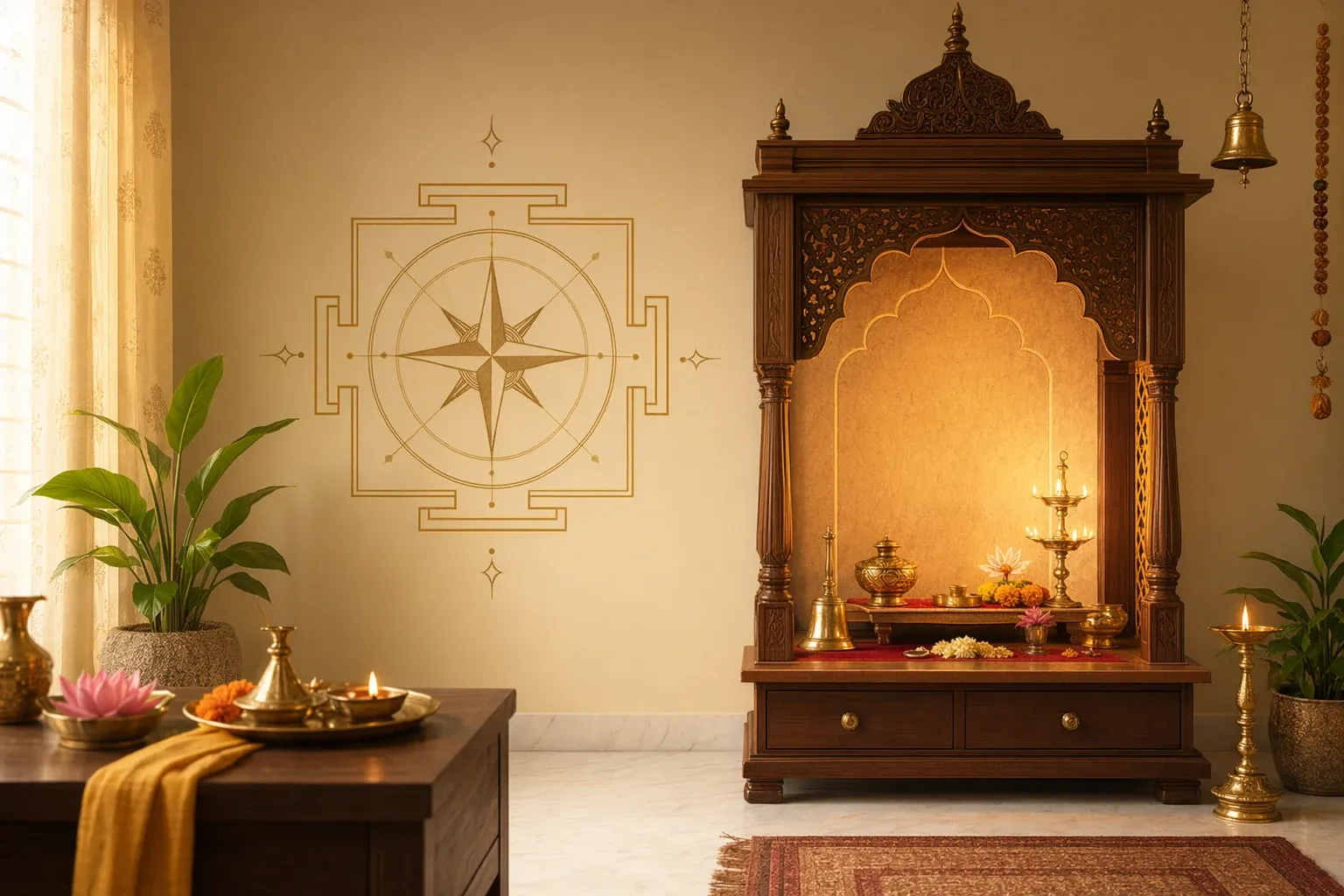
A puja room or home temple is not just another decoration corner. For many families, it is the quietest and most respected part of the home: a place for prayer, gratitude, memory, discipline, and daily grounding.
Vastu discussions about puja space usually focus on direction, cleanliness, height, placement, and respect. The deeper point is simple: sacred practice should be supported by a clean and peaceful space, not by fear.
The simple answer
A puja room or home temple is not just another decoration corner. For many families, it is the quietest and most respected part of the home: a place for prayer, gratitude, memory, discipline, and daily grounding.
How to understand this calmly
A helpful way to read Vastu is to keep three layers separate. The first layer is practical: light, air, movement, privacy, cleanliness, storage, noise, and safety. The second layer is cultural: directions, sacred spaces, daily rhythm, and the feeling that a home should support a good life. The third layer is belief: families may attach spiritual meaning to certain placements or habits. Problems start when all three layers are mixed into one frightening claim.
For young readers and first-time learners, the balanced approach is simple. Learn the vocabulary, understand why people care, notice the practical design ideas, and avoid anyone who uses fear to sell instant fixes. Vastu can be studied as part of Indian architecture and home culture without promising that one object or direction will automatically create wealth, marks, health, marriage, or happiness.
What counts as a home temple?
In a large house, it may be a separate puja room. In an apartment, it may be a wall shelf, cabinet, niche, or small altar. In a hostel room, it may be a tiny clean space for a picture, book, or diya used safely. The form changes; the respect can remain.
Do not shame people for small homes. A sincere, clean, safe corner is better than a grand arrangement that nobody maintains.
Common direction ideas
Many Vastu explanations prefer the north-east or east side for prayer spaces, often linked with light, purity, and sacred beginning. Some families also think carefully about which direction the devotee faces while praying.
These ideas should be handled respectfully but practically. Fire safety matters if you light a diya. Ventilation matters if incense is used. Accessibility matters for elders. Cleanliness matters every day, not only on festivals.
What to avoid
Avoid placing sacred items where they are likely to be kicked, cluttered, damp, or treated carelessly. Avoid turning puja placement into family conflict. Avoid using fear to judge people who live in rented flats or crowded homes.
Also avoid mixing storage of random items with the altar. A puja space should feel intentional. Even a small shelf can be meaningful if it is clean and used mindfully.
How to use these ideas in a real home
The best way to use Vastu ideas is to move from simple, low-risk improvements toward bigger decisions only when they are truly needed. Start with cleanliness, light, air, calm movement, safe electrical points, uncluttered corners, and a respectful prayer or study space if your family uses one. These changes do not require panic, demolition, or expensive purchases, and they usually make a home easier to live in even when people disagree about belief.
For rented flats, hostels, and small apartments, treat Vastu as a guide to arrangement rather than a demand for perfection. You may not control the building, the main door, the road, the shaft, or the room sizes. You can still control daily order, how you use corners, how you sleep, how clean the entry feels, and whether the home supports study, rest, cooking, guests, and devotion.
Red flags to avoid
Be careful with advice that begins by frightening you. Claims that one direction will ruin every relationship, one object will block all money, or one room placement explains every health issue are not responsible. They may sound dramatic online, but real homes and real lives are more complex.
Also be careful with costly fixes that are sold before anyone understands your layout, budget, family needs, structural limits, and safety. A responsible suggestion should explain the reason, the trade-off, and the expected benefit. If a recommendation creates shame, conflict, debt, or constant anxiety, it is not helping the household.
A practical beginner checklist
Keep entrances clean and easy to use; improve light and ventilation where possible; reduce clutter in corners and under beds; make the sleeping area calmer; keep kitchen surfaces hygienic and safe; give sacred items a clean, intentional place; avoid blocking doors and pathways; and do not ignore maintenance problems such as dampness, leaks, pests, unsafe wiring, or poor drainage.
This checklist is not a magical formula. It is a grounded way to connect cultural respect with everyday care. When a traditional idea supports cleanliness, discipline, hospitality, prayer, or rest, it can be meaningful. When it becomes a source of fear, slow down and return to common sense.
Common beginner questions
Where should a temple be kept at home according to Vastu?
Many modern Vastu guides prefer the north-east or east area, but practical factors like cleanliness, safety, accessibility, and respect matter too.
Can a small apartment have a puja space?
Yes. A clean shelf, cabinet, or corner can work if it is safe, respectful, and not mixed with clutter.
Which god controls Vastu?
Vastu traditions often refer to Vastu Purusha and directional deities in symbolic layouts. For beginners, it is enough to know that these are part of the sacred language of space, not a reason for fear.
A calm takeaway
The most useful Vastu conversation begins with respect and ends with calm action. A home is not a superstition machine. It is a place where people study, rest, cook, pray, work, argue, forgive, and grow. If a traditional suggestion helps you create more light, order, quiet, respect, or mindful living, it may be worth considering. If it creates panic, shame, wasteful spending, or family pressure, pause and rethink it.
Use Vastu as cultural knowledge, not as a weapon. Keep what improves daily life, ask qualified people before major changes, and remember that ethics, care, health, safety, and good relationships matter more than perfect placement.
Related reading on Bhaktilipi
For nearby background, read Hindu Symbols in Home Decor and Puja and Hindu Philosophy and the Temple System on Bhaktilipi.