
Unveiling the Legacy: Doul Govinda Temple-History and Builders
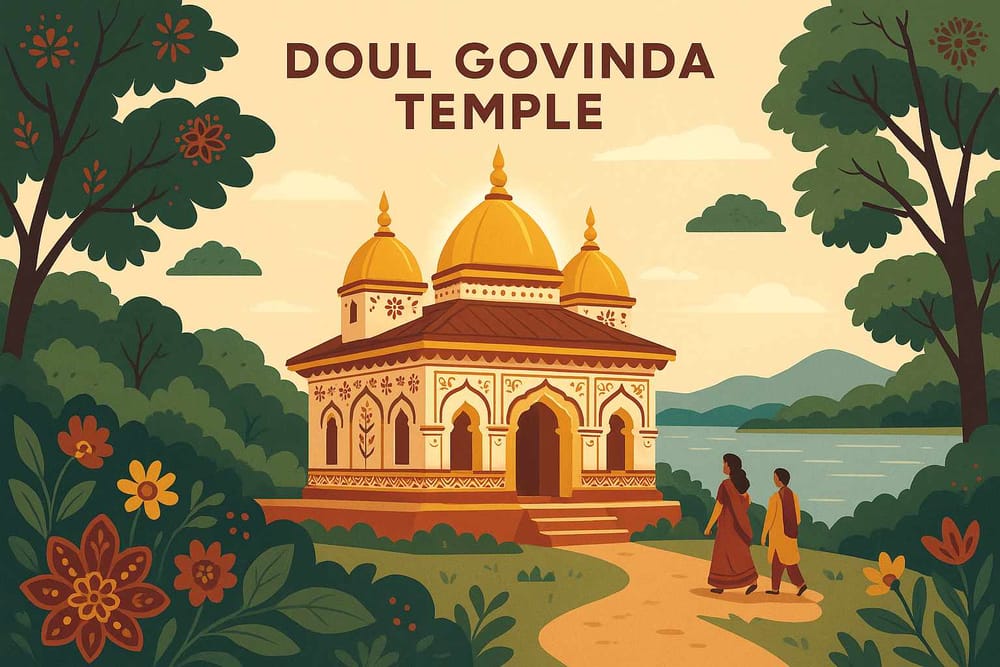
Imagine standing on the northern bank of the mighty Brahmaputra, the river flowing with ancient stories, and a gentle breeze carrying the faint, sweet sound of temple bells. This isn't just a dream; it's the beautiful reality that welcomes you to the Doul Govinda Temple in North Guwahati, Assam. This isn't just a building of brick and mortar; it's a living, breathing space where countless prayers have echoed and where the playful spirit of Lord Krishna feels ever-present.
For generations, this sacred place has been a spiritual anchor for people, a place to find peace, celebrate life, and reconnect with something deeper. Let's take a journey together to understand the heart and soul of this divine abode.
A Journey Back in Time: The Temple's Sacred Origins
Every sacred place has a story, and the tale of Doul Govinda is truly one of pure devotion. The temple's history isn't written in grand declarations of kings but in the heartfelt actions of a true devotee. Legend tells us that the main idol of Lord Krishna was lovingly brought here by a gentleman named Ganga Ram Barooah from a place called Sandhyasar, near Nalbari. It was his unwavering faith that laid the spiritual foundation of this temple more than 150 years ago.
This was a time when the Bhakti movement, championed by the great saint Srimanta Sankardev, was sweeping across Assam. This movement taught people that devotion (Bhakti) was the truest path to God, and places like Doul Govinda became the vibrant heartbeats of this spiritual awakening.
The Hands and Hearts That Built This Divine Abode
Many people wonder if a great king was behind the temple's construction. While the Ahom kings, such as Rajeswar Singha, were great patrons of culture and religion in Assam, the story of Doul Govinda is more about community spirit. The original structure was a humble one, built with the love and labor of the local people. It has stood for over a century and a half, and to ensure it remains a safe and beautiful space for devotees, it underwent a significant renovation in 1966.
So, the real builders of this temple are the countless devotees whose faith, contributions, and prayers have sustained it through the years. It is a testament to what a community, united in devotion, can create and preserve.
An Architecture of Simplicity and Soul
Don't expect towering gopurams or intricate stone carvings that overwhelm the senses. The beauty of Doul Govinda Temple lies in its serene simplicity. Its architecture is deeply reminiscent of a traditional Assamese Vaishnavite Namghar – a community prayer hall that feels open, welcoming, and inclusive.
The temple complex, nestled at the foothills of the Chandra Bharati hill, is thoughtfully designed. It includes:
- The Sanctum Sanctorum (Monikut): This is the sacred inner chamber where the beautiful idol of Lord Krishna resides, showering blessings upon all who come for a darshan. It's the spiritual core of the temple, a place of profound peace.
- The Namghar: This large, airy hall is where the real magic of community worship happens. Devotees gather here to sing kirtans and bhajans, their collective voices rising in a symphony of devotion that can move anyone to tears.
- The Serene Premises: The temple is surrounded by well-maintained grounds, including a 'Doul' and a rest house for pilgrims. The proximity to the Brahmaputra adds a unique charm, especially from November to April, when the weather is perfect for a riverside walk on the white sands.
When Faith Comes Alive: The Celebration of Doul Jatra (Holi)
If there is one time the Doul Govinda Temple truly pulsates with vibrant energy, it's during the festival of Holi, or Doul Jatra. The temple is famous across Assam for its grand celebrations. For days, the air is thick with the fragrance of flowers, the sounds of traditional music, and the joyous shouts of people playing with colours.
Thousands of devotees, from young children to the elderly, flock here to offer their prayers and partake in the festivities. It’s a spectacular sight of faith and unity, a reminder that spirituality can also be incredibly joyful and colourful. The daily rituals, with the morning and evening aartis, also provide a continuous stream of spiritual nourishment for the soul.
The Temple's Enduring Spirit in Today's World
In our fast-paced modern lives, places like Doul Govinda Temple serve as crucial anchors. It is more than a historical site; it's a cultural hub and a source of solace. It reminds the people of Assam of their rich heritage and deep-rooted spiritual values. The temple stands as a proud symbol of identity, bridging the past with the present and welcoming everyone with open arms.
Assam's spiritual landscape is incredibly rich and diverse. While Doul Govinda offers the gentle, loving path of Vaishnavism, the state is also home to powerful centres of Shakti worship. Exploring these sites gives a fuller picture of the region's spiritual tapestry. For instance, the renowned Ugro Tara Temple, another gem in Guwahati, represents a different but equally profound aspect of devotion in Assam.
A Deeper Look into the Temple's Legacy
For those planning a visit, it’s helpful to know that the temple is located in North Guwahati, Assam, on the serene northern banks of the Brahmaputra. Its peaceful location away from the city's noise is part of its charm. Its historical importance isn't just tied to its age but to its role as a living centre of Assamese Vaishnavite culture. It is a place where traditions are not just remembered but are lived every single day, especially during the grand Doul Jatra festival, which brings the entire region to life.
The story of its origin is deeply cherished. The credit for its establishment goes to the devotion of Ganga Ram Barooah, who brought the cherished idol of Lord Krishna, making this ground holy. This act of faith, more than any royal decree, is what makes the temple's history so special and relatable for the common devotee.
Conclusion: A Place Where the Soul Finds Its Home
The Doul Govinda Temple is a beautiful reminder that the grandest displays of faith often come from the simplest acts of devotion. It is a place where the divine feels accessible, where the community feels like family, and where the gentle presence of Lord Krishna can be felt in the flow of the river and the rustle of the leaves. Whether you seek blessings, admire its simple beauty, or simply wish to sit in its peaceful environs, the temple offers an experience that calms the mind and touches the soul.
About Bhaktilipi
© 2025 Bhaktilipi – Crafted with devotion. At Bhaktilipi, we believe that stories of faith and tradition are timeless treasures. We are your trusted digital space for discovering, preserving, and sharing devotional literature and the incredible stories behind sacred places like the Doul Govinda Temple.
Want to dive deeper into the spiritual heritage of India? At Bhaktilipi, you can find authentic information on rituals, traditions, and the cultural treasures that enrich our spiritual journeys. Explore more with us and let your devotion be guided by knowledge.
Stay connected with our community for more insightful content:
- Subscribe to our YouTube Channel for inspiring videos on devotional stories, temples, and spiritual discussions.
- Follow us on Facebook and Instagram for your daily dose of inspiration, festive updates, and beautiful visuals from India's sacred landscape.
A passionate group of people dedicated to preserving India's knowledge of Dharma, Karma, and Bhakti for ourselves and the world 🙏.
Comments
Related in
The Sacred History of Doul Govinda Temple: Royal Origins and Legacy
Imagine a gentle hill overlooking the majestic Brahmaputra, a place where a divine secret was once revealed not by a king's grand decree, but by the quiet devotion of a humble cow. This isn't just a story; it's the very soul of the Doul
Doul Govinda Temple FAQs: Get Answers Now
There are some places where you don't just go, you arrive. The journey itself becomes a part of the darshan. Imagine a gentle ferry ride, the vast, calming expanse of the Brahmaputra River around you, and the first glimpse of a serene temple nestled on the northern bank.
The Sacred Legacy: Doul Govinda Temple's History Emerges
Imagine standing on the gentle slopes of Chandra Bharati hill in North Guwahati, with the mighty Brahmaputra river flowing peacefully nearby. You can almost hear the soft chanting and the distant temple bells mingling with the river breeze. This is the feeling you get at the Doul Govinda Temple, a