
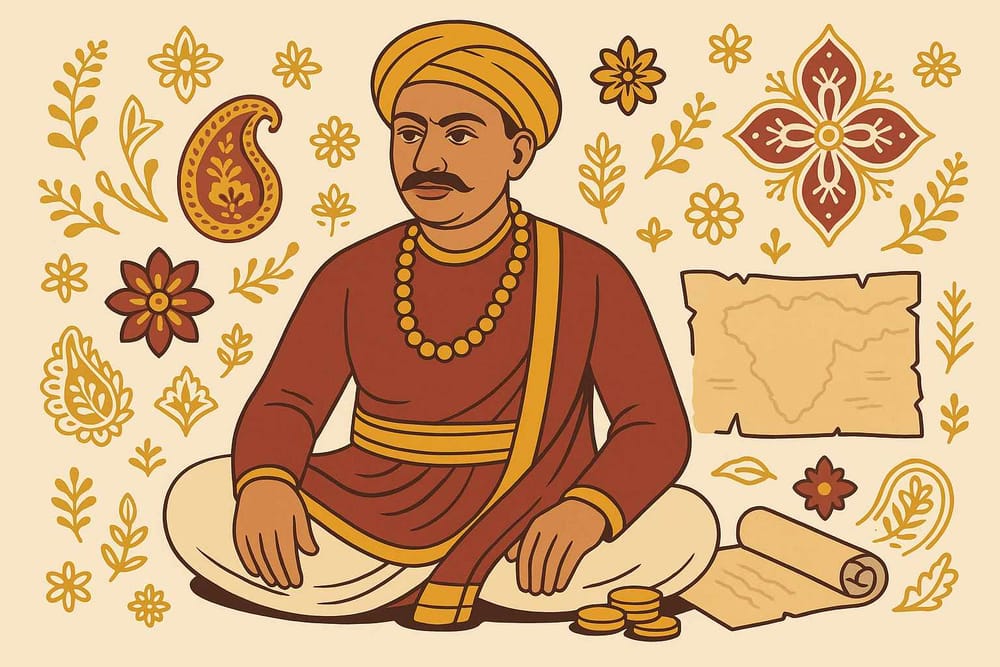
Unveiling the Legacy-Dewan Purnaiah's Impact Explained
Walk through the historic lanes of Mysore, and you can almost feel the echoes of the past. It’s a city built not just with bricks and mortar, but with the vision and sweat of extraordinary individuals. Among these giants, one name stands out, not as a king, but as the kingmaker and the silent architect of the kingdom's resilience—Dewan Purnaiah. His story isn't just a chapter in a history book; it's a powerful lesson in leadership, diplomacy, and unwavering dedication that feels incredibly relevant even today.
From Humble Beginnings to a Kingdom's Pillar
Every great story has a simple start. Purnaiah (1746 – 1812) wasn't born into royalty. He hailed from the Tanjore region, a young boy with a sharp mind and an uncanny gift for languages. Being fluent in Tamil, Kannada, and several other languages, his intellect became his greatest asset. It was this brilliance that caught the eye of the rulers of Mysore, first Hyder Ali and then the legendary Tipu Sultan. They saw in him not just an accountant, but a man of profound wisdom and integrity.
Under Tipu Sultan, Purnaiah was entrusted with the kingdom's finances. Imagine the pressure during the tumultuous Anglo-Mysore Wars! Yet, he navigated these stormy seas with remarkable calm, ensuring the state remained stable. His reliability was his trademark, earning him the complete trust of the Sultan and eventually elevating him to the highest administrative post: the Dewan of Mysore.
Crafting a Resilient Mysore: A Legacy of Reforms
So, what makes a leader truly great? It’s their ability to build systems that outlast them. This is where Dewan Purnaiah’s genius truly shone. He wasn't just managing the kingdom; he was reimagining it for a stronger future.
- Fairness in Finances: Purnaiah knew that a kingdom's strength lies in the happiness of its people. He completely restructured the revenue system, making taxation fairer for farmers while ensuring the state's treasury was healthy. He introduced meticulous land revenue records, bringing transparency to a process that was often murky. This wasn't just an administrative change; it was a move that built trust between the ruler and the ruled.
- Infrastructure for Prosperity: A visionary sees beyond the immediate. Purnaiah initiated massive public works projects. He commissioned the digging of canals and tanks to bring life-giving water to arid lands, a blessing for an agriculture-dependent society. These projects, even today, stand as a testament to his foresight. He understood that true wealth comes from empowering people to prosper.
- A Foundation of Justice: He also turned his attention to the judicial system, creating a framework where justice was not a privilege but a right. By modernizing the courts, he laid the groundwork for a progressive state where law and order were paramount.
The Diplomatic Tightrope Walk
Following the tragic death of Tipu Sultan, the Kingdom of Mysore was at a crossroads, facing the mighty British Empire. This was perhaps Purnaiah's finest hour. As a statesman, he had to perform a delicate balancing act. How did he protect Mysore's sovereignty during this era of intense colonial expansion? With incredible diplomatic skill.
He was the chief negotiator of the Treaty of Srirangapatna, a crucial agreement that allowed Mysore to continue as a princely state under the Wodeyar dynasty. He skillfully managed relationships with the British, the Marathas, and the Nizam of Hyderabad, playing a complex geopolitical game to safeguard his homeland's autonomy. His letters and negotiations reveal a man who understood power dynamics with crystal clarity, always keeping Mysore's interests at heart.
A Patron of Culture and Society
A leader's legacy isn't just in their politics or economics; it's also in the cultural soul they help nurture. Dewan Purnaiah was a great patron of arts, education, and social welfare. He generously released funds to temples, mathas, and even dargahs, showing a deep respect for all spiritual traditions. This inclusive approach helped foster a sense of harmony within Mysore's diverse population.
He actively supported Kannada literature and encouraged scholars, ensuring the region's rich heritage was preserved. This very spirit of preservation is what drives us at Bhaktilipi. Just as Purnaiah worked to protect the tangible and intangible heritage of his time, we are dedicated to safeguarding our timeless devotional literature for future generations. If you cherish these stories and traditions, explore our collection at Bhaktilipi.in, a space where heritage meets the digital age.
His vision for society was equally progressive. He championed education, believing that knowledge was the key to empowerment. His efforts helped create a foundation for intellectual growth in Mysore, a legacy that continues to benefit the state.
The Enduring Echo of Dewan Purnaiah
Today, Dewan Purnaiah's name is synonymous with wisdom and integrity. His life story is a reminder that leadership is not about power, but about service. The administrative methods he pioneered are, incredibly, still a guiding force in the region's governance. A museum is even being developed at his bungalow in Yelandur to celebrate his achievements and share his story with the world.
You might ask, what is the ultimate legacy Dewan Purnaiah left behind? It is the idea that with vision, strategy, and a deep love for one's people, it's possible to navigate even the most challenging times. He ensured that the legacy of great rulers and their impact on our culture would endure, a theme we explore further in our blog on how a Maharaja's legacy impacts modern culture. He remains a guiding star, a figure whose contributions are woven into the very fabric of Mysore, inspiring leaders to this day.
A passionate group of people dedicated to preserving India's knowledge of Dharma, Karma, and Bhakti for ourselves and the world 🙏.
Comments
Related in
Dewan Purnaiah's Legacy: Life and Impact Echo Through History
In the grand and vibrant story of India, some figures are not kings or warriors, but the silent pillars who hold up kingdoms. Their names might not be chanted in every household, but their impact is felt in the very soil and water of the land they served. One such
The Legacy of Dewan Purnaiah- Mysore's Diplomacy Defined
In the rich and grand story of India, some figures shine with a quiet brilliance, their contributions shaping the very destiny of a kingdom. One such remarkable soul is Dewan Purnaiah, a name that resonates with wisdom, integrity, and masterful statecraft in the history of Mysore. He wasn't

Dewan Purnaiah's Legacy: Explore Mysore's Historic Sites Today
Every time you wander through the grand avenues of Mysore, you can almost hear the echoes of history. The city isn't just made of palaces and gardens; it's built on the vision of extraordinary individuals. Among these giants, one name stands tall, not as a king,