
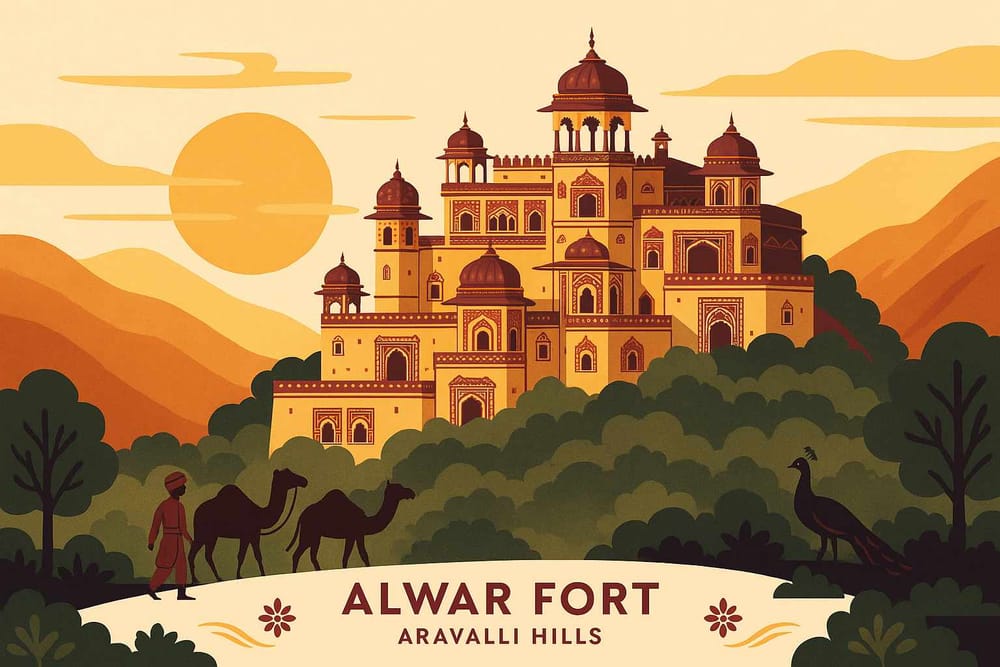
Unveiling Alwar State - A Historical Journey: Significance Explored
Imagine a land where the whispers of the Pandavas' exile still linger in the air, a place whose story stretches back an astonishing 3500 years. This isn't just a chapter from a history book; it's the living, breathing legacy of Alwar. Long before it became a celebrated princely state, this region was known as Matsya Desh, the very kingdom that gave refuge to the Pandavas during the final year of their exile. It's a place where every fort, every palace, and every winding bazaar has a story to tell—a story of courage, artistry, and a timeless spirit. Let's journey together through this remarkable land, uncovering the tales that shaped Alwar into the treasure it is today.
From Ancient Salwapur to a Rajput Kingdom
The story of Alwar's name is as fascinating as its history. Some believe it evolved from 'Salwapur', named after the ancient Salva tribe, while others trace it to Maharaja Alaghraj, who founded a city here in 1049 AD. Whatever its origins, the identity of Alwar as we know it was truly forged in the 18th century. As the mighty Mughal Empire began to fade, a brave Rajput adventurer of the Naruka clan, Rao Pratap Singh, carved out this kingdom in 1775. He was a visionary who saw potential in this strategic land, nestled between Delhi and Jaipur, and established a state that would soon become a prominent name in Rajputana.
Interestingly, Alwar holds a unique place in colonial history. In 1803, after the pivotal Battle of Laswari, it became the very first princely state in Rajputana to sign a treaty of ‘Offensive and Defensive Alliance’ with the British East India Company. This move showcased the sharp political acumen of its rulers, allowing them to maintain autonomy while navigating the complex power dynamics of the era.
A Tapestry of Culture and Architectural Grandeur
What makes Alwar's heritage so captivating? It’s the beautiful blend of Rajput and Mughal influences that you can see, feel, and even taste. This cultural fusion is most evident in its stunning architectural marvels.
- Bala Qila (Alwar Fort): This is not just a fort; it's a silent sentinel perched atop a hill, watching over the city for centuries. Its massive ramparts and intricate gateways tell stories of countless battles and royal processions. Exploring its vast expanse feels like stepping back into an era of kings and warriors.
- City Palace (Vinay Vilas Mahal): A breathtaking example of Indo-Islamic architecture, the City Palace is a treasure trove of art and history. Inside, you’ll find a museum filled with rare manuscripts, magnificent miniature paintings, and the personal weapons of Rajput rulers. It’s a living testament to the refined tastes and artistic patronage of Alwar's maharajas.
- Moosi Maharani ki Chhatri: This elegant cenotaph, with its distinctive red sandstone base and pristine white marble upper storey, is a poignant memorial to Maharaja Bakhtawar Singh and his queen, Rani Moosi. The intricate carvings depicting scenes from mythology are simply mesmerizing and reflect a deep spiritual connection.
The artistic soul of Alwar extends beyond its monuments. The state is famous for its miniature paintings, a delicate art form that flourished under royal patronage. And of course, no mention of Alwar is complete without its famous sweet, the Kalakand. This rich, milky delicacy, which originated right here, is a flavour that carries the essence of Alwar's heritage.
Pivotal Moments and the Dawn of a New Era
Under rulers like the visionary Maharaja Jai Singh and the steadfast Maharaja Tej Singh, Alwar saw significant progress. They weren't just warriors; they were administrators who introduced reforms in education, law, and infrastructure, laying the groundwork for a modern state. The kingdom played a crucial role in the region's politics, navigating through turbulent times like the Anglo-Maratha wars and the 1857 revolt.
After India gained independence, Alwar embraced a new destiny. On March 18, 1948, it merged with its neighbours—Bharatpur, Dholpur, and Karauli—to form the Matsya Union, with Alwar proudly serving as its capital. A year later, on May 15, 1949, this union became part of the newly formed state of Rajasthan, marking the end of its journey as a princely state and the beginning of its chapter in modern India.
Experiencing Alwar in the Present Day
Today, Alwar offers a journey that beautifully marries history with nature. For anyone wanting to explore the grandeur of Rajputana beyond the usual tourist trails, Alwar is a hidden gem. It offers a more intimate glimpse into history, much like the historic sites of Udaipur, another jewel of Rajasthan, where every stone tells a story.
The famous Sariska Tiger Reserve, once the hunting grounds of the maharajas, is now a sanctuary where wildlife roams free against the backdrop of ancient ruins and temples. A visit here is a powerful reminder of the harmony between nature and heritage. For those seeking spiritual solace, the ancient Neelkanth Temple, with its intricate stone carvings, offers a tranquil retreat.
To truly feel the pulse of the city, take a walk through its bustling bazaars. The vibrant colours of traditional textiles, the shimmer of handcrafted jewellery, and the lively chatter of local artisans make for an unforgettable experience.
Reflecting on Alwar's Enduring Legacy
Alwar’s story is a powerful testament to the resilience and richness of Indian culture. It’s a place where tales of valour are etched into majestic forts and where spiritual traditions continue to thrive. Visiting Alwar is more than just a trip; it’s an opportunity to connect with a glorious past and appreciate the incredible tapestry of our nation's history. It reminds us of the importance of preserving these stories and monuments for the generations to come.
At Bhaktilipi, our mission is to keep such timeless stories alive. We believe that by understanding our past, we enrich our present. We are dedicated to collecting, digitizing, and sharing the devotional literature and cultural narratives that form the bedrock of our heritage. If you feel a connection to these stories of faith, valour, and tradition, we invite you to explore our collection. Discover rare texts and inspiring tales that resonate with the spirit of India on Bhaktilipi.in.
Stay connected with our journey of preservation and discovery. Follow us on social media for regular updates, beautiful insights, and a deeper connection to our roots:
- Facebook: BhaktilipiOfficial
Join our community for daily inspiration and stories from India's vast spiritual landscape. - Instagram: @bhakti_lipi
Experience the visual beauty of our culture through stunning imagery and thought-provoking quotes. - YouTube: @Bhaktilipi
Watch engaging videos that bring ancient stories and devotional literature to life.
A passionate group of people dedicated to preserving India's knowledge of Dharma, Karma, and Bhakti for ourselves and the world 🙏.
Comments
Related in
अलवर राज्य का इतिहास और विरासत: एक विस्तृत अध्ययन
कभी आपने किसी ऐसी जगह पर कदम रखा है, जहाँ हवाओं में सिर्फ ठंडक नहीं, बल्कि गुज़रे ज़माने की कहानियाँ घुली हों? जहाँ हर किला, हर महल, और हर झील आपसे बातें करती सी
The Royal Legacy- Alwar State History Explained
Sometimes, when you stand amidst the rugged Aravalli Hills, a gentle breeze whispers tales from centuries ago. It’s a feeling many of us seek—a connection to our roots, to the stories that have shaped our land. In Alwar, Rajasthan, these whispers turn into a grand symphony of valour,