Tribal Cultures of Southern India-Kerala & Karnataka Tribes Today
Sometimes, if you listen closely in the dense forests of the Western Ghats, you can hear stories that are older than the rivers. These are the stories of India's Adivasi communities, the original keepers of the land. In the lush green expanses of Kerala and the ancient hills of Karnataka, these indigenous groups hold a treasure of traditions, a way of life that is deeply woven into the fabric of nature. It’s a world far from our bustling cities, a world where every tree has a spirit and every ritual has a meaning. Let's take a heartfelt journey to understand the lives and heritage of these remarkable people.
Kerala's Forest Keepers: A Glimpse into Their World
Kerala, lovingly called 'God's Own Country', is home to over 35 distinct tribal communities. These aren't just numbers; they represent unique cultural tapestries. With a tribal population of nearly 5 lakh people, concentrated heavily in districts like Wayanad and Idukki, their presence is the very soul of the state's natural heritage.
- The Paniya Community: Imagine working in the paddy fields, your hands in the earth, singing songs that your ancestors sang. This is the life of the Paniya people. Their folk music is not just for entertainment; it's a living archive of their history, their joys, and their struggles, echoing through the fields with every harvest.
- The Kurichiyas: Known for their martial legacy and incredible skill in Kalari Payattu, the Kurichiyas carry an aura of discipline and strength. They are not just warriors of the past but also expert farmers, cultivating spices that find their way into our kitchens. Their traditions are a beautiful blend of reverence for their ancestors and the land they cultivate.
- The Kattunaikka Tribe: Their name literally means 'kings of the forest', and they live up to it every single day. As masters of honey collection, their knowledge of the forest is profound. They understand the secret language of the bees and the trees, practicing a sustainable existence that we can all learn from.
- The Muthuvan Tribe: Tucked away in some of Kerala's most remote parts, like the Edamalakkudy panchayat, the Muthuvan community lives a life that carefully balances ancient customs with the inevitable touch of modernity. Their vibrant festivals are a sight to behold, a powerful expression of their spiritual connection to the natural world.
Their art, from intricate bamboo crafts to mural paintings, is a direct reflection of their environment. Yet, these communities face the silent struggle of preserving their identity against the tide of modernization and shrinking forests.
The Heartbeat of Karnataka: Echoes of Ancestral Traditions
Karnataka's tribal population, numbering over 42 lakh, forms a vital part of the state's rich cultural mosaic. From the misty hills of Kodagu to the forests of Chamarajanagar, these communities are the guardians of ancestral wisdom and ecological balance. Their contributions are a key part of what makes up Karnataka's cultural heritage, a story often intertwined with the state's grand history, including the influence of its royal heritage that shaped its cultural landscape.
- The Soliga Tribe: For the Soligas, the forest is their temple. They are known for protecting sacred groves, which are biodiversity hotspots, and they live in complete harmony with nature. Their philosophy is simple yet profound: take only what you need, and always give back to the forest that sustains you.
- The Jenukuruba Tribe: As expert honey gatherers (Jenu means honey), this community possesses a deep, intuitive knowledge of medicinal plants and herbs. This wisdom, passed down through generations, makes them the original healers of the forest, holding remedies that modern science is only beginning to understand.
- The Siddi Community: A truly unique thread in Karnataka's cultural fabric, the Siddi people have African origins. Their history is a testament to resilience and adaptation. Their culture, a beautiful blend of African traditions and local customs, adds an incredible, distinct flavour to the state's diversity.
Art, Food, and Soul: The Expressions of Adivasi Life
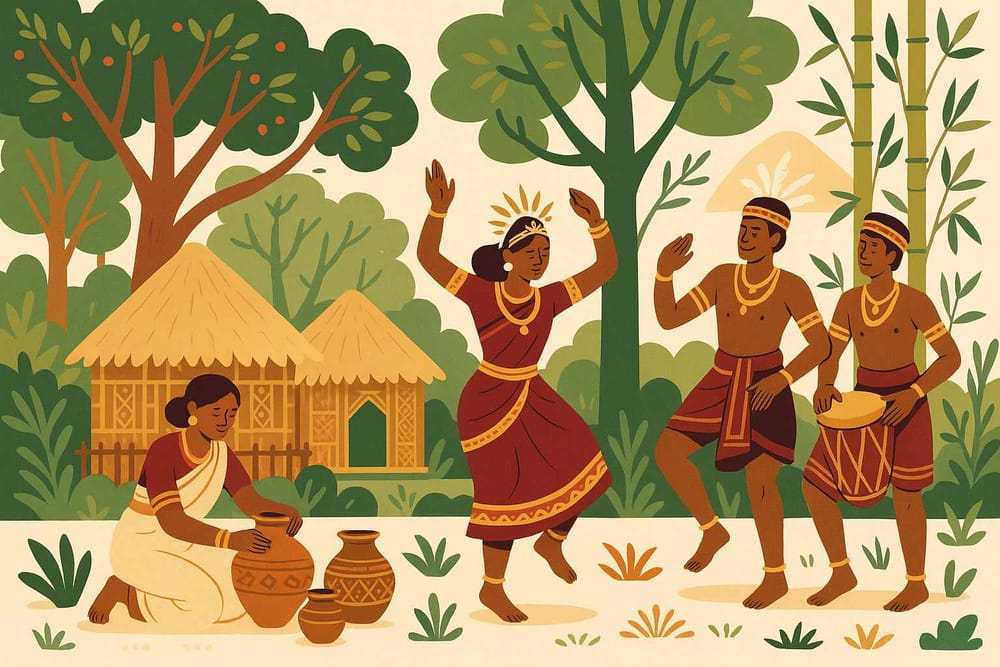
For these communities, art is not separate from life; it is a part of their very being. The stunning embroidery of the Toda women tells stories of the flora and fauna of the Nilgiris. The rhythmic and powerful beats of the Dollu Kunitha dance in Karnataka are not just a performance but a celebration of community spirit.
Their cuisine is a lesson in sustainability. Dishes made from millets, wild tubers, forest fruits, and locally grown spices are not only healthy but also reflect a lifestyle that is in perfect sync with the seasons. It’s food that nourishes the body and respects the earth.
Challenges, Resilience, and a Hope for the Future
It would be wrong to only romanticise their lives. These communities face very real challenges. The threat of losing their ancestral lands, the erosion of their unique languages and culture, and a lack of access to good education and healthcare are constant struggles. Deforestation and urban expansion often push them to the margins.
But there is hope. Government initiatives like the Forest Rights Act aim to empower them by giving them rights over their land. Organisations are working to document their oral traditions and create new opportunities through skill development and responsible tourism, like community-run homestays. By supporting these efforts, we can help them not just survive, but thrive.
About Bhaktilipi’s Mission
At Bhaktilipi, we believe in the power of preservation. Just as these communities are the keepers of ancient oral traditions and natural wisdom, our mission is to preserve the timeless devotional literature of India. We digitize and share these sacred texts, ensuring that the wisdom of our saints and sages remains accessible for generations to come. Exploring stories like the Tribal Cultures of Southern India helps us all connect back to the diverse and profound roots of our land.
To continue this journey with us, you can subscribe to our newsletter here. And for daily inspiration, follow our updates on Facebook, Instagram, or YouTube.
Curious Minds Often Ask About Southern India's Tribes...
Could you tell me more about the main tribal communities found in Kerala?
Of course. Kerala is blessed with a rich tribal presence. Some of the major communities you'll hear about are the Paniyas, who are deeply connected to agriculture; the Kurichiyas, known for their martial history; the Kattunaikkans or 'forest kings'; and the Irulas. They predominantly live in the forested and hilly districts like Wayanad, Idukki, and Palakkad, which provide the natural environment their way of life depends on.
What makes the Wayanad region so special for tribal culture?
Wayanad is truly the heartland of tribal culture in Kerala, as it has the state's largest Adivasi population. The region's dense forests, rolling hills, and remote geography have allowed communities like the Paniyas, Kurumas, and Kattunaikkans to maintain their unique traditions and live in close harmony with nature, away from heavy urban influence.
And what about the prominent tribal groups in Karnataka?
Karnataka's tribal landscape is equally diverse. You'll find communities like the Soligas, who are protectors of the forests in areas like Chamarajanagar; the Jenukurubas, known for their honey-gathering skills; and the Koragas. These groups are mainly concentrated in regions like Kodagu, Mysuru, and Uttara Kannada, each adding a unique chapter to Karnataka's story.
How do these communities manage to keep their traditions alive today?
It's a beautiful process of passing the torch. Traditions are preserved through everyday practices – through their songs and dances, their sacred rituals, their sustainable farming methods, and most importantly, through the stories told by elders to the younger generation. Their deep, spiritual connection to nature is the anchor that keeps their culture alive and vibrant.
What are the biggest hurdles these communities face in modern times?
The challenges are significant. Many face the threat of displacement from their ancestral lands. Access to quality education, healthcare, and stable employment can be very limited. There is also a constant struggle to preserve their unique cultural identity and languages amidst the growing influence of mainstream society. Protecting their heritage and natural resources is a continuous concern for them.
A passionate group of people dedicated to preserving India's knowledge of Dharma, Karma, and Bhakti for ourselves and the world 🙏.