
The Sacred Legacy-Doul Govinda Temple-History Reveals
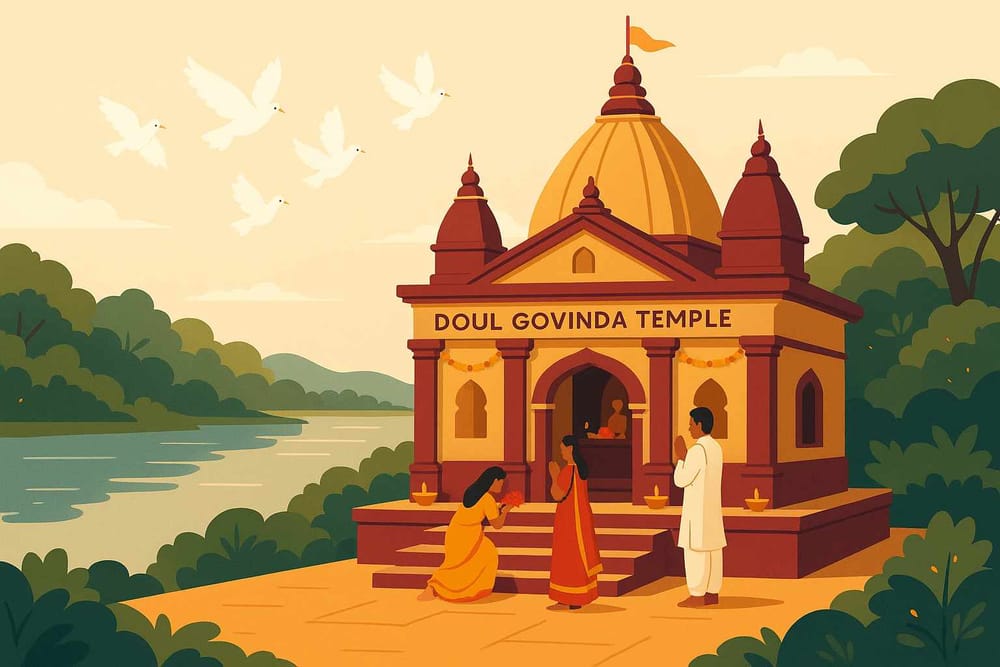
There are some places that you don't just visit; you feel them in your soul. For me, one such place is the Doul Govinda Temple. The journey itself is a spiritual prelude. As the ferry gently glides across the mighty Brahmaputra, leaving the bustle of Guwahati behind, a sense of calm takes over. And there, perched on the serene Chandra Bharati Hill in North Guwahati, you see it—a beacon of faith, radiating peace. This isn't just a temple; it's a living chapter of Assam's history, a place where devotion to Lord Krishna fills the very air you breathe.
The Miraculous Tale of the Temple's Origins
Every sacred place has a story that feels like it’s been passed down from a grandmother's lap, and the story of Doul Govinda Temple is truly special. It doesn't begin with kings and grand decrees, but with a simple, miraculous event that speaks volumes about divine will. The local legend tells of a Brahmin's cow that would wander off into the Sandhyasar forest and lovingly pour its milk over a particular bush every single day.
Intrigued by this strange and beautiful act, villagers dug at the spot and unearthed a magnificent idol of Lord Krishna. It was a devotee named Ganga Ram Barooah who, guided by his unwavering faith, brought this sacred idol to its current home on Chandra Bharati Hill. While the original structure is over 150 years old, the temple we see today was lovingly renovated in 1966, blending traditional Assamese design with modern touches, giving it the welcoming feel of a Vaishnavite *Namghar*.
Chandra Bharati Hill: A Divine Abode by the River
Why this particular hill? One feels the answer as soon as you step on its sacred ground. Chandrabharti Hill offers a breathtaking panorama of the Brahmaputra River, creating an atmosphere so pure and tranquil that your worldly worries seem to just melt away. The location itself feels chosen by the divine. The journey up the hill, with its gentle climb, is part of the pilgrimage, preparing your heart and mind for the darshan of Lord Govinda.
The spiritual landscape of Assam is blessed with such powerful centres of faith, each with its own unique story and energy, much like the historic Ugro Tara Temple in the heart of Guwahati. These sacred sites are the pillars of our culture, reminding us of the deep-rooted devotion that flows through this land, much like the Brahmaputra itself.
A Living Legacy of Faith and Festivals
The Doul Govinda Temple is far more than a historical monument; it's a vibrant, pulsating centre of faith. Its legacy is not just carved in stone but is celebrated every single day through its rituals and festivals.
- The Daily Rhythms of Devotion: The temple comes alive long before the sun rises. The day begins with the ceremonial bathing of the idol, followed by heartfelt prayers and the offering of *bhog*. The distribution of this *prasada* to the devotees is an experience in itself, a taste of divine blessing that nourishes both body and soul.
- Holi Like Never Before: If you truly want to see the temple in its full glory, you must visit during Holi. Here, the festival of colors, known as *Doul Utsav*, is not a one-day affair but a grand five-day celebration. Devotees from all corners of the country gather here, singing bhajans, dancing in spiritual ecstasy, and showering each other with vibrant colors. It’s a spectacle of pure joy and collective devotion, a memory that will stay with you forever.
Just as the Doul Govinda Temple stands as a guardian of Assamese Vaishnavite traditions, we at Bhaktilipi are committed to preserving and sharing these timeless stories of faith. Our platform is a digital space where you can connect with the heart of India's spiritual heritage.
At Bhaktilipi.in, we bring you authentic devotional literature and insights into our rich traditions, helping you deepen your connection to your roots with the convenience of today's technology. Explore our stories, understand the rituals, and keep the flame of tradition alive in your heart.
Honoring Our Sacred Heritage
The Doul Govinda Temple is a testament to unwavering faith that has bridged the past with the present. It welcomes everyone with open arms, offering a sanctuary for those seeking spiritual solace. Preserving such sacred spaces means we are cherishing the legacy of devotion that binds us as a community.
May the divine grace of Lord Govinda inspire us all and may this sacred legacy continue to guide generations to come.
Your Questions Answered: Exploring Doul Govinda Temple
What's the real story behind the temple's history?
The temple's history is a beautiful mix of legend and faith. It is believed to be over 150 years old, founded after an idol of Lord Krishna was miraculously discovered in a forest. It was brought to its current location by a devotee named Ganga Ram Barooah and has since become a cornerstone of Vaishnavite culture in Assam, deeply influenced by the teachings of Mahapurush Srimanta Sankardeva.
Who should be credited with building the temple?
The temple wasn't built by a single king but by the collective effort of devoted communities and local patrons, particularly influential zamindars of the region. Local artisans poured their skill and devotion into its construction, making it a true community-built sanctuary. The current structure was renovated in 1966.
Where exactly is the Doul Govinda Temple?
The temple is beautifully situated on Chandra Bharati Hill in North Guwahati, Assam, right on the northern banks of the majestic Brahmaputra River. Its serene and picturesque location away from the city's noise adds immensely to its divine atmosphere.
What makes the Doul Govinda Temple so important?
Its significance lies in it being a living center of faith for devotees of Lord Krishna. It’s not just a place of worship but a cultural hub that preserves and promotes Assamese Vaishnavite traditions. It is especially revered for its grand and joyous Holi celebrations, which attract thousands of pilgrims.
When is the best time to visit for festivals?
While the temple is a peaceful destination year-round, the absolute best time to visit is during the festival of Holi (Doul Utsav) in February-March. The five-day-long celebration is an unforgettable experience filled with vibrant colors, music, dance, and a powerful sense of community devotion.
Are there any specific daily rituals performed at the temple?
Yes, the temple follows a beautiful daily routine of rituals. This includes the ceremonial opening of the temple doors in the early morning, the bathing of the idol of Lord Krishna, regular prayers, offerings of *bhog* (food for the deity), and the distribution of *prasada* to all the devotees present.
A passionate group of people dedicated to preserving India's knowledge of Dharma, Karma, and Bhakti for ourselves and the world 🙏.
Comments
Related in
The Sacred History of Doul Govinda Temple: Royal Origins and Legacy
Imagine a gentle hill overlooking the majestic Brahmaputra, a place where a divine secret was once revealed not by a king's grand decree, but by the quiet devotion of a humble cow. This isn't just a story; it's the very soul of the Doul
Doul Govinda Temple FAQs: Get Answers Now
There are some places where you don't just go, you arrive. The journey itself becomes a part of the darshan. Imagine a gentle ferry ride, the vast, calming expanse of the Brahmaputra River around you, and the first glimpse of a serene temple nestled on the northern bank.
The Sacred Legacy: Doul Govinda Temple's History Emerges
Imagine standing on the gentle slopes of Chandra Bharati hill in North Guwahati, with the mighty Brahmaputra river flowing peacefully nearby. You can almost hear the soft chanting and the distant temple bells mingling with the river breeze. This is the feeling you get at the Doul Govinda Temple, a