
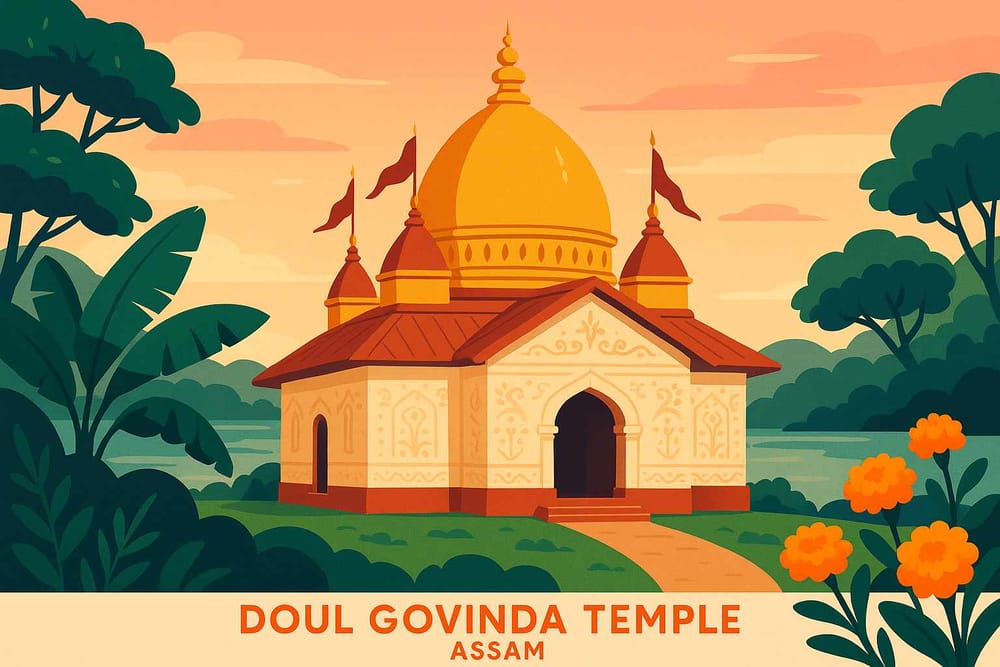
The Sacred History of Doul Govinda Temple-Origins and Significance Explained
There are some places in India that feel less like a destination and more like a homecoming for the soul. On the northern banks of the mighty Brahmaputra, nestled on a gentle hill in Guwahati, lies such a place – the Doul Govinda Temple. It’s a space where the air itself seems to hum with the sweet name of Krishna, and every glance offers a view that calms the heart. This isn't just a temple; it's a living, breathing testament to Assam's deep-rooted Vaishnavite traditions, a spiritual sanctuary for countless devotees who come seeking peace and connection.
The Divine Discovery: A Tale of Miraculous Origins
Every ancient temple has a story that feels like it’s been whispered down through generations, and the story of Doul Govinda is truly magical. The temple’s history isn’t found in dusty records but in a beautiful legend. It is said that many years ago, in the Sandhyasar forest, a Brahmin noticed his cow would wander off and lovingly pour its milk over a specific patch of *birina* grass every single day. Filled with curiosity, the villagers dug at the spot, and to their astonishment, they unearthed a beautiful idol of Lord Krishna.
This divine idol was then brought to its current home by a devout man named Ganga Ram Barooah, who installed it on the sacred Chandra Bharati Hill. The first structure was built over 150 years ago, but the temple we see today was lovingly renovated in 1966 with contributions from the community, blending traditional reverence with modern stability.
A Temple Built by Hearts: The Hands Behind the Shrine
One of the most beautiful things about the Doul Govinda Temple is that it wasn't built by a single king or wealthy patron. Instead, it feels like it was raised by the collective faith of a community. While the Ahom kings of Assam, known for their love of art and religion, certainly offered their patronage, the temple’s soul lies in the efforts of ordinary devotees and local communities.
- Community and Faith: The story of its founding, from the cowherd's discovery to the installation on the hill, is a celebration of community-driven faith. It reminds us that when devotion is pure, divine will finds a way through the hands of the people.
- Generations of Care: For centuries, the temple’s rituals and traditions have been carefully preserved and passed down through generations of custodians. This unbroken chain of devotion is what keeps the spiritual energy of the temple so vibrant and powerful.
Where Nature and Spirituality Meet
The temple's location on Chandra Bharati Hill is no accident. It offers breathtaking panoramic views of the Brahmaputra river and the lush green landscapes surrounding it. The gentle elevation creates a serene ambiance, perfect for quiet prayer and meditation, away from the hustle of daily life.
The journey to the temple itself is a part of the spiritual experience for many. Crossing the Brahmaputra by ferry, with the cool breeze on your face and the temple coming into view, feels like a pilgrimage in itself. The river, considered sacred in our culture, adds a profound layer of sanctity to the entire atmosphere.
Doul Utsav: When the Temple Dances in Colours of Joy
While the temple is a haven of peace year-round, during Holi, it transforms into a vibrant kaleidoscope of joy and devotion. The Doul Utsav here is not just a festival; it's a grand, five-day celebration that attracts thousands of people from all over Assam and beyond.
The air fills with the sounds of *bhajans* and *kirtans*, and the grounds are covered in a riot of colours as devotees play Holi with a spirit of pure delight and reverence for Lord Krishna. Beyond Holi, festivals like Janmashtami and Maghi Purnima are also celebrated with immense enthusiasm. Daily rituals, including the bathing of the deity and the offering of *bhog* (sacred food), which is later distributed as *prasadam*, ensure that the divine presence is honoured every single day.
Assam's spiritual heritage is incredibly rich and diverse. While Doul Govinda Temple is a cherished centre of Vaishnavism, the state is also home to powerful centres of Shakti worship. To understand this beautiful spiritual tapestry better, one can also explore the history of other significant shrines, like the sacred Ugratara Temple, another jewel in Guwahati's crown.
The Simple Grace of Assamese Architecture
The temple’s architecture is a beautiful reflection of traditional Assamese design—simple, elegant, and deeply connected to nature. It doesn't have towering gopurams or intricate carvings, but its humility is its strength. Inside the premises, you will find:
- The Sanctum Sanctorum (Garbhagriha): This is the heart of the temple, where the divine idol of Lord Krishna resides, adorned in beautiful silks and traditional Assamese ornaments. Its serene presence fills the entire space with a palpable energy.
- The Namghar: A quintessential feature of Assamese Vaishnavite culture, the *Namghar* or prayer hall provides a spacious area for community prayers, singing hymns, and holding religious discourses. It is a place where faith is shared and strengthened together.
A Final Thought
The Doul Govinda Temple is more than just a structure of brick and mortar. It is a symbol of enduring faith, a hub of culture, and a sanctuary of peace. Its story, rooted in a divine miracle and nurtured by community love, reminds us of the profound connection between humanity, nature, and the divine. Whether you come as a pilgrim seeking blessings or a traveller searching for tranquillity, this sacred abode of Lord Govinda welcomes you with open arms, leaving an everlasting impression on your heart.
About Bhaktilipi
© 2025 Bhaktilipi – Crafted with devotion. We at Bhaktilipi are dedicated to bringing you the timeless devotional literature and sacred stories that form the bedrock of our culture. We believe in preserving these traditions while making them accessible and inspiring for today’s generation.
Want to delve deeper into the stories that shape our faith? Discover the origins and significance of India's sacred temples on our platform. Gain insights that help you connect more deeply with your spiritual traditions. Explore more with Bhaktilipi.
Follow us for your daily dose of authentic devotional content:
Subscribe to our newsletter to stay informed about devotional stories, rituals, and sacred history.
A passionate group of people dedicated to preserving India's knowledge of Dharma, Karma, and Bhakti for ourselves and the world 🙏.
Comments
Related in
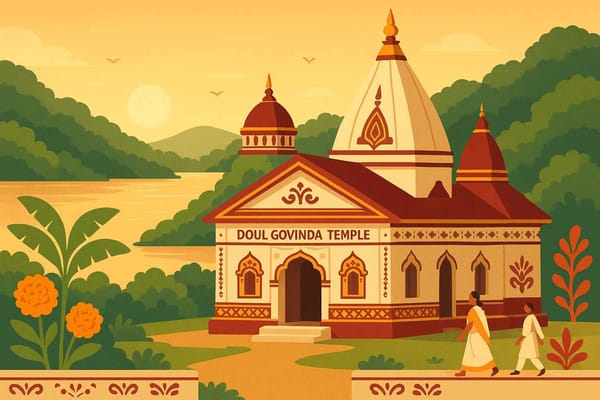
The Sacred History of Doul Govinda Temple: Royal Origins and Legacy
Imagine a gentle hill overlooking the majestic Brahmaputra, a place where a divine secret was once revealed not by a king's grand decree, but by the quiet devotion of a humble cow. This isn't just a story; it's the very soul of the Doul
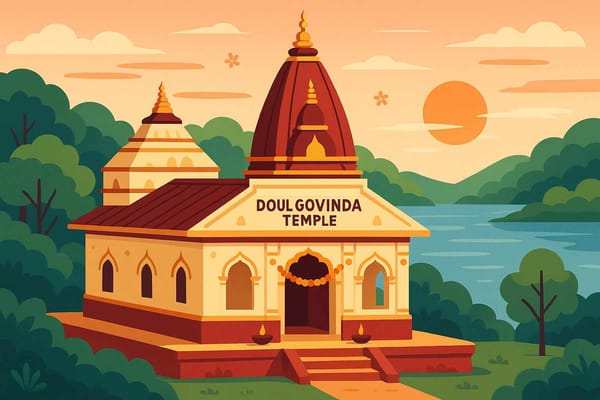
Doul Govinda Temple FAQs: Get Answers Now
There are some places where you don't just go, you arrive. The journey itself becomes a part of the darshan. Imagine a gentle ferry ride, the vast, calming expanse of the Brahmaputra River around you, and the first glimpse of a serene temple nestled on the northern bank.
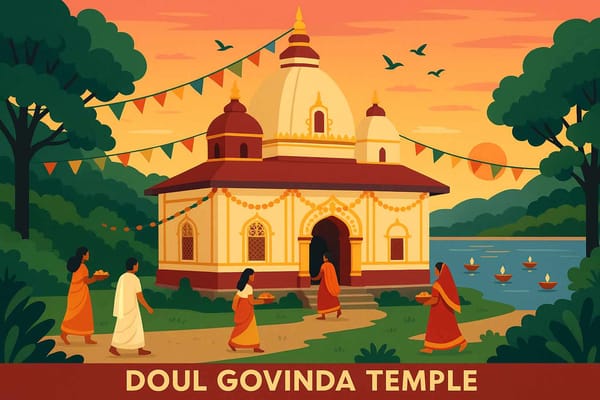
The Sacred Legacy: Doul Govinda Temple's History Emerges
Imagine standing on the gentle slopes of Chandra Bharati hill in North Guwahati, with the mighty Brahmaputra river flowing peacefully nearby. You can almost hear the soft chanting and the distant temple bells mingling with the river breeze. This is the feeling you get at the Doul Govinda Temple, a