
The Sacred History of Doul Govinda Temple-Kings and Devotion
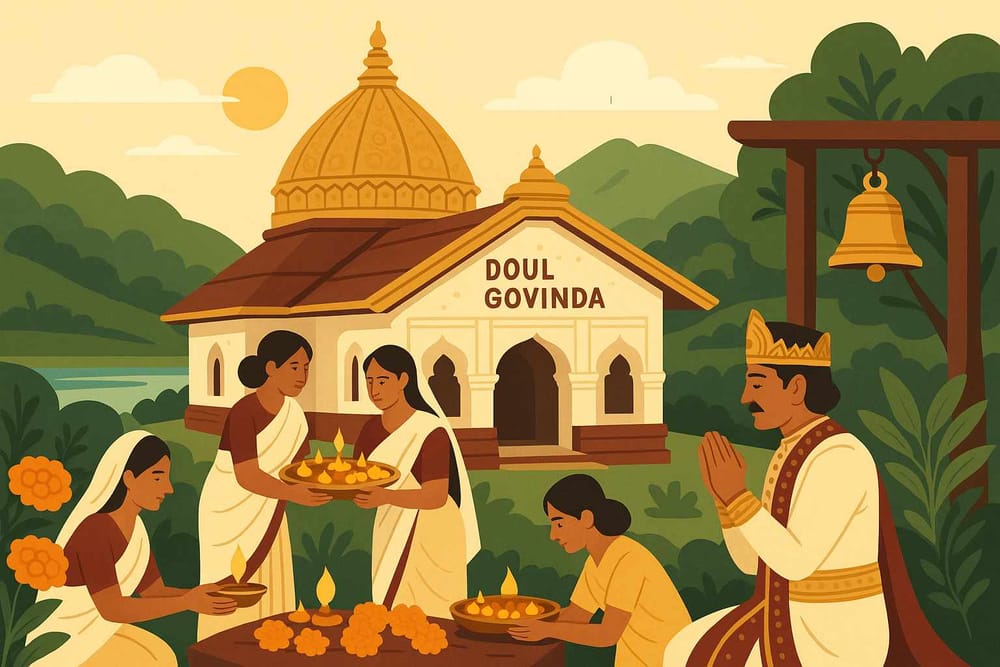
There are some places where you can feel the pulse of history and faith beating together in the very air you breathe. The Doul Govinda Temple, nestled peacefully on the northern banks of the mighty Brahmaputra in Guwahati, is one such sacred space. It’s more than just a temple; it’s a living story, a place where legends come alive, and where the devotion of generations has created an atmosphere of pure serenity and joy.
Looking at its tranquil setting, you can almost hear the whispers of ancient tales carried by the river's breeze. This isn't just a destination; it's an experience that connects you to something deeper, something timeless.
A Miraculous Beginning: How Lord Krishna Revealed Himself
The story of Doul Govinda doesn’t begin with kings and conquests, but with a simple, miraculous event that speaks volumes about divine grace. As local lore tells it, deep in the Sandhyasar forest, a cow would mysteriously wander off each day. Her owner noticed that she would stand over a particular patch of *birina* grass and pour out her milk, as if making an offering to the earth itself.
Curiosity turned to wonder, and when the villagers dug at that very spot, they unearthed a beautiful idol of Lord Krishna. It was a moment of pure magic, a sign that the Lord himself had chosen this land. Later, a devotee named Ganga Ram Barooah was divinely guided to bring this sacred idol from Sandhyasar and install it in Rajaduar, giving it the home it deserved.
Echoes of Royalty and the Power of the People
Many wonder about the kings who built the Doul Govinda Temple. While the original structure is over 150 years old, its story is woven with both royal history and the unwavering faith of the common people. The area itself, historically known as "Raja-dooar" or "the king's gate," hints at its importance during the reign of ancient Pala and Koch kings, serving as a gateway to the Brahmaputra for royalty.
However, the temple as we see it today holds a different, even more powerful legacy. It wasn't rebuilt with royal funds, but was beautifully renovated in 1966 through the collective efforts and donations of the public. This makes it a true "people's temple," a testament to a community united in its devotion to Lord Krishna. This spirit of collective ownership is a powerful force, much like the history embedded in other sacred sites across India, such as the ancient shrines and forts of Junagadh, where history and devotion are intertwined.
The Heartbeat of Devotion: Daily Rituals and Joyous Festivals
The moment you step into the Doul Govinda Temple complex, you feel a shift. The air hums with a gentle energy, a mix of reverence and celebration. The day begins with the sacred bathing of Lord Krishna's idol, followed by *archana* (offerings) and soulful prayers. In the evening, the temple comes alive with the glow of lamps and the sound of devotional songs during the *Arati*. Devotees offer *bhog* and *Thagi* (Sarai), simple acts of love that form the backbone of Vaishnavite tradition.
But to truly understand the temple's soul, you must experience its festivals.
- Doul Utsav (Holi): This is when the temple transforms into a carnival of faith. For five vibrant days in February-March, thousands of devotees flock here. Holi at Doul Govinda is not just about colours; it's an explosion of joy, with devotional music (holigeet), dancing, and a feeling of spiritual ecstasy that is simply unforgettable. It’s a sight that fills the heart and cleanses the soul.
- Janmashtami: The birth of Lord Krishna is celebrated with immense devotion and grandeur. The temple is decorated beautifully, and special prayers and cultural programs mark the occasion, drawing families from all over to seek the Lord's blessings. The divine energy is palpable, a feeling that resonates in powerful spiritual centres like the revered Ugro Tara Temple, where divinity feels incredibly close.
A Sanctuary of Peace and Culture
The temple's architecture is a beautiful reflection of Assamese craftsmanship, simple yet elegant, designed to focus the mind on the divine. The main sanctum, housing the radiant idol of Lord Krishna, is the spiritual heart of the temple. Surrounding it, the serene complex, which also includes a *Namghar* for community prayers, provides a tranquil space for reflection.
Being so close to the Brahmaputra adds a unique layer of peace to the atmosphere. Many visitors spend time by the riverbank, contemplating, praying, or simply soaking in the spiritual vibrations of the place. It’s this harmonious blend of nature, architecture, and unwavering faith that makes Doul Govinda so special.
This dedication to preserving tradition and creating sacred spaces for worship is a beautiful part of our culture. It reminds us how important it is to keep these practices alive in our own lives, with pure and authentic rituals. For those looking to bring this same sanctity into their homes, Bhaktilipi offers a thoughtful collection of puja essentials. Explore our range of idols, incense, and other sacred items at Bhaktilipi.in, crafted with the devotion your traditions deserve.
A Timeless Symbol of Faith and Heritage
The Doul Govinda Temple is far more than just a historic building; it is a living, breathing symbol of Assam’s spiritual heritage. It’s a place where the story of a miraculous discovery continues to inspire, where the efforts of a community are celebrated daily, and where the joyous spirit of Lord Krishna touches every visitor.
A visit here is a journey for the soul, a chance to connect with a timeless tradition of faith that flows as powerfully and eternally as the river beside it. It stands as a beautiful reminder that the most enduring temples are built not just with stone, but with love, faith, and devotion.
A passionate group of people dedicated to preserving India's knowledge of Dharma, Karma, and Bhakti for ourselves and the world 🙏.
Comments
Related in
The Sacred History of Doul Govinda Temple: Royal Origins and Legacy
Imagine a gentle hill overlooking the majestic Brahmaputra, a place where a divine secret was once revealed not by a king's grand decree, but by the quiet devotion of a humble cow. This isn't just a story; it's the very soul of the Doul
Doul Govinda Temple FAQs: Get Answers Now
There are some places where you don't just go, you arrive. The journey itself becomes a part of the darshan. Imagine a gentle ferry ride, the vast, calming expanse of the Brahmaputra River around you, and the first glimpse of a serene temple nestled on the northern bank.
The Sacred Legacy: Doul Govinda Temple's History Emerges
Imagine standing on the gentle slopes of Chandra Bharati hill in North Guwahati, with the mighty Brahmaputra river flowing peacefully nearby. You can almost hear the soft chanting and the distant temple bells mingling with the river breeze. This is the feeling you get at the Doul Govinda Temple, a