
The Sacred History and Significance of Doul Govinda Temple-A Guide
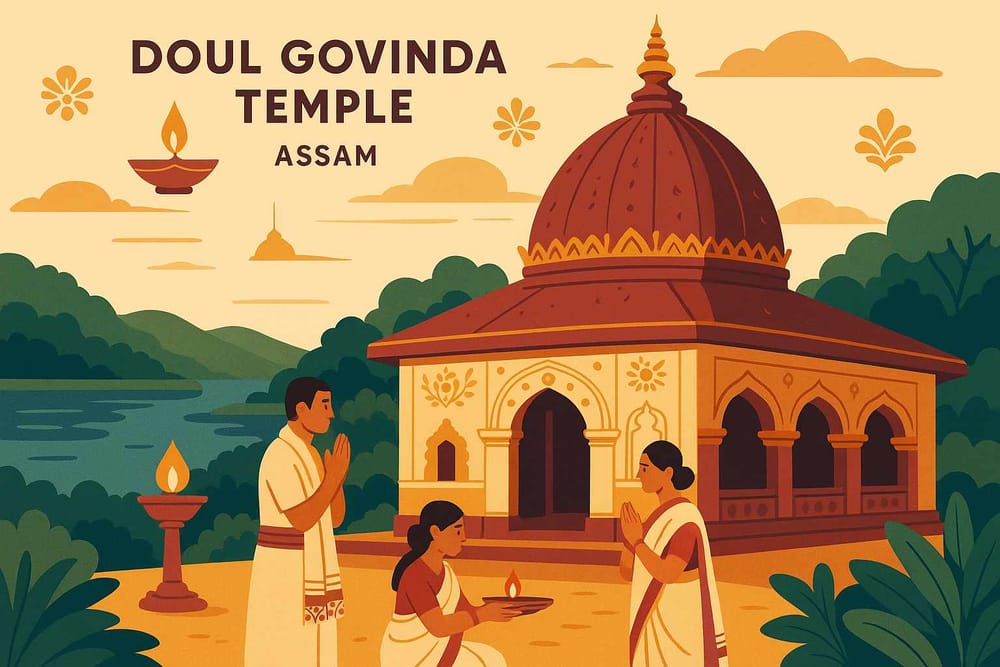
Imagine standing on the northern banks of the mighty Brahmaputra, the gentle breeze carrying whispers of ancient chants and the sweet scent of incense. Here, nestled in the serene embrace of the Chandrabharati hills in North Guwahati, lies the Doul Govinda Temple. This isn't just a structure of bricks and mortar; it's a living, breathing heart of faith, a place where generations have found solace and celebrated the divine play of Lord Krishna.
For countless devotees, this temple is more than a pilgrimage site; it’s a spiritual homecoming. It's where the vibrant energy of festivals mingles with quiet, personal moments of devotion. Let's take a journey together to explore the sacred stories, the deep-rooted traditions, and the divine beauty of this cherished Assamese landmark.
The Miraculous Story of Doul Govinda's Origins
Every sacred place has a story that feels like it’s been touched by the divine, and the Doul Govinda Temple is no exception. Its history, believed to be over two centuries old, isn't found in dusty archives but in the living heart of local legends. The story goes that a local cowherd noticed one of his cows would regularly wander off and pour its milk over a specific patch of *birina* grass.
Curious and astonished, the villagers decided to dig at that very spot. As they delved deeper into the earth, they unearthed a beautiful idol of Lord Krishna. It was a moment of pure magic and devotion. This sacred idol was then reverently installed by a devout man named Ganga Ram Barooah, laying the foundation for the temple we see today. The name itself tells a story: 'Doul' refers to the joyous festival of Holi, and 'Govinda' is, of course, our beloved Krishna, the protector of cows.
The Hands That Built a Sanctuary of Faith
When you ask who built the Doul Govinda Temple, the answer isn't a single name. It was built by the collective spirit of a community, fueled by unwavering devotion. While historical accounts suggest patronage from the Ahom kings, who were great supporters of art and religion, the temple is truly a "people's temple." It was raised and has been sustained by the contributions, big and small, of countless local families and devotees over the years.
The structure we see today, renovated in 1966, beautifully marries the traditional Assamese *Namghar* style with more modern elements. This blend reflects the temple's journey through time—holding onto its ancient roots while welcoming new generations of followers. It stands as a testament to what shared faith and community effort can create.
A Divine Setting: The Temple's Location and Surroundings
The location of the Doul Govinda Temple feels as though it was chosen by the divine itself. Perched at the foothills of the Chandrabharati hill in North Guwahati, it offers a breathtaking panoramic view of the Brahmaputra River. This river is not just a body of water in Assam; it's a symbol of purity, life, and divinity. The serene surroundings, filled with lush greenery and the gentle sounds of nature, create an atmosphere of profound peace.
This tranquil environment offers a perfect escape from the chaos of city life, allowing you to connect with yourself and a higher power. Getting here is also part of the experience. You can take a scenic ferry ride across the Brahmaputra or travel by road from Guwahati, each journey preparing your heart for the spiritual solace that awaits.
The Heartbeat of Faith: Rituals and Festivals
At Doul Govinda, faith is a vibrant, living thing. The air is always thick with devotion, especially during its festivals, which are celebrated with unparalleled fervor. The temple truly comes alive during these times.
- Doul Utsav (Holi): This is the temple's signature festival, and what a spectacle it is! Devotees from every corner of Assam and beyond gather here, their faces and clothes adorned with a kaleidoscope of colours. The sounds of *kirtans* and traditional music fill the air, as everyone celebrates Lord Krishna's divine love and playful spirit. It’s a celebration that dissolves all differences and unites everyone in pure, unadulterated joy.
- Janmashtami: The birth of Lord Krishna is celebrated with immense devotion and grandeur. The temple is decorated with twinkling lamps and fragrant flowers, creating a magical atmosphere. Devotees participate in night-long prayers, chanting, and listening to stories from Krishna's life. It’s a deeply spiritual experience that reaffirms one's faith and connection to the Lord.
- Daily Rituals: Beyond the grand festivals, the daily rituals form the spiritual backbone of the temple. Every day begins with the sacred bathing of the idol, followed by prayers and the offering of *bhog* (consecrated food) to the deity, which is then distributed among the devotees. This simple act of sharing sanctified food strengthens the sense of community and spiritual kinship.
The vibrant cultural life here is a beautiful reflection of Assam's spiritual heritage, much like other revered sites in the region. For instance, the history of the Ugratara Temple also reveals deep-rooted traditions that define Assam's spiritual landscape.
Your Questions Answered: Understanding Doul Govinda Temple
Many visitors and devotees are curious about the deeper aspects of this sacred place. Here are some common thoughts and their answers.
Many often wonder about the temple’s ancient roots and story.
The temple’s history is a beautiful blend of legend and faith, dating back more than 150-200 years. Its origin story is tied to the miraculous discovery of Lord Krishna’s idol after a cow was seen offering its milk at a specific spot. This divine event marks the beginning of the temple's sacred journey as a major centre for Vaishnavite traditions in Assam.
Was the temple built by a king or a specific person?
While patrons like the Ahom kings likely supported its growth, the Doul Govinda Temple is lovingly called a "people's temple." It was the collective effort, devotion, and contributions of the local community and devotees over many generations that truly built and have sustained this holy shrine. It is a monument built by faith itself.
Where exactly can one find this temple?
You'll find this serene spiritual haven in North Guwahati, Assam. It is beautifully situated on the northern bank of the Brahmaputra River, nestled at the base of the Chandrabharati hills, making it a place of both spiritual and natural beauty.
What makes the temple so significant for devotees?
Its significance lies not just in its age but in its role as a living hub of culture and faith. It’s a place where the teachings of Vaishnavism are practiced daily. During festivals, especially Doul Utsav (Holi), it becomes the spiritual epicenter of the region, attracting thousands who come to celebrate their devotion to Lord Krishna together.
What is the best time of year to plan a visit?
While the temple’s peaceful atmosphere can be enjoyed year-round, visiting during the Doul Utsav in spring is an unforgettable experience. The energy, colours, and collective joy are simply unparalleled. Janmashtami is another wonderful time to witness the temple in its full festive glory.
How does one travel to the temple?
Reaching the temple is quite convenient. It is well-connected by road from Guwahati city. Alternatively, many devotees prefer taking a ferry across the Brahmaputra River, which is a scenic and soulful journey in itself, preparing you for the tranquility of the temple.
A Timeless Beacon of Faith and Tradition
The Doul Govinda Temple is so much more than a destination; it's an experience that touches the soul. It is a place where faith is celebrated with joyous colours, where community is built over shared meals of *prasad*, and where the presence of Lord Krishna can be felt in the gentle flow of the Brahmaputra. It stands as a proud beacon of Assamese culture and the timeless power of devotion.
A visit here is a chance to reconnect with tradition, to find a moment of peace, and to witness the beautiful way faith continues to bind people together in love and celebration. It is a true sanctuary for the heart.
About Bhaktilipi
At Bhaktilipi, we believe that stories of faith and tradition are meant to be shared. We are dedicated to bringing you timeless devotional literature, the sacred histories of temples, and the meaning behind rituals in a way that resonates with today's world. Our mission is to be your trusted companion on your spiritual journey.
Why connect with Bhaktilipi? Because we help you dive deeper into the spiritual heritage of India. Whether it's understanding the significance of a place like Doul Govinda Temple or learning about other sacred traditions, we provide inspiring and well-researched content. Stay connected with your roots and enrich your spiritual life with us.
Subscribe to our YouTube channel, and follow us on Facebook and Instagram for your daily dose of devotion and inspiration. Let's explore the path of faith together.
© 2025 Bhaktilipi – Crafted with devotion.
A passionate group of people dedicated to preserving India's knowledge of Dharma, Karma, and Bhakti for ourselves and the world 🙏.
Comments
Related in
Doul Govinda Temple: History and Architecture Define Sacred Site
Imagine standing on a gentle hill, with the mighty Brahmaputra river flowing serenely below. A soft breeze carries the faint sound of temple bells, and a feeling of profound peace settles in your heart. This isn't just a dream; it's the everyday reality at the Doul
Doul Govinda Temple FAQs: Get Answers Now
There are some places where you don't just go, you arrive. The journey itself becomes a part of the darshan. Imagine a gentle ferry ride, the vast, calming expanse of the Brahmaputra River around you, and the first glimpse of a serene temple nestled on the northern bank.

Holi 2025 at Doul Govinda Temple-Guwahati: Your Complete Guide
There's a certain magic that fills the air in Assam as spring arrives. The gentle breeze carries the sweet scent of new blossoms and the faint, rhythmic sound of the khol and taal. On the northern bank of the mighty Brahmaputra, nestled on the Chandra Bharati Hill, lies