
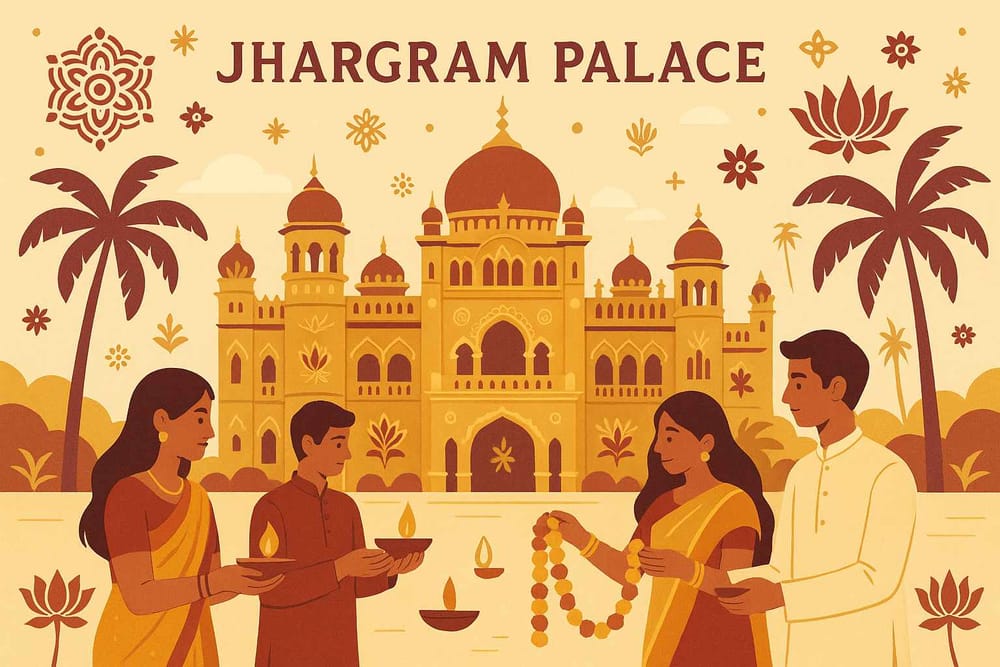
The Sacred Heart of the Palace - Jhargram's Traditions Explained
There are some places in our incredible India that feel less like destinations and more like living stories. Step into the heart of the "Jhar" (dense forest) and "Gram" (village) that is Jhargram, and you'll find one such story etched in stone and spirit – the magnificent Jhargram Palace, or Rajbari. It’s not just a building; it's a feeling, a whisper of a bygone era where royalty, tradition, and the deep-rooted faith of the local communities blend into a beautiful, seamless whole.
Imagine walking through its corridors, feeling the cool touch of the walls that have witnessed generations of the Malla Dev dynasty. This isn't just a visit; it's an experience that connects you to the very soul of West Bengal's rich heritage.
A Palace That Breathes History: The Architectural Soul of Jhargram
Built in 1922 under the watchful eye of Raja Narasingha Malla Dev Bahadur, the Jhargram Rajbari is a stunning masterpiece. It feels like a beautiful conversation between different worlds. You can see the grandeur of Italianate architecture blending flawlessly with the intricate elegance of Indo-Saracenic design. It’s a sight to behold!
The palace wasn't just built for show; it was designed for life. The sprawling courtyards were not empty spaces but arenas for grand ceremonies and intimate family gatherings. The lush gardens surrounding the palace have, for decades, echoed with the sounds of laughter and music during local celebrations. Today, a part of this majestic home has been lovingly converted into a heritage hotel, giving us a precious opportunity to experience this royal life, even if just for a little while.
The Spiritual Heartbeat of the Rajbari
What truly makes Jhargram Palace special is its deep spiritual core. It’s a place where devotion is woven into the very fabric of its existence. Within its grounds, you'll find a serene Radha Krishna temple, radiating peace and tranquility. The royal family has always been a guiding light for the community's faith, extending their patronage to revered temples like the nearby Chilkigarh Kanak Durga Temple.
During festivals like Durga Puja and Kali Puja, the palace transforms into a divine hub. The air thickens with the fragrance of incense and the sound of holy chants. It’s a heartwarming sight to see the entire community come together, their faces lit with devotion, participating in rituals led by the royal family. These are not just ceremonies; they are powerful threads connecting the present generation to their sacred roots.
A Tapestry of Culture: Royal Grace and Tribal Roots
Jhargram is a beautiful melting pot of cultures, where the traditions of indigenous communities like the Santhals, Mundas, and Kurmis are celebrated with immense pride. The palace has always acted as a guardian of this incredible diversity.
- A Stage for Timeless Arts: The palace is a champion of regional art forms. It provides a platform for the mesmerising Chhau Dance, a martial arts-infused storytelling form that originated in this very region. The annual fairs held here are a vibrant showcase of traditional crafts like Dokra art, soul-stirring music, and ancient stories passed down through generations.
- Celebrations that Unite Everyone: The spirit of Jhargram comes alive during festivals like Tusu Parab and Karam Puja. It’s a beautiful example of how royal traditions shape local celebrations, preserving heritage for everyone. The palace becomes a common ground where every member of the community feels a sense of belonging and shared identity.
The Enduring Legacy of the Malla Kings
The story of Jhargram is deeply connected to the Malla Dynasty, which began its journey here in 1592. To honour this rich past, a section of the palace has been thoughtfully turned into a Royal Heritage Museum. Walking through it is like turning the pages of a history book. You can see royal costumes, antique furniture, and old photographs that tell countless stories of a glorious era. It's a powerful reminder of how a maharaja's legacy impacts modern culture, leaving an indelible mark on the hearts and minds of the people.
Feeling inspired by these living traditions? Here at Bhaktilipi, we are dedicated to sharing such timeless devotional stories and cultural practices. We believe that understanding our heritage helps us navigate modern life with a deeper sense of connection and purpose.
Explore our platform to learn the beautiful "why" behind ancient rituals and how to bring their wisdom into your own life. We make it simple to stay connected with your roots. Subscribe to our YouTube channel for insightful videos, and follow us on Facebook and Instagram for your daily dose of inspiration!
Curiosities About Jhargram Palace Answered
What makes Jhargram Raj Mahal so unique?
Its uniqueness lies in its beautiful blend of architecture, the serene natural surroundings of the forest, and most importantly, the royal family's heartfelt dedication to preserving both royal and local tribal traditions. It's not just a monument; it’s a living, breathing cultural centre.
Can one truly experience royal life at the palace?
Absolutely! Since a part of the Jhargram Raj Prasad now functions as a heritage hotel, visitors have the wonderful opportunity to stay and immerse themselves in its regal past. It’s a chance to wake up to the history and hospitality that the palace is known for.
What are the key traditions to witness here?
If you get the chance, experiencing Durga Puja at the palace is unforgettable. The grand celebrations, combined with the unique blend of royal and tribal rituals, create a deeply spiritual and vibrant atmosphere that truly captures the essence of Jhargram.
Is the royal family still connected to the palace?
Yes, they are very much the heart of the palace. The Jhargram royal family continues to reside in a private section of the Rajbari, actively participating in the cultural and spiritual life of the community and ensuring their ancestral traditions are carried forward.
How old is this magnificent structure?
The palace you see today was constructed in 1922 by Raja Narasingha Malla Deb. For nearly a century, it has stood as a proud and enduring symbol of the region's rich history and cultural pride.
Embracing the Timeless Spirit of Jhargram
The traditions of Jhargram are more than just customs; they are the very heartbeat of a community that holds its culture close. Every ritual, every story, and every stone of the palace carries an essence of devotion and pride. To understand these customs is to connect with a shared past that inspires us to celebrate our own heritage today.
Let us cherish and uphold these beautiful traditions, ensuring that the timeless legacy of Jhargram continues to inspire and guide generations to come.
© 2025 Bhaktilipi – Crafted with devotion.
A passionate group of people dedicated to preserving India's knowledge of Dharma, Karma, and Bhakti for ourselves and the world 🙏.