
The Legacy of the Lion Capital: Why It Still Matters in India Today
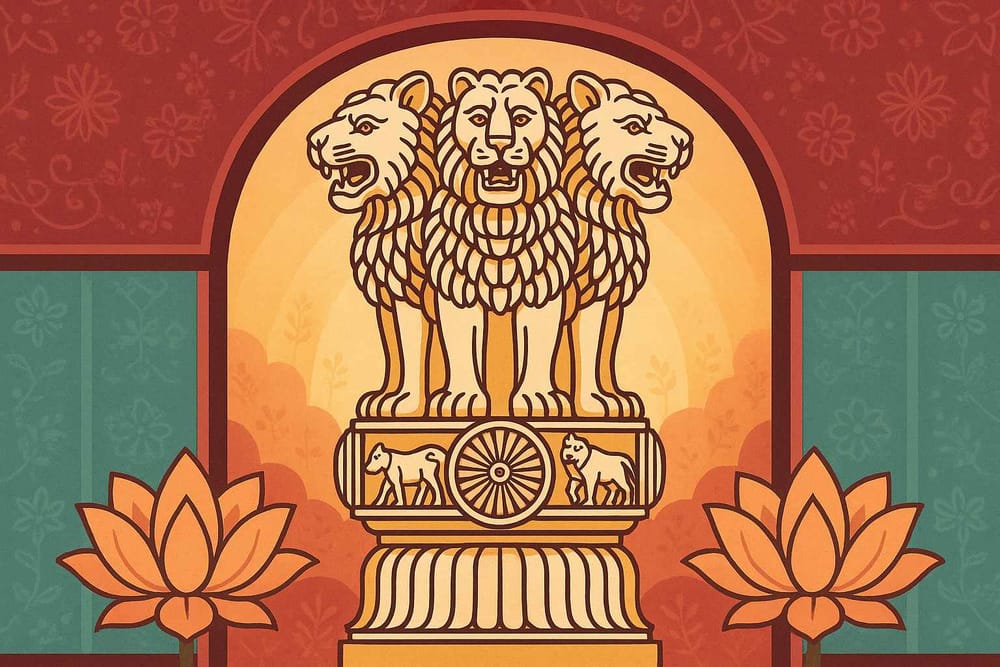
Every time I hold a crisp currency note or pass by a government building, my eyes are drawn to it—the four majestic lions, standing proud and resolute. This emblem is so familiar to us, a part of our daily lives, yet it holds within it a story that stretches back thousands of years. It’s more than just a symbol; it’s a connection to our roots, a reminder of a glorious past, and a beacon for our future. This is the story of the Lion Capital of Ashoka, a testament to India's enduring spirit.
A Journey Back in Time: The Birth of a Masterpiece
To truly understand this magnificent sculpture, we must travel back to the 3rd century BCE, to the era of the great Mauryan Emperor, Ashoka. After the heart-wrenching Kalinga War, Ashoka underwent a profound transformation, embracing Buddhism and dedicating his life to spreading dhamma—the path of righteousness, peace, and moral duty. He erected massive pillars across his empire, not as symbols of conquest, but as messengers of peace.
The most iconic of these pillars was placed at Sarnath, the sacred ground where Lord Buddha delivered his very first sermon. Crowning this pillar was the Lion Capital, exquisitely carved from a single block of polished sandstone by masterful Mauryan artisans. Its placement was no coincidence; it was a powerful statement, announcing the reign of peace and justice from the very place where the wheel of Dharma was first set in motion.
Decoding the Artistry: Every Carving Tells a Story
The Lion Capital is a marvel of symbolism, where every element has a deep, spiritual meaning. It’s not just a sculpture; it’s a complete philosophy etched in stone. To truly appreciate its beauty, one must understand the stories hidden within its form. Exploring the profound symbolism of the Ashokan emblem can offer a much deeper connection to our heritage.
- The Four Majestic Lions: Seated back-to-back, these Asiatic lions are the most prominent feature. They represent strength, courage, confidence, and pride. Facing the four cardinal directions, they are seen as broadcasting the message of Dharma to all corners of the world, a silent, powerful roar for eternity.
- The Circular Abacus: Below the lions rests a drum-shaped abacus, which features four animals separated by wheels. These animals—a galloping horse, a powerful bull, a majestic elephant, and a regal lion—are said to represent different stages of Buddha’s life or the four quarters of Ashoka's vast empire, signifying cosmic harmony and the interconnectedness of all life.
- The Dharma Chakra (Wheel of Law): The wheel, or Chakra, is a central symbol in Buddhist philosophy, representing the eternal cosmic order and the path to enlightenment. It is this very wheel, the Ashoka Chakra, that proudly sits at the heart of our Indian national flag today, reminding us to always move forward on the path of progress and righteousness.
- The Inverted Lotus: The entire structure rests on an inverted lotus flower, a powerful symbol in Indian culture. The lotus grows in muddy water yet blossoms into a beautiful flower, signifying purity, spiritual awakening, and detachment from worldly desires.
From an Ancient Pillar to the Heart of a Modern Nation
So, how did this ancient masterpiece become the face of modern India? When India stood on the threshold of independence, our leaders sought a symbol that would encapsulate the nation's spirit—a symbol of strength, tolerance, and justice. On January 26, 1950, the Lion Capital of Ashoka was officially adopted as the National Emblem of India.
It was chosen because it perfectly reflected the ideals of the newly born republic. The lions stood for a nation that was strong and courageous, yet committed to peace. Below the emblem, the words from the Mundaka Upanishad, “Satyameva Jayate” (Truth Alone Triumphs), were inscribed. This motto became the very soul of our nation's philosophy, a constant reminder of our commitment to truth and righteousness.
Today, this emblem is everywhere—on our passports, our coins, and official government documents. It serves as a constant, gentle reminder of our rich history and the timeless values our nation is built upon. For those who wish to witness its original grandeur, the Lion Capital is carefully preserved and displayed at the Sarnath Museum in Uttar Pradesh, standing as a silent witness to centuries of Indian history.
Understanding these deep-rooted symbols helps us connect more profoundly with who we are. At Bhaktilipi, we believe that exploring such timeless stories from our heritage is a beautiful way to enrich our modern lives. Our platform is a dedicated space where you can immerse yourself in India's spiritual and cultural narratives.
Explore Bhaktilipi.in for more devotional literature and stories that inspire and connect us to our roots.
A Legacy That Continues to Inspire
The Lion Capital of Ashoka is far more than just an ancient artifact; it is a living symbol of our collective identity and pride. It bridges the gap between the past and the present, connecting every Indian to the noble principles of Dharma, justice, and unity that Emperor Ashoka envisioned for his people.
It stands as a proud reminder that our nation's strength doesn't come from aggression, but from courage, confidence, and an unwavering commitment to truth. As it watches over our Parliament and travels in our pockets, it inspires us to uphold integrity and fairness in our own lives. By honouring this emblem, we ensure that these timeless values continue to guide and inspire generations to come, celebrating the true spirit of India—a nation deeply rooted in tradition, yet always looking forward with hope and strength.
Stay Connected with Our Heritage
We believe that tradition enriches life, and sharing this wisdom is our passion. Follow us on our social media channels to stay updated with inspiring content that celebrates our culture and devotion every day!
A passionate group of people dedicated to preserving India's knowledge of Dharma, Karma, and Bhakti for ourselves and the world 🙏.
Comments
Related in
Lion Capital of Ashoka-India's Heritage Explained
Have you ever held a coin in your hand or looked at your passport and truly seen the four lions seated majestically back-to-back? It’s a sight so familiar to us Indians, a part of our daily lives. But this isn't just a design; it's a
The Historical Significance of the Lion Capital of Ashoka: Understand its Enduring Legacy
There are some symbols that are etched into the very soul of a nation. For us in India, the Lion Capital of Ashoka is one such powerful emblem. We see it on our currency notes, on our passports, and on every official government letterhead. But have you ever paused to
The Significance of the Lion Capital of Ashoka: Explores Indian History
Have you ever paused for a moment, holding a currency note or looking at your passport, and truly looked at the four lions standing so majestically? That symbol, the Lion Capital of Ashoka, is something we see almost every day. But how often do we think about its story? It’