

The Legacy of Kumarapala: Chaulukya Dynasty's Impact Explained
Some stories from our past feel like they are etched not just in stone, but into the very soul of our land. They speak of a time when rulers were not just conquerors, but also protectors of dharma, patrons of art, and true servants of their people. When I think of such a leader, my mind often wanders to the sun-drenched plains of medieval Gujarat and to the remarkable reign of Kumarapala of the Chaulukya Dynasty. His story isn't just a chapter in a history book; it's a living lesson in how faith, when combined with strong governance, can create a golden era of peace and prosperity.
From a Throne of Thorns to an Empire of Stability
Kumarapala's journey to the throne around 1143 CE wasn't an easy one. He inherited a kingdom grappling with political uncertainty. But where others might have seen chaos, he saw an opportunity to build something lasting. He wasn't just a king by birthright; he proved to be a masterful strategist and a unifying force. With sharp political acumen, he consolidated his territories, extending Chaulukya influence far and wide, from the heart of Gujarat to parts of Rajasthan. His victories over powerful adversaries like the Chahamana king Arnoraja and the Paramara king Ballala weren't just about expanding borders; they were about bringing security and peace to the land, creating a sanctuary where trade, culture, and daily life could flourish without fear.
What truly set him apart was his administrative genius. He understood that a kingdom's strength lies in the well-being of its people. He introduced reforms that balanced the authority of the crown with the autonomy of local governance, ensuring that prosperity wasn't just confined to the royal court but reached every corner of his empire. This was the foundation upon which he built his legacy.
A Heart Transformed: The Spiritual Journey of a King
While his political achievements are noteworthy, the most touching part of Kumarapala's story is his profound spiritual transformation. Born into a Shaivite family, his life took a pivotal turn under the guidance of the great Jain scholar, Acharya Hemachandra. This was more than just a change of faith; it was a deep, personal awakening. He embraced the Jain principle of Ahimsa (non-violence) with his whole heart, and this conviction began to shape the very laws of his land.
Jain traditions tell us he promoted vegetarianism and placed restrictions on animal slaughter, a radical move for a king of that era. He became the last great royal patron of Jainism, commissioning hundreds of beautiful Kalpasutra manuscripts and establishing magnificent libraries in his capital, Patan, to spread knowledge and philosophy. Yet, his devotion to Jainism did not make him intolerant. He generously funded the restoration and construction of both Jain and Hindu temples, including the magnificent rebuilding of the Somnath temple, demonstrating a harmony of faiths that remains an inspiration.
Where Art and Architecture Reached for the Divine
A kingdom at peace is a kingdom where art can flourish. Kumarapala's reign became a golden age for culture. He was a great patron of the arts, and under his rule, the stunning Maru-Gurjara style of architecture blossomed. The temples and structures built during his time were not mere buildings; they were offerings to the divine, intricate stories carved in stone.
His court buzzed with intellectual energy, attracting scholars and artists from all over India. Literature, especially in Gujarati and Sanskrit, thrived. This era of cultural revival shows us that for a ruler to be truly great, they must nurture not just the body of the kingdom, but also its creative soul. To truly understand the depth of this period, one can explore the Chaulukya dynasty's influence in more detail.
The Enduring Echo of Kumarapala's Reign
So, what can we learn from a king who ruled centuries ago? Kumarapala's story teaches us that true power lies in compassion, that a kingdom's wealth is measured by its cultural and spiritual richness, and that a leader's greatest legacy is the harmony they foster. His life is a testament to how visionary leadership, rooted in deep-seated values, can leave a lasting mark on history.
Understanding the Vision of Kumarapala
Many who hear his story are curious about the specifics of his impact. A common thought is about Kumarapala's defining role within the Chaulukya Dynasty. He was truly its consolidator and most influential ruler, who not only expanded its territories but also fortified its administration, creating an era of unparalleled stability and cultural growth.
People also often ask about his religious contributions. Beyond personal faith, Kumarapala actively promoted Jain principles like non-violence across his kingdom. His support for scholars like Acharya Hemachandra and his commissioning of grand temples, like the one at Taranga, created a lasting spiritual and architectural heritage.
His reign is considered so significant in Indian history because it marked a perfect blend of prosperity, cultural efflorescence, and religious tolerance. He set a benchmark for good governance, showing that a powerful kingdom could be built on peace and ethical principles. The legacy of Kumarapala's rule continues to be a subject of fascination and respect, reminding us of this golden period.
Even though he faced his share of challenges, from internal rebellions to external threats, he overcame them with a steady hand, proving that stability is the soil in which a society blossoms. His emphasis on culture, education, and non-violence continues to inspire modern ideas of what makes a just and progressive society.
Preserving Stories That Shape Our Heritage
Reflecting on a legacy like Kumarapala's reminds us of the importance of preserving our rich past. At Bhaktilipi, we feel a deep connection to this cause. Our space is dedicated to exploring and safeguarding the timeless bhakti literature and stories that form the bedrock of our culture. We seek out rare and precious devotional works, ensuring they are not lost to time but remain accessible for everyone to experience.
By digitizing these texts, we create a bridge between our ancient heritage and our modern lives. It allows us to keep these traditions vibrant and alive. Just as Kumarapala supported scholars to preserve knowledge, we strive to be a humble part of that tradition in the digital age. We invite you to explore these stories and connect with India's profound spiritual heritage.
Stay inspired with us and receive updates on new resources by subscribing to our newsletter. You can also join our community on Facebook and Instagram, and watch our videos on our YouTube channel.
A passionate group of people dedicated to preserving India's knowledge of Dharma, Karma, and Bhakti for ourselves and the world 🙏.
Comments
Related in
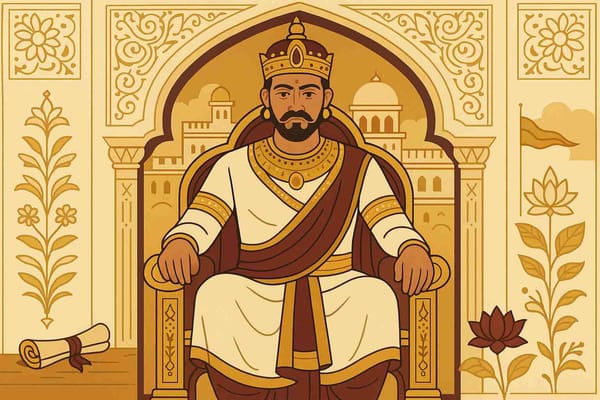
Kumarapala: Explores the Chaulukya Dynasty's Enduring Legacy
Every time you walk through the ancient temple complexes of Gujarat, have you ever felt the stories whispered by the stones? There’s a magic in our land, a history so rich that it feels alive even today. Much of this vibrancy, this deep-rooted culture of peace and artistry, can
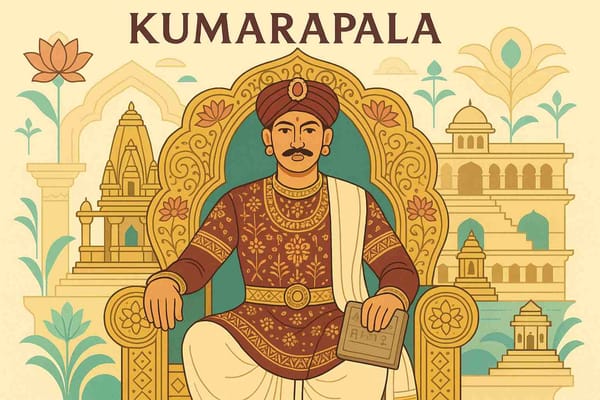
Kumarapala: Explores the Chaulukya Dynasty Legacy
In the grand tapestry of Indian history, there are tales of kings and kingdoms that shine a little brighter, not just for their power, but for their purpose. We often hear stories of an ideal rule, a 'Ram Rajya', where peace and prosperity embrace the land. It feels
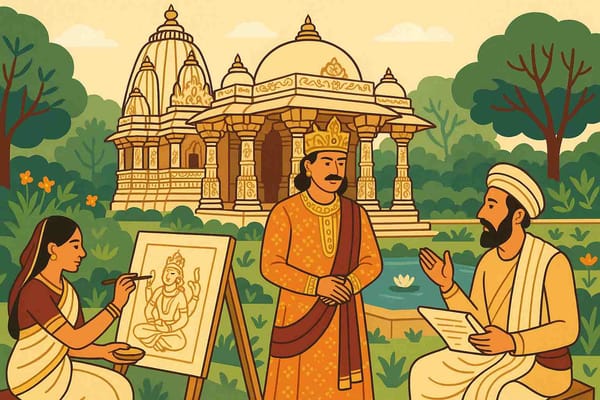
The Legacy of Kumarapala: Explores the Chaulukya Dynasty
When you wander through the historic landscapes of Gujarat, you can almost feel the echoes of time. The magnificent temples and ancient structures aren't just stone and mortar; they are storytellers. Among the countless tales they hold, the story of one king resonates with exceptional power—the tale