
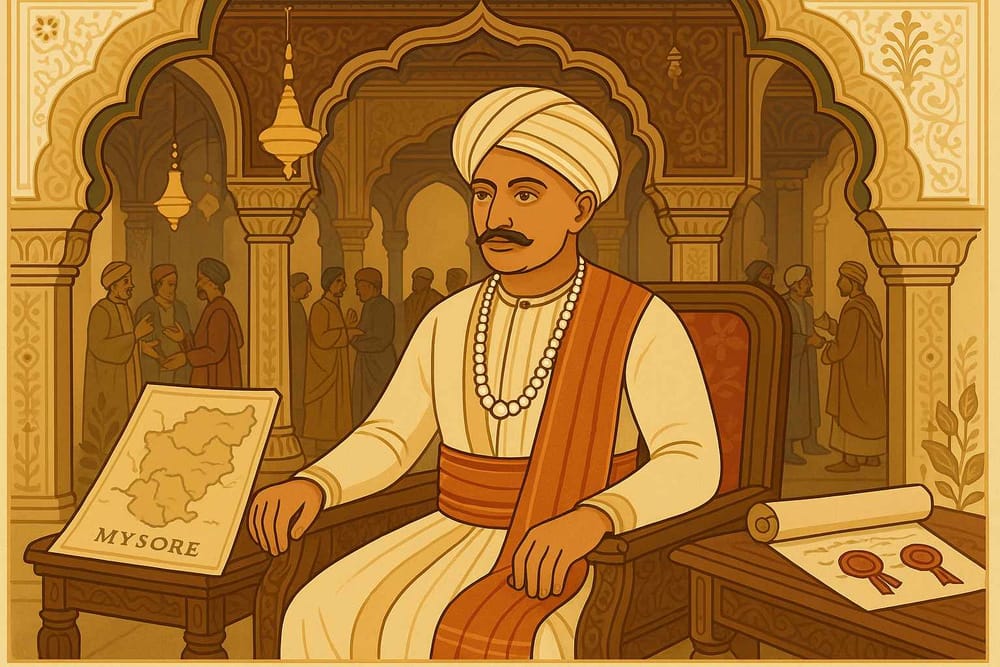
The Legacy of Dewan Purnaiah- Mysore's Diplomacy Defined
In the rich and grand story of India, some figures shine with a quiet brilliance, their contributions shaping the very destiny of a kingdom. One such remarkable soul is Dewan Purnaiah, a name that resonates with wisdom, integrity, and masterful statecraft in the history of Mysore. He wasn't just an administrator; he was the architect who took a kingdom shattered by war and carefully rebuilt it, brick by brick, into a beacon of prosperity and stability. Let's take a moment to journey back in time and understand the legacy of this incredible visionary.
From Humble Roots to a Kingdom's Pillar
Purnaiah's story begins not in a palace, but in a humble Brahmin family. His traditional education wasn't just about scriptures; it sharpened his mind, giving him a prodigious memory and an incredible knack for numbers. His journey into the heart of Mysore's administration started under the formidable Hyder Ali, where his sharp intellect and unwavering dedication quickly made him indispensable. His skills were so valued that he became a trusted advisor to Tipu Sultan, helping navigate the kingdom through some of its most turbulent years. He even played a crucial role in maintaining confidentiality around Hyder Ali's death, ensuring a smooth succession for Tipu Sultan.
After the fall of Tipu Sultan in 1799, the political landscape of Mysore changed dramatically. The British restored the Wodeyar dynasty, placing the young Krishnaraja Wodeyar III on the throne. The kingdom was in disarray, and it needed a steady hand to guide it back to strength. Who better than Purnaiah? Appointed as the first Dewan and Regent, he took on the monumental task of healing the state's wounds and charting a new course forward.
Steering Mysore Through Turbulent Waters
Imagine taking charge of a kingdom that had lost land, resources, and its leader. This was the challenge Purnaiah faced. The air was thick with uncertainty, and the British presence loomed large. Yet, with incredible diplomatic skill, Purnaiah managed a delicate balancing act. He maintained a cooperative relationship with the British East India Company while fiercely protecting Mysore's internal autonomy. His goal was simple yet profound: to give Mysore the peace and stability it needed to recover and thrive.
He focused on the basics—reviving agriculture, streamlining revenue collection, and ensuring the treasury was managed with utmost honesty. His leadership was the calm in the storm, allowing the kingdom to breathe and rebuild from the ground up.
A Legacy Carved in Governance and Progress
Purnaiah's tenure as Dewan is a masterclass in good governance. His reforms were not just policies on paper; they transformed the lives of ordinary people and laid the foundation for modern Mysore. His work touched every aspect of the state:
- Revolutionising Administration: Purnaiah knew that a strong state needs a strong system. He introduced a methodical approach to revenue by conducting detailed land surveys and clearly marking borders, which brought clarity and fairness. He created an organized structure of administrative posts like Shekdars, Amaldars, and Tahshildars—a framework whose principles can still be seen in the state's administration today.
- Building for the People: His vision went beyond spreadsheets and borders. He initiated incredible public works, including a nine-mile canal to bring precious drinking water to the city of Mysore. He also commissioned the construction of a beautiful stone bridge across the Kaveri River, connecting Srirangapattana and Kirangur, which boosted both agriculture and trade in the region.
- Nurturing Faith and Culture: A true statesman understands that a kingdom's soul lies in its culture and faith. Purnaiah reinstated financial allowances to temples, *mathas*, and even *dargahs*, which had been stopped during the years of conflict. He built numerous *choultries* (rest houses) to provide shelter for pilgrims and travellers, fostering a sense of harmony and preserving Mysore's deep-rooted cultural fabric.
Purnaiah’s model of governance created a ripple effect of stability, influencing even smaller principalities in the region. The intricate histories of these states, such as the Legacy of Sandur State, show how strong leadership in one kingdom could inspire order and progress in its neighbourhood.
This dedication to preserving our cultural and spiritual heritage is a value we hold very dear. At Bhaktilipi, we are committed to safeguarding the timeless devotional literature and stories that form the bedrock of our traditions. We believe that by understanding figures like Purnaiah, we gain deeper insights into the values that have shaped our culture for centuries.
Explore our collection of rare and digitised texts on Bhaktilipi.in and connect with the profound wisdom of our ancestors.
Frequently Asked Questions about Dewan Purnaiah
Many who hear his name are curious about the specifics of his incredible life and work. Let's explore some of the most common questions.
What exactly was Dewan Purnaiah's role in Mysore's administration?
Think of him as the prime minister or chief administrator of the Kingdom of Mysore. He was the most powerful figure after the monarch, responsible for everything from managing the state's finances and revenue to overseeing the military and conducting diplomacy. He served with distinction under Hyder Ali, Tipu Sultan, and then as Regent for the young Wodeyar king.
So, what makes him such a pivotal figure in Mysore's history?
Purnaiah is celebrated because he was the steadying force during one of Mysore's most chaotic periods. After years of war, he brought peace, stability, and prosperity back to the kingdom. His exceptional administrative skills and diplomatic foresight are the reasons the Wodeyar dynasty had such a strong foundation in the 19th century.
How did he manage to handle diplomacy so effectively in such a tense era?
His approach was a blend of pragmatism and wisdom. He understood the power of the British and knew that confrontation would be disastrous for Mysore. Instead, he maintained strategic and peaceful relations with them, all while safeguarding Mysore's interests. This masterful diplomacy protected the kingdom from external threats and allowed it to focus on internal growth.
Is it true he was closely associated with Tipu Sultan's reign?
Absolutely. Purnaiah was a key figure in Tipu Sultan's court, serving as his finance minister and trusted advisor. His administrative genius was crucial to the management of the kingdom's affairs during Tipu's rule. His ability to continue serving under the Wodeyars after Tipu's fall speaks volumes about his reputation and indispensability.
A Timeless Legacy of Leadership
Dewan Purnaiah’s story is more than just a chapter in a history book. It is a powerful lesson in integrity, visionary leadership, and selfless service. He showed the world that true strength lies not in aggression, but in wisdom, careful planning, and a deep commitment to the well-being of the people. His life's work ensured Mysore not only survived but flourished, becoming a model state admired for its governance and vibrant culture.
Today, as we look back, the legacy of Dewan Purnaiah continues to inspire. He reminds us that true leaders build bridges, nurture culture, and govern with a compassionate heart. He was, and remains, one of the brightest jewels in the crown of Mysore's history.
Stay Connected with Bhaktilipi
If stories of wisdom, devotion, and cultural heritage inspire you, Bhaktilipi is the space for you. We are dedicated to preserving and sharing timeless devotional literature and stories that enrich the soul. Connect with our community and continue your spiritual journey with us.
Subscribe to our newsletter or follow us on social media for authentic devotional content:
A passionate group of people dedicated to preserving India's knowledge of Dharma, Karma, and Bhakti for ourselves and the world 🙏.
Comments
Related in
Dewan Purnaiah's Legacy: Life and Impact Echo Through History
In the grand and vibrant story of India, some figures are not kings or warriors, but the silent pillars who hold up kingdoms. Their names might not be chanted in every household, but their impact is felt in the very soil and water of the land they served. One such

Dewan Purnaiah's Legacy: Explore Mysore's Historic Sites Today
Every time you wander through the grand avenues of Mysore, you can almost hear the echoes of history. The city isn't just made of palaces and gardens; it's built on the vision of extraordinary individuals. Among these giants, one name stands tall, not as a king,
Unveiling the Legacy-Dewan Purnaiah's Impact Explained
Walk through the historic lanes of Mysore, and you can almost feel the echoes of the past. It’s a city built not just with bricks and mortar, but with the vision and sweat of extraordinary individuals. Among these giants, one name stands out, not as a king, but as