
The Kushano-Sasanians- Explore the Empire's Secrets
Sometimes, the most fascinating stories of our motherland are not the ones we learn in school. We talk endlessly about the Mauryas, the Guptas, and the Mughals, but history has countless hidden chapters, tucked away in the sands of time. One such incredible tale is that of the Kushano-Sasanians, an empire that was born from the beautiful confluence of two mighty cultures: the Persian Sasanians and our very own Kushans.
Imagine a time, during the 3rd and 4th centuries, when the powerful Sasanian Empire from Persia looked eastwards. Here, the magnificent Kushan Empire was beginning to wane. In this moment of transition, a new power was born. This wasn't just a conquest; it was the start of a unique cultural dialogue that would shape the destiny of regions we now know as Afghanistan, Pakistan, and Northern India. This is their story.
A New Dawn in the East: The Rise of the Kushanshahs
The Kushano-Sasanian kingdom, also sometimes called the Indo-Sasanian kingdom, didn't just appear overnight. It was established when the Sasanian Empire, under powerful rulers like Ardashir I and Shapur I, expanded into the territories of Sogdia, Bactria, and Gandhara around 225 CE. The local Sasanian governors who ruled these lands took on the title "Kushanshah," meaning "King of the Kushans," a sign of deep respect for the legacy they were inheriting.
Great cities like Balkh and Gandhara became the beating hearts of this new empire. They weren't just administrative centres; they were melting pots of culture, commerce, and spirituality. While this new dynasty was finding its feet, it faced pressures from other rising powers, most notably the mighty Gupta Empire. Eventually, around the year 360 CE, invasions by the Kidarites marked the beginning of their end, but their legacy was already carved in stone. For a deeper dive into this fascinating period, you can read more about this forgotten era of history.
Where Two Worlds Carved Their Story in Stone
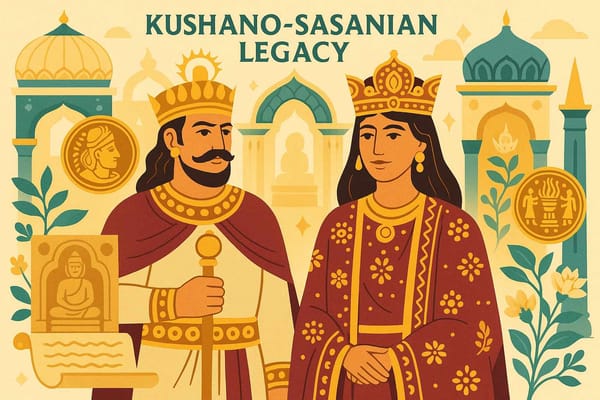
The true magic of the Kushano-Sasanians lies in their art. It’s here you can truly see the meeting of two worlds. Their coins, for instance, are like tiny canvases telling a grand story. On one side, you might see the proud, Iranian-style bust of a Sasanian ruler, and on the other, inscriptions in scripts like Brahmi and Pahlavi. It was a currency that spoke two languages, both literally and culturally.
Their architectural genius was no different. Temples, stupas, and entire city plans showed a seamless blend of grand Persian styles with intricate Indian craftsmanship. This was the golden age for Gandhara art, where Greco-Buddhist sculptures reached new heights. Imagine seeing the serene face of the Buddha, carved with a hint of Greek realism, adorned with motifs like lotus flowers and winged figures from Persian lore. These surviving artefacts aren’t just objects; they are whispers of a time when cultures embraced each other with open arms.
The Crossroads of the Ancient World
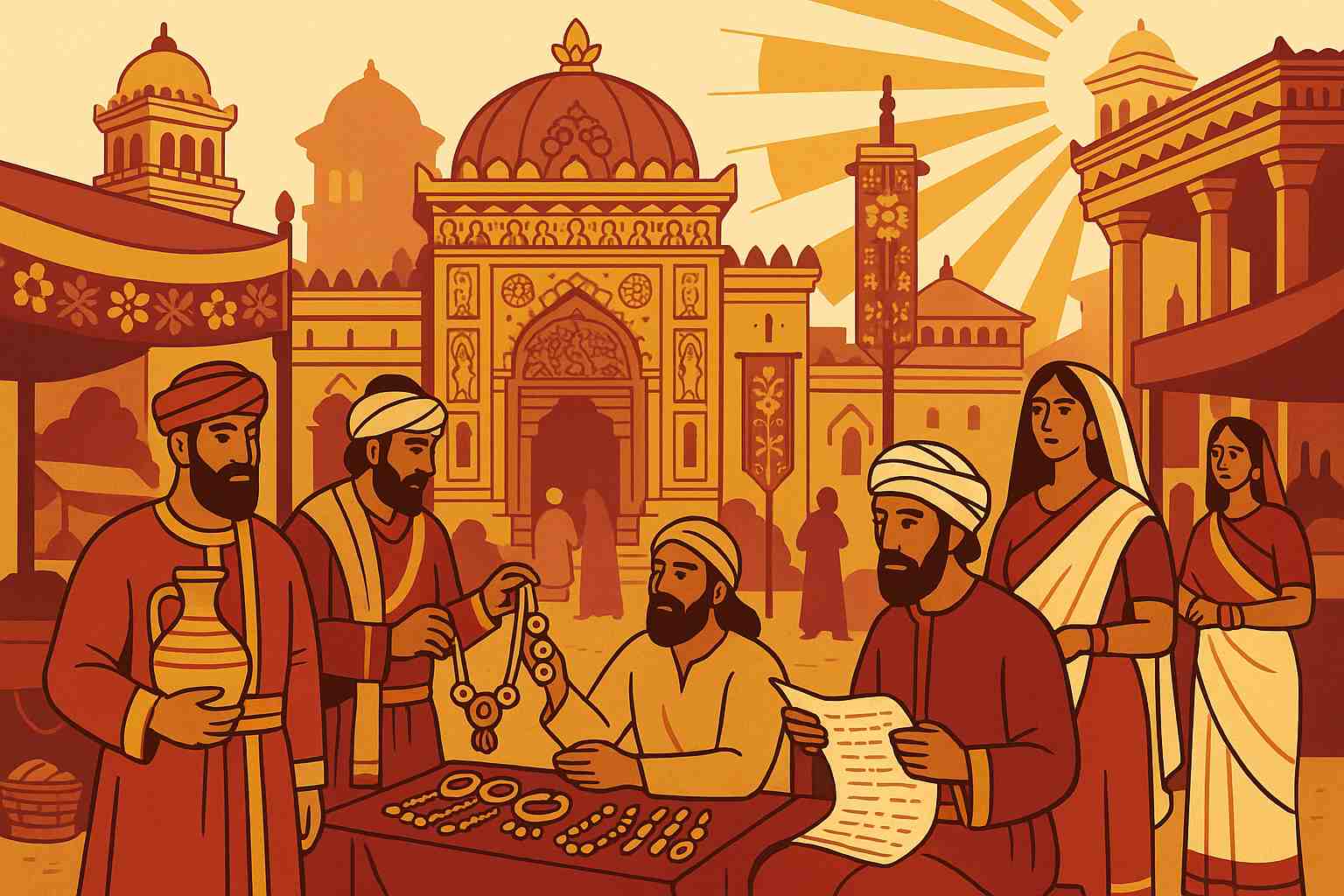
Positioned strategically along the lifeblood of ancient commerce, the Silk Road, the Kushano-Sasanian Empire was a bustling gateway between the East and the West. This wasn't just a trade route for goods; it was a highway for ideas, philosophies, and faith. Caravans laden with silk, fragrant spices, and precious metals passed through their lands, making their cities vibrant hubs of economic activity.
Archaeological digs have uncovered what must have been thriving marketplaces, filled with the sounds of merchants haggling in different tongues. The bilingual nature of their coins was a practical tool for this cross-cultural trade, making commerce easier for everyone. This empire understood that connecting people through trade was the surest way to build a prosperous and stable society.
A Tapestry of Faiths
Perhaps the most beautiful aspect of the Kushano-Sasanian rule was the air of religious harmony. In their kingdom, Zoroastrianism, Buddhism, and Hinduism coexisted peacefully. It was a place where the sacred fires of Zoroastrian altars burned brightly not far from the peaceful chants emanating from a Buddhist monastery. The rulers, while adhering to their own Zoroastrian beliefs, were patrons of Buddhist art and monasteries.
This beautiful syncretism is visible in their art. You can find religious symbols like fire altars and images of the Buddha appearing together, a testament to the respect and inclusivity that defined their reign. They showed the world that it was possible for different faiths to not just tolerate each other, but to enrich one another, creating a unique spiritual identity for the entire region.
Curious to Know More? Unlocking Their Secrets
Many often wonder, what made this empire so special? The Kushano-Sasanian dynasty is historically significant because it showcases a beautiful and rare example of peaceful cultural fusion. They ruled over a vast territory, including parts of modern-day Afghanistan, Pakistan, and Northern India, acting as a bridge between the Persian and Indian worlds. Their coins are particularly unique, often featuring Sasanian-style rulers with symbols from Zoroastrianism, a clear reflection of their heritage.
While the rulers themselves were primarily followers of Zoroastrianism, their reign had a profound impact on the region's art, religion, and trade, especially along the vital Silk Road. Though their political power eventually faded, exploring the rise and fall of this ancient empire reminds us of the incredible richness that comes from shared heritage.
About Bhaktilipi: Keeping Our Stories Alive
Stories like that of the Kushano-Sasanians remind us of the incredible depth and diversity of our shared heritage. It’s this very spirit of preserving and sharing timeless devotional literature and cultural tales that lies at the heart of what we do at Bhaktilipi.
We are a digital space dedicated to collecting and digitizing rare and lesser-known works, ensuring that the wisdom of our ancestors is not lost to time. We reimagine these timeless stories to connect with today's readers, making them meaningful for a new generation. Our goal is to share the light of devotion and culture with authenticity, respect, and utmost care.
How You Can Benefit
- Explore Our Rich Collection: Dive into a world of spiritual wisdom, ancient histories, and devotional practices on our platform. Gain knowledge about the traditions that have shaped our culture and can enrich your life today.
- Stay Connected: To keep receiving regular insights into the world of bhakti literature and forgotten cultural gems, we invite you to subscribe to our newsletter or follow our journey on social media.
Follow us:
Why Their Story Still Matters Today
The Kushano-Sasanian Empire may be a lesser-known chapter of our past, but its legacy is a powerful reminder of the beauty of cooperation and cultural fusion. They teach us that our identities are not built in isolation but are woven from the countless threads of interaction with others.
In a world that often feels divided, their story of harmony, trade, and shared artistic expression is more relevant than ever. They show us that embracing diversity is not a weakness, but our greatest strength. The Kushano-Sasanians may be gone, but their echo lives on in the art, culture, and soul of the land they once ruled.
A passionate group of people dedicated to preserving India's knowledge of Dharma, Karma, and Bhakti for ourselves and the world 🙏.
Comments
Related in
Exploring the Legacy of the Kushano-Sasanians: History and Impact
History isn't always about grand battles and massive empires that we read in school textbooks. Sometimes, the most beautiful chapters are written in the quiet spaces in between, where cultures meet, shake hands, and create something entirely new. Imagine a time when the powerful Persian Sasanian empire extended
Kushano-Sasanians- A Forgotten Era of History Explained
History, as we often read it, is a grand narrative of mighty empires and legendary conquerors. But sometimes, the most fascinating tales are hidden in the folds, in the chapters that speak not of conquest, but of confluence—a beautiful sangam of cultures. One such forgotten story is that of
Kushano-Sasanians: Explore This Missing Chapter in Ancient History
Sometimes, in the grand book of history, certain chapters get quietly turned over, their stories fading between the pages of larger, more famous empires. It’s like a family recipe that no one wrote down, its unique flavour remembered but not fully known. The story of the Kushano-Sasanian Empire is