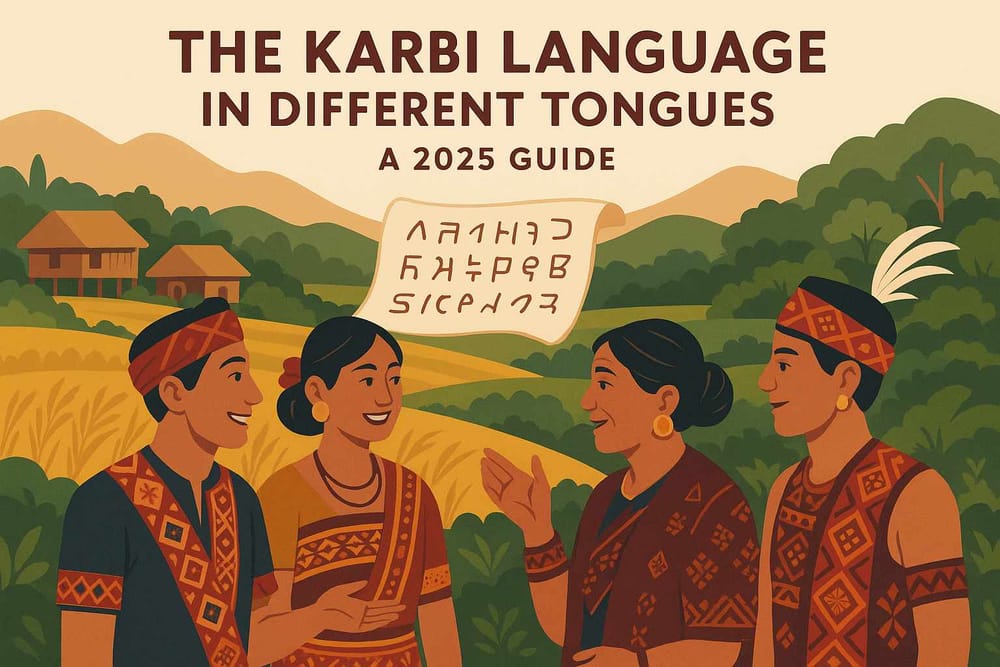
The Karbi Language in Different Tongues- A 2025 Guide
Have you ever stood on a misty hilltop in Assam and felt the ancient stories whispering through the trees? That's the feeling the Karbi language evokes. It's more than just a way to speak; it's the very heartbeat of the Karbi people, a beautiful melody carrying centuries of tradition, faith, and identity. In a world that's rushing forward, taking a moment to understand a language like this is like finding a hidden stream in a dense forest – pure, refreshing, and deeply sacred.
The Heartbeat of a People: Where Karbi's Roots Lie
The Karbi language is a precious gem in India's vast treasure chest of languages. It belongs to the Sino-Tibetan language family, which makes its sound and structure unique. You'll hear it spoken with pride primarily in the Karbi Anglong district of Assam, a land of rolling hills and vibrant culture. This isn't just a language for daily chatter; it is the soul of the community. It's woven into their folk songs, their intricate rituals, and the stories their grandparents tell, ensuring that the wisdom of generations is never lost. The importance of the Karbi language lies in its power to hold the community's entire cultural identity together, a sacred thread connecting the past, present, and future.
Every word and phrase is a living piece of their heritage. To truly appreciate this, one must explore the rich tapestry of Karbi culture and traditions, which the language so beautifully expresses.
Karbi and Assamese: Neighbours with Different Voices
Many people visiting Assam wonder if the Karbi language is similar to Assamese. While they share the same soil and a close cultural bond, they are linguistically quite different. Think of it like two different rivers flowing through the same beautiful valley. Assamese is an Indo-Aryan language, while Karbi belongs to the Tibeto-Burman family. This means their grammar, vocabulary, and phonetic sounds come from completely different origins, giving each its own distinct flavour and rhythm.
Bridging Worlds: Writing and Translating the Karbi Tongue
One of the fascinating things about the Karbi language is that it traditionally did not have its own script. It was a language of the heart, passed down through spoken words. Today, to document their rich literature and for modern communication, it is often written using the Roman or Assamese scripts. This adaptability shows the resilience of the community.
This also means that translating the Karbi language, whether into Hindi or English, requires a delicate touch. While online tools can give you a rough idea, for a true and accurate translation, nothing beats the help of a native speaker or a professional translator. They understand the cultural nuances and emotions behind the words, ensuring that the soul of the message isn't lost in translation.
Keeping the Flame Alive: Learning Karbi in 2025
In today's fast-paced world, there's a real fear that such unique languages might fade away. But the Karbi people and language enthusiasts are working hard to ensure this flame never dies out. As of 2025, there are more ways than ever for you to learn the basics of this beautiful language and connect with its culture.
- Formal University Education: Assam University's Diphu Campus now offers a wonderful six-month certificate course in Communicative Karbi Language. This is a fantastic opportunity for students, teachers, and anyone living or working in the region to develop proper spoken, written, and translation skills, creating a new generation of fluent speakers. If you are ever planning a visit to the region, knowing about your transportation options in Karbi Anglong can be very helpful.
- Learning from Home, Online: For those who can't attend a formal class, the digital world has opened new doors. Platforms like Namami Brain Academy are offering online lessons focused on practical, daily phrases in the Thuluwa Karbi dialect. They make learning accessible and fun with pronunciation tips and real-life examples.
These initiatives are crucial, especially as there are growing demands to include Karbi among the 22 scheduled languages recognized under the Eighth Schedule of our Constitution. Each new learner becomes a guardian of this precious heritage.
At Bhaktilipi, We Celebrate Every Devotional Voice
At Bhaktilipi.in, we believe that devotion speaks in many tongues. The spiritual stories and songs of the Karbi people are as sacred as any other ancient text. Our mission is to preserve and share this timeless devotional literature, ensuring that these diverse voices of faith are not just heard but celebrated. Exploring a language is like discovering a new path to the divine, and we invite you to walk this path with us.
Stay connected with our mission to preserve devotion in all its forms. Follow our journey and get your daily dose of inspiration by subscribing to our YouTube channel, or connecting with us on Facebook and Instagram. Let's cherish our shared heritage together!
Frequently Asked Questions about the Karbi Language
What exactly is the Karbi language?
The Karbi language is the mother tongue of the Karbi tribe, who primarily reside in the Karbi Anglong district of Assam. It is a part of the Tibeto-Burman language family, distinct from the Indo-Aryan languages like Assamese or Hindi.
Can the Karbi language be written?
Traditionally, Karbi was an oral language without its own script. However, in modern times, it is documented and taught using both the Roman and Assamese scripts, making it accessible for written communication and learning.
Where is the Karbi language mainly spoken?
The heartland of the Karbi language is the Karbi Anglong district in Assam. You will also find speakers in neighbouring districts and states, but this region is where the language and its culture thrive the most.
Why is preserving the Karbi language so important?
The Karbi language is the soul of the Karbi community's identity. It carries their history, folklore, spiritual beliefs, and unique worldview. Preserving it means protecting a vital part of India's incredible cultural diversity for future generations to cherish.
A passionate group of people dedicated to preserving India's knowledge of Dharma, Karma, and Bhakti for ourselves and the world 🙏.