
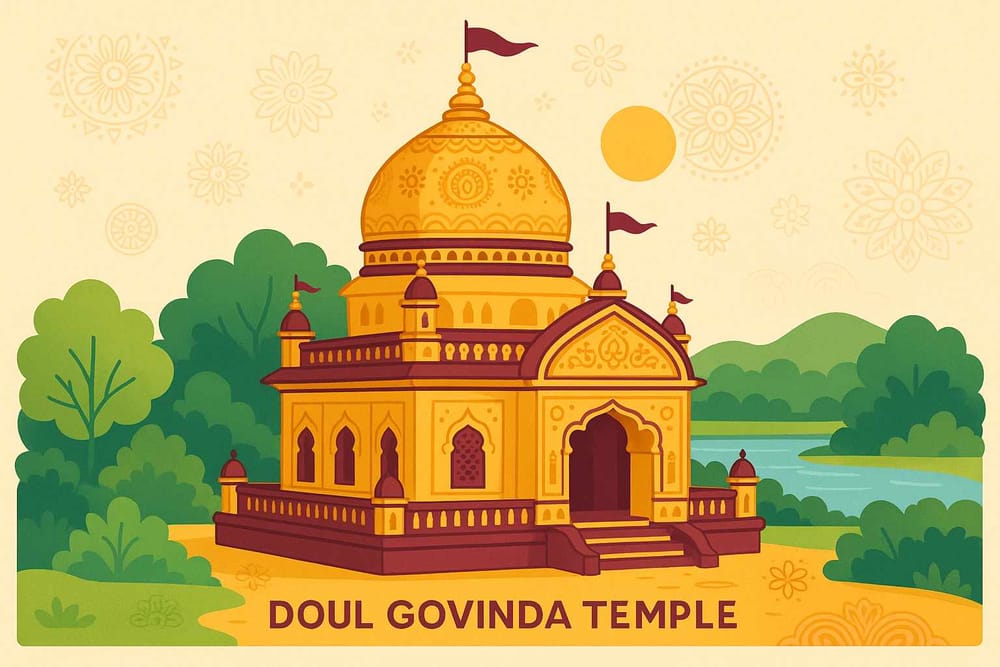
The Divine Legacy: Doul Govinda Temple's History-Significance Explored
There are some journeys that begin long before you take the first step. My trip to the Doul Govinda Temple felt like one of those. It began with the gentle lapping of the Brahmaputra’s waters against the ferry, a rhythmic chant that seemed to calm the soul. As the city of Guwahati faded behind me, the northern bank, lush and serene, grew closer, holding the promise of a sacred space where faith and nature embrace each other. This isn't just a temple; it's an experience, a spiritual anchor for countless souls in the heart of Assam.
The Whispers of History: Tracing the Temple's Sacred Roots
Every sacred place has a story, a legend that breathes life into its stones. The story of Doul Govinda Temple is one that feels blessed by divinity itself. Local lore, passed down through generations, tells a beautiful tale. Imagine, over 150 years ago, a humble cow that would wander off into the woods each day. Her owner was puzzled to find that her udder was always empty in the evenings. One day, villagers followed her and witnessed a miracle: milk flowed freely from her udder onto a particular patch of Birina grass. Believing it to be a divine sign, they dug at the spot and unearthed a beautiful idol of Lord Krishna. It was this sacred idol that was later lovingly installed by a pious man named Ganga Ram Barooah, giving birth to the temple we know today.
While this divine incident marks its spiritual beginning, the temple's growth was nurtured by the great Ahom and Koch dynasties. During an era when the teachings of Mahapurush Srimanta Sankardeva were inspiring a wave of devotion across Assam, rulers supported the creation of temples and Namghars dedicated to Lord Vishnu and his avatars. The Doul Govinda Temple became a shining example of this cultural and spiritual flourishing.
More Than Bricks and Mortar: The Hands That Built Doul Govinda
A temple like this isn't built by one person; it's raised by the devotion of many. While the Ahom kings provided patronage, it was the collective effort—the *seva* of local artisans, craftsmen, and countless devotees—that truly shaped this holy place. Their faith and dedication are carved into the very structure, which beautifully blends traditional Assamese Namghar architecture with simpler, modern elements. It stands today not just as a monument to a king's generosity, but as a testament to the community's unwavering faith that has preserved it through the ages.
Where Nature Meets Nirvana: The Temple's Breathtaking Setting
Perched peacefully on the northern bank of the Brahmaputra in North Guwahati, the Doul Govinda Temple enjoys a location that can only be described as divinely chosen. Surrounded by verdant greenery with the majestic river flowing as its eternal witness, the temple complex exudes an atmosphere of profound tranquility. The journey itself, often a scenic ferry ride from the main city, prepares your heart for the peace that awaits. It’s a place where you can sit for hours, listening to the gentle breeze and the distant temple bells, feeling completely connected to both nature and the divine.
The Heartbeat of Assamese Culture: Festivals and Daily Worship
The Doul Govinda Temple is the vibrant cultural and spiritual heart of Assamese Vaishnavism. Its name, "Doul," is a direct reference to Holi, and the celebration here is legendary.
- Doul Utsav (Holi): For five glorious days, the temple transforms into a kaleidoscope of joy. The air becomes thick with the sweet fragrance of flowers and the vibrant colours of *gulal*. Devotees from every corner of the state gather, singing devotional *bhajans* and celebrating the divine love of Radha and Krishna. It's a spectacle of pure, unadulterated devotion and happiness.
- Daily Rituals and Other Festivals: The spiritual energy is palpable here every single day. The day begins with the sacred bathing of the idol, followed by *archana* (prayers with flowers and mantras) and the offering of *bhog* (consecrated food). Festivals like Janmashtami, Lord Krishna's birthday, are also celebrated with immense fervour, filling the temple with music, chanting, and a deep sense of community.
These living traditions keep the flame of faith burning brightly. Assam is blessed with many such spiritual powerhouses, each with its unique story. While Doul Govinda celebrates the love of Krishna, other sites honour different aspects of the divine, like the revered Ugro Tara Temple, a significant Shakti Peeth in the region.
To truly appreciate the depth of these rituals, it helps to understand the stories and traditions behind them. At Bhaktilipi, we are dedicated to sharing this timeless wisdom. Exploring our collection of devotional literature can bring you closer to the heart of these sacred practices. Check out our resources at Bhaktilipi.in to deepen your connection.
Your Questions Answered: Understanding Doul Govinda Temple Better
What is the core belief behind the Doul Govinda Temple?
The temple is a sacred shrine dedicated to Lord Krishna, one of the most beloved deities in Hinduism. It serves as a major centre for Vaishnavite devotees in Assam, who come to seek blessings, offer prayers, and immerse themselves in the stories and teachings of Lord Krishna. Its spiritual significance is deeply tied to the miraculous discovery of the idol.
What makes the Holi celebration here so special?
Holi, or Doul Utsav, is the temple's signature festival. Unlike single-day celebrations elsewhere, here it's a grand five-day affair. It’s not just about colours; it’s a deeply spiritual event filled with traditional music, dance, congregational chanting (*kirtans*), and rituals that re-enact the divine play of Lord Krishna. The sheer number of devotees and the joyous, electric atmosphere make it an unforgettable experience.
How can one reach the temple from Guwahati?
Reaching the temple is part of the beautiful experience. The most popular way is to take a ferry or a machine-operated boat from Fancy Bazar Ghat in Guwahati. The short river crossing offers stunning views of the Brahmaputra. Once on the northern bank, the temple is easily accessible by local transport. The journey by water adds a layer of peace and anticipation to the pilgrimage.
Is there a recommended time for a peaceful visit?
If you wish to experience the temple in its full festive glory, visiting during Doul Utsav (Holi) or Janmashtami is a must. However, for a more serene and contemplative experience, any other time of the year is perfect. Early mornings are especially magical, as you can witness the morning rituals and enjoy the tranquil ambiance before the daily crowds arrive.
A Final Thought: A Legacy of Faith
The Doul Govinda Temple is more than just a destination; it's a journey into the soul of Assam's devotion. It's where history is alive in chanted prayers, where culture is celebrated with every handful of colour, and where the divine feels incredibly close, carried on the breeze from the Brahmaputra. It is a timeless heritage that continues to inspire, unite, and bless everyone who steps onto its sacred ground.
About Bhaktilipi
© 2025 Bhaktilipi – Crafted with devotion.
Bhaktilipi is your trusted platform for exploring timeless devotional literature, stories, and traditions. We aim to preserve and share the essence of spirituality in a way that connects with today’s readers.
Learn About Doul Govinda Temple and More
Discover the rich history and spiritual significance of the Doul Govinda Temple on our platform. Gain insights into its divine legacy, rituals, and cultural importance. Expand your knowledge and stay connected to India’s devotional heritage by visiting us at Bhaktilipi.in.
Follow us on Facebook, Instagram, and YouTube for more updates. Subscribe to our newsletter for regular updates on devotional content straight to your inbox.
A passionate group of people dedicated to preserving India's knowledge of Dharma, Karma, and Bhakti for ourselves and the world 🙏.
Comments
Related in
The Sacred History of Doul Govinda Temple: Royal Origins and Legacy
Imagine a gentle hill overlooking the majestic Brahmaputra, a place where a divine secret was once revealed not by a king's grand decree, but by the quiet devotion of a humble cow. This isn't just a story; it's the very soul of the Doul
Doul Govinda Temple FAQs: Get Answers Now
There are some places where you don't just go, you arrive. The journey itself becomes a part of the darshan. Imagine a gentle ferry ride, the vast, calming expanse of the Brahmaputra River around you, and the first glimpse of a serene temple nestled on the northern bank.
The Sacred Legacy: Doul Govinda Temple's History Emerges
Imagine standing on the gentle slopes of Chandra Bharati hill in North Guwahati, with the mighty Brahmaputra river flowing peacefully nearby. You can almost hear the soft chanting and the distant temple bells mingling with the river breeze. This is the feeling you get at the Doul Govinda Temple, a