
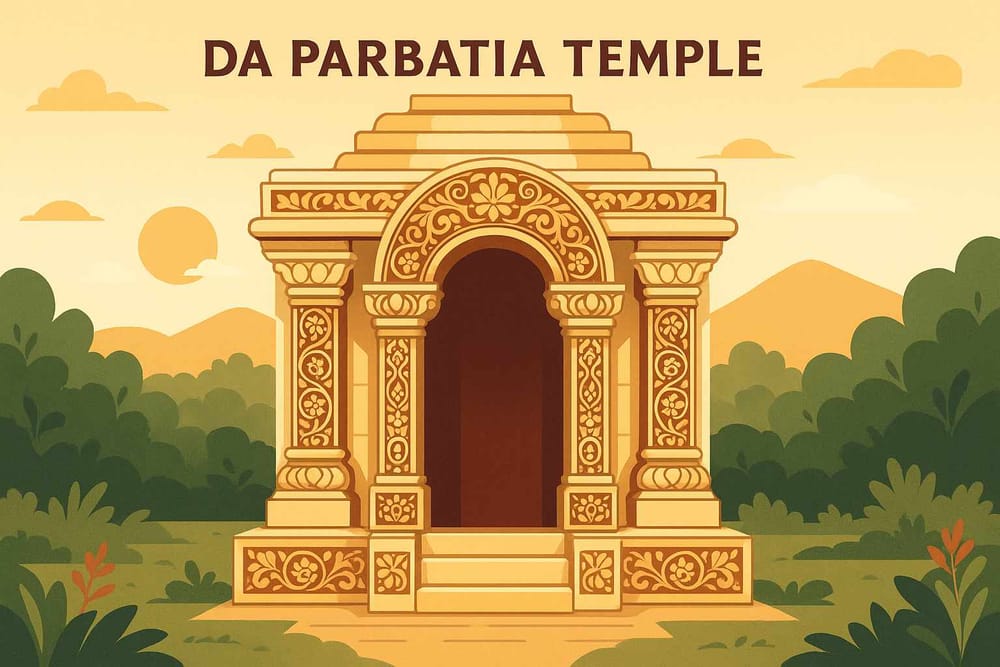
The Divine Architecture of Da Parbatia Temple: An Overview
Some places in our country don't just exist on a map; they live within the stories we tell, in the silent prayers of our ancestors. In the heart of Assam, near the beautiful town of Tezpur, lie the ruins of the Da Parbatia Temple. This isn't just a pile of old stones; it's a whisper from the 5th century, a time when art, faith, and life were woven into a single, breathtaking tapestry. Standing here, you can almost feel the pulse of the Gupta era, a golden age when Indian craftsmanship reached for the heavens.
The story of this temple is one of survival and rediscovery. It’s a testament to our land's ability to hold onto its treasures, waiting for the right moment to reveal them to us. Let's take a quiet journey back in time and listen to the stories that the stones of Da Parbatia have been waiting to share.
A Glimpse into a Golden Past
Imagine a time, over 1,500 years ago, when the Gupta Empire was at its peak. This was a period of incredible creativity and spiritual awakening. It was during this very era, around the 5th or 6th century CE, that the foundation of the Da Parbatia Temple was laid. Tezpur, then a bustling cultural centre, became home to this architectural marvel. The temple’s ruins are one of the oldest surviving examples of Hindu temple architecture in Assam, a precious link to our ancient roots.
The temple's journey through time is fascinating. Long after its original structure faded, a new brick Shiva temple was built over its sacred ground during the Ahom period. But destiny had other plans. A massive earthquake in 1897, which shook all of Assam, brought down the newer temple. In this moment of destruction, a miracle was unveiled—the original, exquisitely carved Gupta-period door frame, hidden for centuries, was revealed to the world. Today, this site is lovingly protected by the Archaeological Survey of India (ASI), ensuring that its story continues to inspire generations.
Where Stone Breathes Divinity
The architectural genius of our ancestors is something truly profound. Archaeological findings suggest that the original temple had a classic square layout, a design that holds deep spiritual meaning. It featured a sacred garbhagriha (the sanctum sanctorum), which was the heart of the temple, a mandapa (a pillared hall for devotees), and a welcoming mukhamandapa (an entrance porch). A path for pradakshina, or circumambulation, encircled the main shrine, allowing devotees to absorb its divine energy.
This careful planning wasn't just about building a structure; it was about creating a space where the earthly could connect with the divine. The design philosophy of ancient Indian temples is a vast and beautiful subject, reflecting a deep understanding of cosmology and human consciousness. You can explore more about these sacred designs in our article on India's Temple Architecture and Spiritual Energy.
The Celestial Gateway: The Legendary Door Frame
The true heart of Da Parbatia lies in its magnificent stone door frame. This isn't merely an entrance; it is a masterpiece that has captivated historians and art lovers for decades. Carved from sandstone, it stands as a testament to the unparalleled skill of Gupta-era artisans.
On either side of the doorway stand the graceful figures of the river goddesses, Ganga and Yamuna. Maa Ganga, standing on her vehicle, the Makara, and Maa Yamuna on the Kurma (tortoise), are depicted with garlands in their hands. In our culture, these river goddesses are not just bodies of water; they are symbols of life, purification, and unending prosperity. Their presence at the entrance sanctifies the entire space, cleansing every soul that passes through. The frame is further adorned with intricate floral patterns and celestial figures, each detail carved with a precision that feels almost divine.
A Legacy Etched in Time
What remains of Da Parbatia today is more than just ruins. It is a living museum. Excavations around the site have unearthed beautiful terracotta plaques showing human figures, giving us a peek into the rich artistic life that once thrived here. Each fragment tells a story of devotion, community, and an unshakeable faith that inspired such incredible art.
Visiting places like Da Parbatia, or even just reading their stories, connects us to something larger than ourselves. It’s a humbling reminder of the artistic and spiritual brilliance of those who came before us. This legacy is a source of immense pride and a reminder to preserve the sacred heritage we have been blessed with.
Stories like that of Da Parbatia remind us of the deep spiritual roots embedded in our culture. At Bhaktilipi, we strive to bring these very stories to you, reimagined for today's world but with their soul intact. We believe that these timeless tales of faith, art, and history have the power to inspire and guide us in our daily lives.
Why Explore Bhaktilipi?
- Learn and Discover: Delve into the rich history behind sacred sites like Da Parbatia. We bring you carefully researched articles and stories that illuminate the symbolism and significance of our ancient traditions and their architectural grandeur.
- Connect with Your Roots: Experience devotional literature and timeless tales that resonate with the modern Indian soul. Our content is designed to feel familiar and comforting, like a story from your grandmother, yet accessible and relevant to your life today.
- Join a Community of Seekers: When you subscribe to Bhaktilipi, you become part of a family that values heritage, faith, and meaningful connections. Get new posts, reflections, and updates delivered straight to your inbox and enrich your spiritual journey with us.
Follow us for more inspiring content on Facebook, Instagram, and YouTube. Join our community and let's explore the path of bhakti together!
Your Questions Answered: Understanding Da Parbatia
We often get questions from curious souls about this incredible temple, so let's explore some of them. Many people wonder what makes Da Parbatia so special. It is most celebrated for its stunning ancient door frame, a pinnacle of Gupta-style art that has miraculously survived for centuries. This door frame is truly its most unique feature, with its breathtaking carvings of goddesses Ganga and Yamuna, surrounded by delicate floral motifs. It’s one of the oldest and finest examples of temple art in all of Eastern India.
If you're wondering about its historical importance, the temple's origins in the 5th or 6th century AD place it in a very special category of ancient Indian sites. It offers priceless insights into the art, culture, and religious practices of that era. Its intricate carvings and symmetrical designs are why it is considered a masterpiece of divine architecture, showcasing a perfect blend of spiritual belief and artistic genius. For those who wish to experience this history firsthand, the temple is located in the Da Parbatia village near Tezpur, Assam. It's a protected archaeological site and is open to the public, welcoming both history enthusiasts and devotees with open arms.
A passionate group of people dedicated to preserving India's knowledge of Dharma, Karma, and Bhakti for ourselves and the world 🙏.