
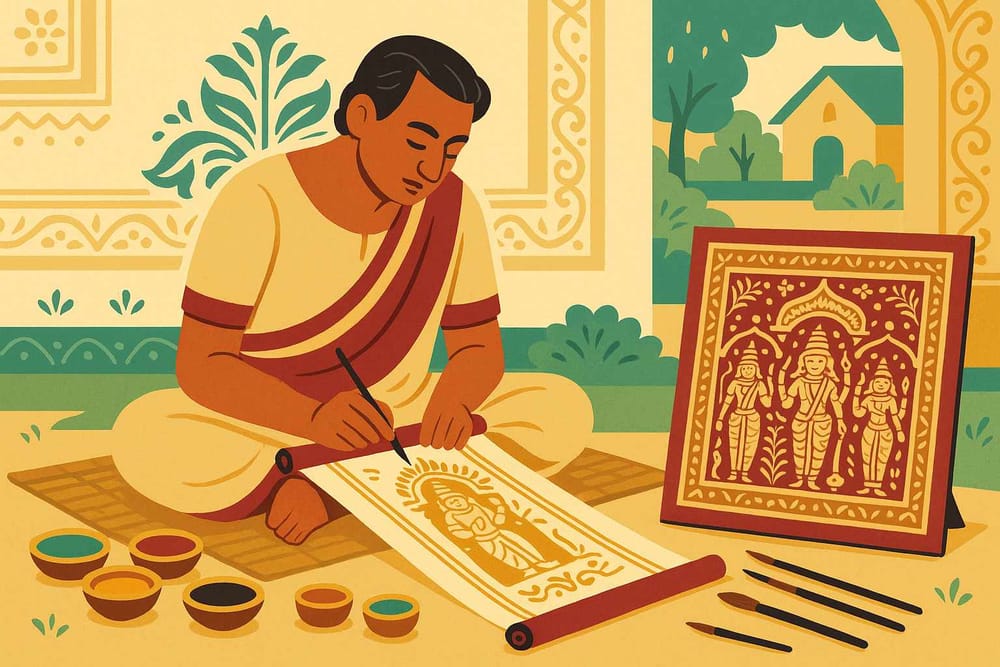
The Art and Craft of Pattachitra- A Traditional Indian Painting
Imagine an art form so deeply woven into the fabric of devotion that every colour, every line, tells a story from our ancient scriptures. This isn't just a painting; it's a living tradition, a prayer on canvas. This is the world of Pattachitra, a timeless art that flows from the heartlands of Odisha and West Bengal, carrying with it centuries of faith, culture, and unparalleled craftsmanship.
For me, Pattachitra is more than just beautiful art to hang on a wall. It feels like a direct connection to our roots, a visual bhajan that sings the tales of Lord Jagannath, Krishna's playful leelas, and the epics that have shaped our values. Let’s take a walk through this sacred art form together.
The Sacred Origins: A Story Blessed by Lord Jagannath
The story of Pattachitra begins not in a gallery, but in the hallowed precincts of the Puri Jagannath Temple, dating back to the 12th century. The very name, from the Sanskrit words 'Patta' (cloth) and 'Chitra' (picture), tells you about its humble yet profound medium. This art was born out of a deep ritualistic need.
During the 'Anasara' period, a special time when the deities of the Jagannath Temple are kept away from public view for 15 days, it is these Pattachitra paintings that stand in for them. The artists, known as Chitrakars, create these sacred images, allowing devotees to continue their worship without interruption. It’s a beautiful reminder that art, in its purest form, is a medium of unwavering devotion.
The Making of a Masterpiece: A Labour of Love and Nature
Creating a Pattachitra painting is a meditative process, a true labour of love that respects Mother Nature at every step. The artists don't just buy their supplies from a store; they create them with their own hands, infusing their energy into the artwork.
- The Canvas (Patta): The journey starts with preparing the canvas. A piece of cotton cloth is coated with a special mixture of chalk and gum made from tamarind seeds. This paste is meticulously applied and polished, creating a smooth, leathery surface that’s ready to absorb the natural colours and hold them for generations.
- Colours from the Earth: The vibrant hues you see are all gifts from nature. Fiery reds from the *hingula* stone, brilliant yellows from *haritala*, and a divine white from powdered conch shells. The black, which outlines the divine forms, is made from the soot of a burning coconut shell. These organic colours give the paintings a unique glow that synthetic paints can never replicate.
- Brushes Tied with Devotion: Even the brushes are handmade, often from the fine hair of a mouse or squirrel, tied carefully to a small bamboo stick. This allows the Chitrakar to draw with incredible precision, creating those fine, expressive lines that are the hallmark of this art.
Themes That Touch the Soul: Stories of Gods and Mortals
At its heart, Pattachitra is a form of storytelling. The canvas becomes a stage for our most cherished mythological tales. The central theme often revolves around Lord Jagannath and his divine siblings, Balabhadra and Subhadra. You'll find vivid depictions of the Dashavatara (the ten incarnations of Vishnu), scenes from the Ramayana and Mahabharata, and the enchanting stories of Radha and Krishna.
But it’s not just about the main characters. The borders are just as important, filled with intricate floral motifs, geometric patterns, and scenes that add depth and context to the central story. Every element, from the expression on a deity's face to the curve of a lotus petal, is symbolic and full of meaning. Exploring the tradition and craft of Pattachitra helps one appreciate the depth behind each masterpiece.
Pattachitra in Today's World: A Tradition Reimagined
While its roots are ancient, Pattachitra is not frozen in time. It is a dynamic art form that is finding new expressions in the modern world. It has gracefully moved from temple walls and scrolls to grace our homes and wardrobes.
Today, you can find Pattachitra motifs on elegant sarees, dupattas, home décor, and even lifestyle accessories. This adaptation has not only given the art a wider audience but has also provided a sustainable livelihood for the artisan communities. It’s heartwarming to see this ancient tradition being embraced by a new generation. In fact, this art has gained such global respect that leaders like our Prime Minister have gifted Pattachitra paintings to world leaders, showcasing our rich heritage on an international stage.
If you're as fascinated by this blend of old and new as I am, you might love diving deeper into the techniques and traditions of this ancient art. At Bhaktilipi, we believe in celebrating these timeless stories.
Your Questions on Pattachitra Answered
Many people are curious about the specifics of this beautiful art form, so let’s talk about some common questions.
Often, people ask what materials are used in Pattachitra. The beauty of this art lies in its complete reliance on natural elements. The canvas is made from cloth treated with tamarind paste and chalk powder, while the colours are derived from minerals, stones, and plants, ensuring each painting is eco-friendly and long-lasting.
Another common query is about the themes depicted in these paintings. Pattachitra is primarily a medium for religious storytelling. The most prominent themes are stories of Lord Jagannath, tales from the Ramayana and Mahabharata, and the divine lilas of Lord Krishna. Each painting is a visual narrative steeped in mythology.
People also wonder what makes Pattachitra so unique. It’s the combination of its intricate details, the use of 100% natural colours, the traditional storytelling method, and its deep-rooted connection to the Jagannath culture. This isn't just art; it's a piece of India's spiritual soul.
And yes, Pattachitra is perfect for home decor! A Pattachitra painting can bring a touch of traditional elegance and positive spiritual energy into any home. Its vibrant colours and profound themes make it a wonderful conversation starter and a cherished piece of heritage.
It’s also important to know that this art form is very much alive. Pattachitra is still practiced today by dedicated artisan communities, who are working hard to keep this legacy alive. By supporting them, we help preserve a priceless piece of our culture.
Keeping the Legacy Alive with Bhaktilipi
Pattachitra is more than just art; it's a celebration of our culture, a testament to enduring faith, and a legacy of immense skill. By appreciating and supporting this craft, we not only honour the artisans but also ensure that these divine stories continue to be told for generations to come.
At Bhaktilipi, our mission is to be a digital space where you can explore and connect with timeless devotional literature and traditions like Pattachitra. We are dedicated to sharing India's rich spiritual heritage in a way that inspires and resonates with today's world.
To continue this journey with us and discover more about India's devotional art forms, do follow our conversations on social media.
Let's cherish this timeless art together, as a beautiful connection to our roots and a vibrant bridge to our future.
A passionate group of people dedicated to preserving India's knowledge of Dharma, Karma, and Bhakti for ourselves and the world 🙏.
Comments
Related in
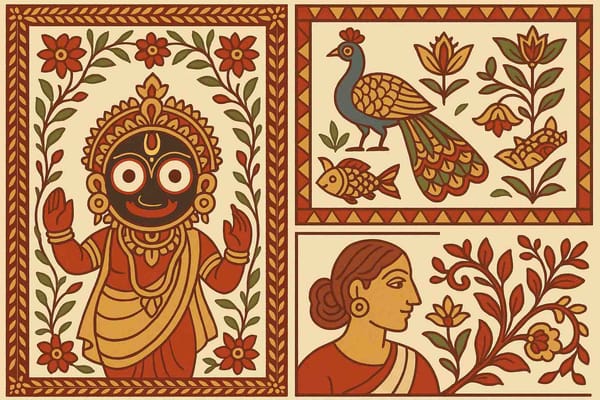
Pattachitra-Madhubani-Kalamkari: Compare India's Art Forms
Every corner of our beautiful India hums with a unique story, a special colour, a rhythm of its own. I often feel that to truly understand our country's heart, one must look at its art. It’s in the vibrant strokes of a painting, the intricate lines on

Pattachitra Artistry: Tradition and Culture Explored
Imagine a piece of cloth that doesn’t just hold colour, but holds stories. Stories of gods, goddesses, epic battles, and divine love, all painted with pigments drawn from the earth itself. This isn't just art; it’s a conversation with our ancestors, a sacred scroll that unfolds
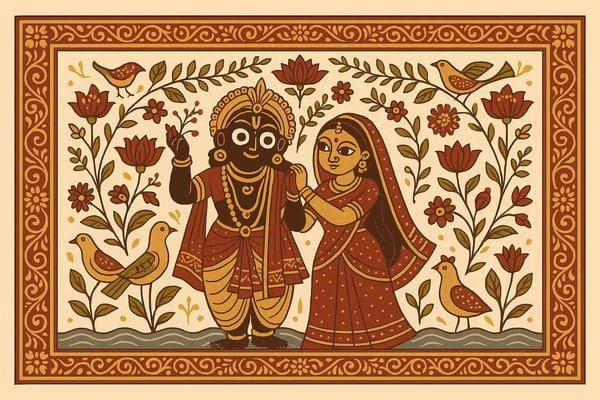
Pattachitra- Art Tells Ancient Stories
In the sacred land of Odisha, where the air itself seems to hum with ancient chants and devotion, there exists an art form that is more than just a painting. It is a prayer on a canvas, a story whispered through generations, and a vibrant celebration of faith. This is