
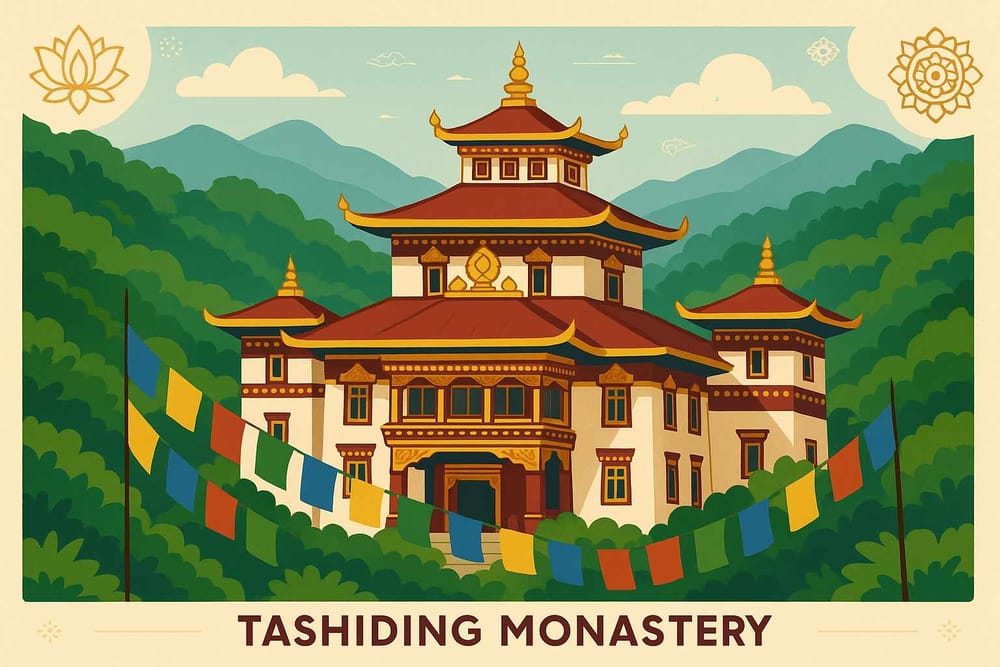
Tashiding Monastery's Mysteries: Architecture and Culture Explored
There are some places on Earth where the air itself feels different, charged with centuries of prayer and devotion. Standing on the hill where Tashiding Monastery is perched, with the mighty Kanchenjunga watching over you and prayer flags whispering secrets to the wind, is one such experience. It’s more than just a visit; it’s a feeling that seeps into your soul, a profound sense of peace that quiets the chaos of modern life. This isn't just a structure of wood and stone; it is the spiritual heartbeat of Sikkim, a place where legends are alive and faith is tangible.
The Seeds of Faith: How Tashiding Came to Be
The story of Tashiding begins not with bricks, but with a divine sign. It is said that the great master, Guru Padmasambhava, shot an arrow into the sky, vowing to meditate wherever it landed. That arrow found its mark on this very hill, sanctifying the land forever. Following this sacred event, in 1641, the monastery was formally established by Ngadak Sempa Chempo Phunshok Rigzing, one of the three holy men who consecrated the first king of Sikkim. This sacred gompa belongs to the ancient Nyingma sect of Tibetan Buddhism, making it one of the most important spiritual centres in the entire region.
The monastery quickly became a sanctuary for seekers and a custodian of ancient traditions. Its legacy is not just in its age, but in the unbroken chain of faith it represents. To truly understand the rich tapestry of stories that make this place so special, one must delve into the legends and legacy of Tashiding Monastery, each one adding to its mystical aura.
An Architecture of Devotion and Harmony
Tashiding Monastery is a masterpiece of traditional Tibetan architecture, designed to exist in perfect harmony with its breathtaking natural surroundings. It feels as if the structure grew organically from the sacred hill itself.
- Sacred Structures: The entire complex is a map of the spiritual path. You enter through an intricately carved gate known as a “Kakini,” adorned with protective deities. The grounds are dotted with 41 whitewashed chortens, or stupas, known as the 'Chortens of Enlightenment,' which house the relics of revered lamas and Sikkim’s Chogyals (kings).
- The Chorten That Liberates: Among these, the most revered is the Thongwa Rangdol chorten. The name itself holds a powerful promise, as it is believed that a mere glimpse of this sacred stupa is enough to cleanse a person of their sins and negative karma. It’s a powerful symbol of hope and redemption that draws devotees from all corners of the world.
- Art That Teaches: Inside the main prayer hall, the walls come alive with vibrant murals and ancient thangka paintings. These are not just decorations; they are visual scriptures, narrating profound Buddhist teachings, depicting deities, and illustrating complex mandalas that serve as aids for meditation.
The Living Culture and the Mystical Bhumchu Festival
What makes Tashiding truly special is that it is not a relic of the past; it is a living, breathing centre of spiritual practice. The air hums with the sound of chants, the scent of butter lamps fills the halls, and the rhythmic turning of prayer wheels sends countless mantras out into the universe.
The cultural highlight of the year is the Bhumchu Festival, a unique and deeply significant event held around February or March. At the heart of this festival is a sacred vase, or ‘Bhumchu,’ filled with holy water consecrated by Guru Padmasambhava himself. Once a year, the lamas open this vase to observe the water level. This is believed to be a divine forecast for Sikkim's fortunes in the year ahead—a full vase signifies peace and prosperity, while a low level might suggest challenges. It’s a moment of collective hope and faith that unites the entire community.
Participating in such rituals, even as an observer, connects you to a timeless tradition. It’s a reminder of the simple, profound faith that can guide our lives. For those of us who wish to bring a piece of this sanctity into our own homes, finding authentic and pure pooja essentials is crucial. At Bhaktilipi, we understand this need, offering carefully sourced items to help you create your own sacred space. You can explore our collection of devotional items on the Bhaktilipi website.
Frequently Asked Questions about Tashiding Monastery
Many who hear about this sacred place have questions that bubble up from a place of curiosity and reverence. Let's explore some of them.
A common question is about the deep significance of Tashiding Monastery in Sikkim. It is considered one of the holiest Buddhist pilgrimage sites in the state. The belief that visiting this monastery can wash away one's sins makes it a powerful spiritual magnet, a place for introspection, purification, and renewal for countless devotees.
People are often fascinated by its unique architecture. When you look closely, you’ll see it’s a beautiful example of traditional Buddhist design principles. The use of local stone and wood, intricate carvings, vibrant murals depicting spiritual stories, and the presence of sacred chortens all work together to create an atmosphere of immense peace and devotion that blends seamlessly with the natural landscape.
The cultural practices followed here are a source of great interest. Beyond the famous Bhumchu festival, the monastery’s daily life is steeped in tradition. Daily prayers, the chanting of sacred texts, and meditation form the spiritual backbone of Tashiding. Visitors can feel this powerful devotional energy from the moment they arrive.
The best time to visit often depends on what you seek. For a truly immersive cultural experience, planning your trip during the Bhumchu Festival (usually in February or March) is ideal. The monastery is alive with celebration, and the spiritual energy is palpable. Otherwise, the pleasant weather in spring and autumn makes for a peaceful and scenic journey.
Finally, reaching this serene haven is part of the experience. Tashiding is located in West Sikkim and is well-connected by road from major towns like Gangtok and Pelling. The drive itself is a visual treat, winding through lush green hills and charming villages, preparing your mind and spirit for the tranquility that awaits.
About Bhaktilipi
At Bhaktilipi, we believe that spirituality is a universal language that connects us all. Our platform is lovingly designed to be inclusive, offering translations and a simple, user-friendly interface to welcome everyone on their spiritual journey. We are dedicated to preserving and sharing the timeless stories, hymns, and traditions that guide, heal, and empower our readers.
We also put great care into creating a visually serene and pleasing experience. From our thoughtful layouts to our calming design, every detail is crafted to enhance your devotional moments.
Why Choose Bhaktilipi?
Bhaktilipi is your trusted friend in connecting with India's profound traditions and devotional literature in a way that feels easy and accessible. Explore inspiring stories of sacred places like Tashiding Monastery, or learn about the rituals that can bring deeper meaning to your daily life. By gaining this knowledge, you enrich your understanding of our beautiful culture and spirituality.
Subscribe to our newsletter for regular updates on devotional content. Follow us on Facebook, Instagram, and YouTube for inspiring videos and posts. Let us help you stay connected to your roots with grace and ease.
A passionate group of people dedicated to preserving India's knowledge of Dharma, Karma, and Bhakti for ourselves and the world 🙏.
Comments
Related in
Tashiding Monastery: Legends and Legacy Explain Mysteries
Some places in our incredible Bharat have an energy you can feel the moment you arrive. The air seems to hum with ancient chants, and the wind carries stories from centuries past. My journey to Tashiding Monastery in Sikkim was exactly like that—a feeling of returning to a spiritual