
What Is the Mahabharata? Story, Meaning, and Why It Matters
The Mahabharata is not just a war story. It is a vast Indian epic about family, dharma, power, choices, and the cost of adharma.
The Mahabharata is not just a war story. It is a vast Indian epic about family, dharma, power, choices, and the cost of adharma.
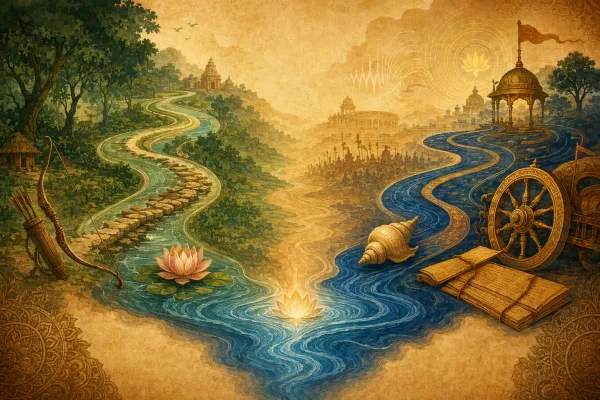
The Ramayana and Mahabharata are India’s two great Sanskrit epics, but they differ in story, scale, mood, authorship tradition, and dharma questions.
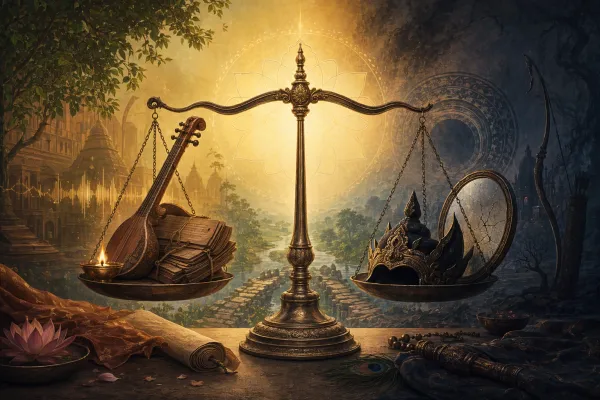
Ravana is not a flat villain: he is powerful and learned, but his ego and adharma lead to destruction.
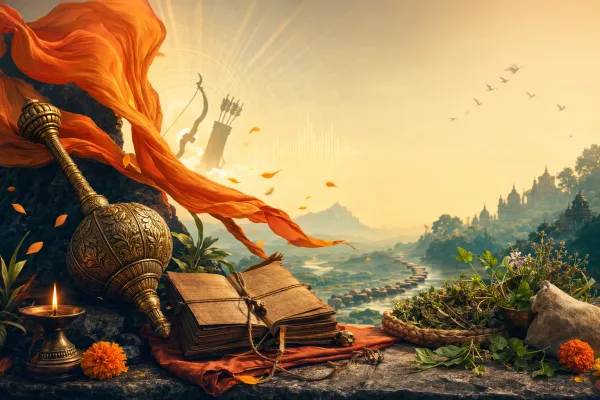
Hanuman is loved because his strength is joined with humility, intelligence, devotion, and fearless service to Rama.
Sita is one of the central figures of the Ramayana, remembered for courage, dignity, patience, love, and inner strength.
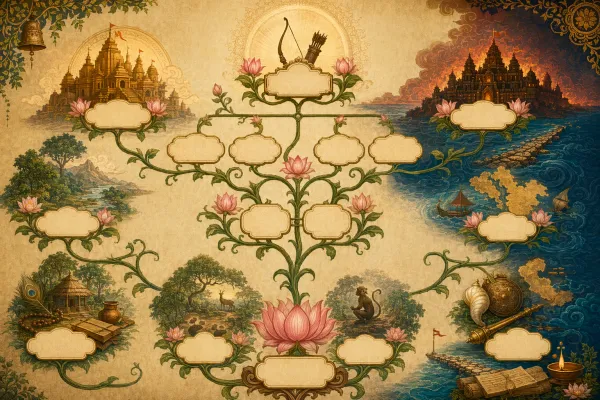
Understanding the Ramayana becomes easier when you group the characters by Ayodhya, Mithila, Lanka, Vanara allies, and sages.
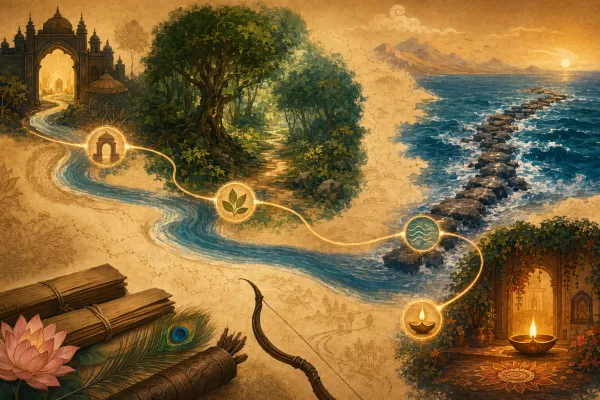
This beginner summary explains the Ramayana story in simple English while keeping its devotional and cultural importance respectful.
The Ramayana is traditionally attributed to Maharishi Valmiki, honoured as Adi Kavi, while its history also includes oral transmission and many later retellings.
The Ramayana is one of India’s great sacred epics, teaching dharma, love, courage, service, and wise choices through the story of Rama and Sita.