
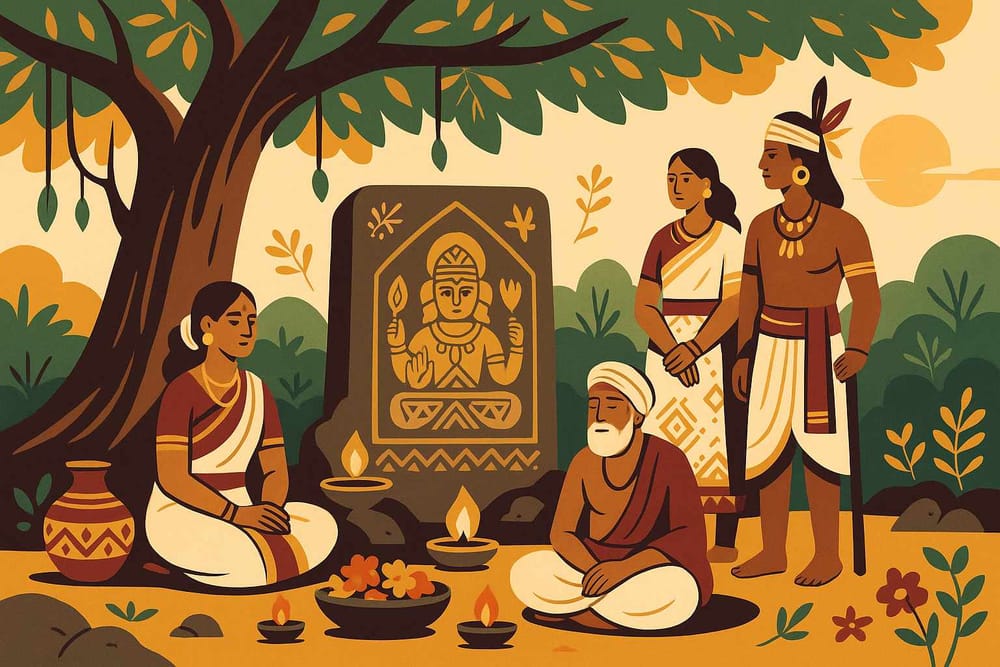
Spiritual Heritage of Tribes and Castes: Roots in India's Central Provinces
Ever felt a deep pull towards the heart of our country, a place where time seems to flow a little differently? I’m not just talking about a geographical centre, but a spiritual one. Journey with me to the lands that were once known as the Central Provinces – a region that cradles parts of modern-day Madhya Pradesh, Chhattisgarh, and Maharashtra. Here, the earth itself seems to hold memories, and the air is thick with the stories of diverse tribes and communities whose faith is woven into the very fabric of their existence. Understanding these traditions isn't just an academic exercise; it's like listening to the heartbeat of ancient India, a rhythm that continues to inspire us today.
The Land of a Thousand Stories: Understanding the Central Provinces
So, what exactly were the "Central Provinces"? During the British era, this was an administrative name for a vast, vibrant territory that connected different parts of India. But for the people who lived there, it was always much more. It was a melting pot, a place where forest trails met bustling trade routes, and where countless languages, beliefs, and ways of life mingled and influenced one another. Imagine the fertile plains nurtured by the Narmada, giving life to farming communities, and the dense forests that have been the sacred home to tribal groups for centuries. This land was a crossroads of culture, creating a spiritual heritage that is as diverse as it is deep.
This historical region, which included cities like Nagpur and Jabalpur, has seen empires rise and fall, but what has endured is the unwavering connection between its people and their spiritual roots. It’s a place that perfectly showcases the vibrancy of Indian culture, where every tradition has a story to tell.
In Tune with Nature: The Spiritual World of Central India’s Tribes
For the tribal communities of this region, spirituality isn't something confined to a temple or a specific day of the week; it's in every tree, river, and mountain peak. Their beliefs are a beautiful testament to living in harmony with the natural world.
- The Gonds and their Supreme Deity: The Gond tribe, one of the largest in Central India, holds a deep reverence for Bada Dev, their supreme god. He isn't a distant figure in the sky but a presence felt in the mighty Saja tree and the forces of nature. Their rituals are a heartfelt dialogue with the sun, the moon, and the earth, seeking balance and blessings for a prosperous life.
- The Baiga's Connection to the Earth: The Baiga community, often called the "people of the forest," are known for their deep knowledge of medicinal herbs and shamanistic traditions. They believe the earth is their mother and have historically practiced a form of shifting cultivation that respects her sanctity. Their shamans, or 'gunias', act as intermediaries, invoking spirits to bring healing and protection to the community.
- The Bhils' Vibrant Folklore: The Bhil communities express their devotion through incredibly rich folklore, songs, and dances. Their lives are interwoven with tales of local deities and ancestral spirits. Their festivals, tied to the changing seasons and agricultural cycles, are not just celebrations but powerful affirmations of their identity and faith.
Faith in Every Action: The Traditions of Caste Communities
Alongside the tribal traditions, the spiritual practices of the caste communities add another rich layer to the region's identity. Here, faith is often intertwined with one's profession and daily duties, reminding us that the divine can be found in the mundane.
The Brahmin communities have been the custodians of Vedic knowledge, meticulously preserving sacred rituals and scriptures through generations. Further down the social fabric, you find agriculturist castes like the Kunbis, whose festivals are a beautiful expression of gratitude to the land. Celebrations like Makar Sankranti are not just about the harvest; they are a heartfelt thank you to the earth for its bounty, strengthening community bonds with every shared meal and prayer. Even artisan communities, such as the Lohars (blacksmiths), see divinity in their craft, performing rituals to bless their tools and seek divine guidance for their work. This shows how spirituality in Central India is a lived experience, deeply integrated into the rhythm of daily life.
Where Prayers Echo: Sacred Spaces of Central India
Some places just feel holy, don't they? The Central Provinces are dotted with such sacred sites that hold immense spiritual energy.
Take Amarkantak, for instance. It is revered as the source of the holy Narmada River and is a pilgrimage site that draws devotees from all over. But spirituality here isn't just confined to grand temples. Deep within the forests, you'll find sacred groves—untouched patches of ancient trees considered the abode of local deities. These groves are natural temples where communities gather for rituals, reinforcing their sacred bond with nature. Small village shrines, dedicated to a local god or goddess, become the heart of the community during annual ceremonies, bridging the gap between the social and the spiritual.
Holding on to Heritage in a Changing World
In today's fast-paced world, it's natural to wonder if these ancient traditions are still alive. The truth is, they face challenges. Urbanization and deforestation can disrupt the natural environment that is so central to tribal beliefs. As younger generations move to cities for work, there is a risk of losing the oral traditions passed down through the ages.
But there is also hope. There's a growing awareness and a beautiful effort from communities and cultural organizations to preserve this priceless heritage. Cultural festivals are being revived, workshops are being held, and the stories and songs are being documented. It’s a reminder that preserving our spiritual heritage is not about freezing it in time, but about honouring our roots and finding ways to carry their wisdom forward.
This is where platforms like Bhaktilipi find their purpose. In a digital age, we believe technology can be a powerful ally in preserving and sharing these timeless stories. By making devotional literature and sacred knowledge accessible, we hope to connect today's generation with the profound wisdom of their ancestors. If you feel inspired by the deep spiritual traditions of our land, explore the wealth of devotional content we have carefully curated on Bhaktilipi.in. It's a space to learn, connect, and enrich your own spiritual journey.
A Legacy to Cherish
The spiritual heritage of Central India is a living, breathing tapestry woven with threads of nature-worship, community faith, and ancestral reverence. Every ritual, every song, and every sacred stone tells a story of a deep connection between humanity, nature, and the divine. By cherishing and supporting this legacy, we not only honour the past but also nurture the values of harmony, gratitude, and respect that are so needed in our world today. Let's ensure these whispers from the heart of India continue to inspire generations to come.
A passionate group of people dedicated to preserving India's knowledge of Dharma, Karma, and Bhakti for ourselves and the world 🙏.
Comments
Related in
Doul Govinda Temple: History and Architecture Define Sacred Site
Imagine standing on a gentle hill, with the mighty Brahmaputra river flowing serenely below. A soft breeze carries the faint sound of temple bells, and a feeling of profound peace settles in your heart. This isn't just a dream; it's the everyday reality at the Doul
Exploring Spiritual Heritage-Navayana and Iconic Temples in Faridabad
Sometimes, we think we know a city. We see the tall buildings, the busy roads, the rush of daily life, and we assume that’s the whole story. I used to think of Faridabad that way – a bustling industrial hub, a close cousin to Delhi. But beneath this modern surface,