
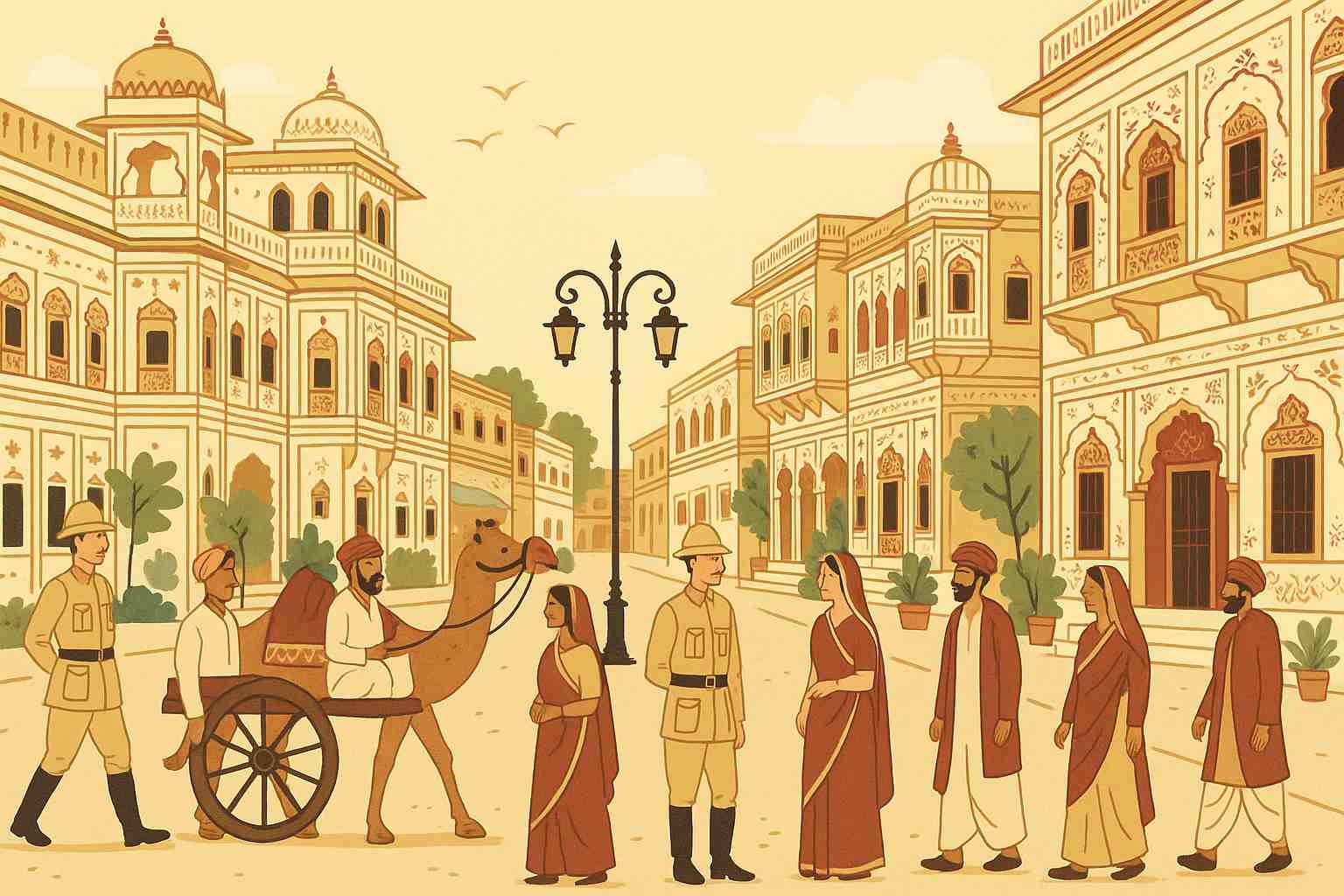
Sikar During the British Era: History and Exploration
Every time I wander through the vibrant lanes of Rajasthan, I feel like I'm walking through the pages of a living history book. The Shekhawati region, with its painted havelis and tales of valour, holds a special place in my heart. Among its many jewels is Sikar, a city whose story is not just written in forts and palaces, but in the silent frescoes that whisper tales of a time when two worlds met—the world of proud Rajputana and the sprawling British Empire.
It’s a fascinating story, not of a simple conquest, but of a complex dance between tradition and modernity, of resistance and adaptation. Let's journey back in time and uncover the soul of Sikar as it navigated the intricate chapter of the British era.
The Shekhawati Stronghold: Sikar Before the British Raj
Before the Union Jack cast its long shadow, Sikar was a thriving princely state, a powerhouse in the semi-arid Shekhawati landscape. Governed by the courageous Shekhawat clan of Rajputs, it was a vital hub on the caravan routes. Imagine the bustle—camels laden with spices, vibrant textiles, and opium, connecting the heart of Rajasthan to the far corners of India. Life revolved around a traditional zamindari system, and agriculture, though challenging in the arid climate, was the backbone of its economy. Sikar was a land rich in culture, art, and an unyielding spirit.
A New Dawn: The Arrival of British Influence
The arrival of the British wasn’t a sudden storm but a gradual shift in the winds. Through treaties and alliances, Sikar, like many princely states, was woven into the British administrative fabric. It wasn't a hostile takeover but a relationship built on indirect control. The Shekhawat rulers retained their autonomy, but they now paid tribute to the Crown. British Political Agents were appointed, introducing modern governance, land revenue surveys, and new judicial systems.
This era saw rulers like Rao Raja Madhav Singh Bahadur, who cultivated a cordial relationship with the British. This partnership paved the way for remarkable progress, including the laying of the Jaipur-Sikar railway line, the introduction of electricity, and the construction of new roads. Sikar was transforming into a modern trade centre, but this change also brought new challenges, particularly the new taxation policies that placed a heavy burden on the local populace.
Economic Tides: Trade, Railways, and the Rise of Merchants
The clang of the steam engine was the sound of a new era dawning in Sikar. The railways revolutionised trade, replacing the slow-moving caravans with faster, more efficient networks. This was a golden opportunity for the region's astute Marwari merchants. They adapted swiftly, leveraging the new connectivity to expand their commercial empires across India. Their success story, which began in the dusty lanes of Shekhawati, would go on to shape the Indian economy for generations.
While trade in cash crops like cotton flourished, it was a double-edged sword. The British policies, focused on revenue, often strained the local farmers and zamindars, who found themselves caught between traditional agricultural practices and the demands of a colonial economy.
Where Stone and Paint Tell a Story: A Fusion of Cultures
If you truly want to understand Sikar's colonial past, you must look at its architecture. The magnificent havelis of Shekhawati became canvases for a unique cultural dialogue. Here, traditional Rajasthani designs met British Gothic elements, giving birth to the Indo-Saracenic style. The intricate frescoes, a hallmark of the region, began to feature fascinating new subjects—local folklore was painted alongside depictions of Queen Victoria, steam trains, and British officers. It was a visual representation of a world in transition.
This cultural exchange extended to education as well. Western-style schools were established, blending modern knowledge with the traditional gurukul system. The elite class began to adopt elements of British attire and customs, yet they held firmly to their deep-rooted cultural and spiritual traditions. It’s this beautiful blend that makes the heritage of places like Sikar so unique, much like the diverse histories seen across different princely states, such as the rich cultural tapestry of Mayurbhanj.
The Flame of Freedom: Sikar’s Spirit of Resistance
The relationship with the British was not always one of peaceful co-existence. The spirit of independence ran deep in the soil of Rajasthan. The new taxation policies and administrative control often led to friction and protest. A powerful example of this was the Battle of Sikar on January 21, 1859, during the Indian Mutiny, where local sepoys bravely fought against the forces of the British East India Company. This event, along with other smaller protests by farmers and zamindars, showed that the people of Sikar would not passively accept policies they deemed oppressive. Their struggle became a part of India's larger fight for freedom.
A Legacy Carved in Time
Today, as we walk through Sikar, we see a city that proudly carries its past into the future. The railways built during the British era continue to be lifelines of commerce. The havelis, though old, stand as proud monuments to a unique artistic fusion. The legacy of the Marwari business families continues to inspire entrepreneurs. Sikar's story is a powerful reminder of how a community can embrace change without losing its soul, a theme that resonates deeply with the historical perspective of British influence in the region.
Exploring this history helps us connect with our roots and appreciate the resilience that is woven into the fabric of India. It’s in these stories of our past that we find inspiration for our future.
Discover More Timeless Stories with Bhaktilipi
At Bhaktilipi, we believe that every corner of India has a story to tell, a lesson to teach, and a tradition to share. Our digital space is dedicated to preserving and sharing this timeless devotional and cultural literature. From sacred texts to inspiring historical tales like that of Sikar, we bring you content that connects you to your heritage in a meaningful way.
Join our community to explore the path of devotion and spirituality. Subscribe to Bhaktilipi and get updates on new posts, features, and reflections delivered straight to your inbox. Let's keep these incredible stories alive together.
Frequently Asked Questions about Sikar's History
Many people are curious about the intricate details of Sikar's past, especially its time under British influence. Let's explore some common queries to paint a clearer picture.
What was Sikar’s actual status during the British era?
Sikar was a significant princely state within the Shekhawati region. It wasn't directly ruled by the British but maintained a semi-independent status. Its rulers, the Shekhawats, managed internal affairs while acknowledging British supremacy and aligning with their broader policies.
How did British rule truly impact Sikar’s development?
The influence was a mix of progress and pressure. On one hand, the British introduced crucial infrastructure like railways and roads, which boosted trade and connected Sikar to larger markets. On the other hand, their administrative and taxation reforms often disrupted traditional governance and placed economic strain on the local populace.
Can we still see architectural remnants from that period in Sikar?
Absolutely. The most famous examples are the grand havelis of the Shekhawati region. Many of these structures, built by wealthy Marwari merchants, feature a stunning blend of Rajput and colonial architectural styles. Their frescoes often depict scenes from both Indian mythology and British life, making them unique historical landmarks.
Was there significant resistance against the British in Sikar?
Yes, while the princely rulers often maintained a diplomatic relationship with the British, there were notable instances of resistance. The Battle of Sikar in 1859 is a key example of armed opposition. Additionally, farmers and local leaders often protested against oppressive tax policies, contributing to the wider national movement for freedom.
A passionate group of people dedicated to preserving India's knowledge of Dharma, Karma, and Bhakti for ourselves and the world 🙏.