
Satya Shodhak Samaj Legacy- A 2025 Examination
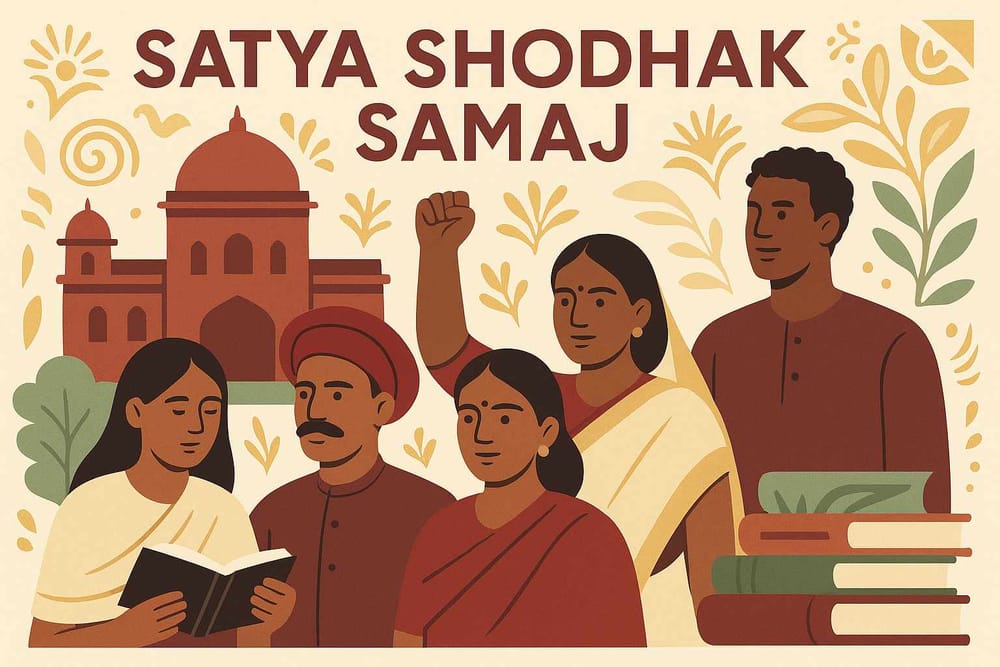
Some stories are not just written in books; they are etched into the very soul of a nation. They are stories of courage, of a fight against injustice, and of a dream for a better tomorrow. The story of the Satya Shodhak Samaj, the "Truth-Seekers' Society," is one such powerful chapter in India's history. It began not with a roar, but with the quiet determination of one man, Jyotirao Phule, who dared to ask a simple yet profound question: Can we build a society where every single person lives with dignity?
On September 24, 1873, in Pune, this question took the form of a movement. It was a time when our society was deeply divided by the rigid walls of the caste system. To be born into a certain family decided your entire life's path, your opportunities, and your worth. Jyotirao Phule, having felt the sting of this discrimination himself, knew that this had to change. His vision was to light a lamp of truth and reason in a world darkened by dogma and inequality.
The Spark of a Revolution: What the Samaj Stood For
The Satya Shodhak Samaj was more than just an organisation; it was a powerful idea. It was a family of people from all walks of life—Muslims, Brahmins, merchants, farmers, and so-called 'untouchables'—who came together for a common cause. Phule believed that true liberation could only come through knowledge and self-respect.
- Education for Everyone: The Samaj's biggest mission was to break the monopoly of the upper castes on education. Jyotirao and his incredible wife, Savitribai Phule, believed that education was the key to empowerment. Savitribai, a true pioneer, headed the women's section and championed education for girls and women, opening doors that had been sealed for centuries. Her work reminds us of the continued struggle and achievements of women in shaping our cultural narratives, a spirit celebrated by organisations like the Sadou Asom Lekhika Samaroh Samiti.
- Challenging Blind Faith: The movement encouraged people to think for themselves and question religious rituals that were used to exploit them. Phule argued against the need for priests as intermediaries to God, promoting a direct, personal connection with the divine based on morality and equality. This was a radical shift from ritual-based worship to a faith rooted in humanity.
- A Fight for Social Equality: At its heart, the Samaj fought to dismantle the caste system. It promoted inter-caste marriages, stood against child marriage, and championed the rights of widows. It was about creating a new social identity where your worth was defined by your character, not your birth.
The Enduring Echo of the Truth-Seekers
Though the Satya Shodhak Samaj's activities slowed down by the 1930s, its spirit never died. Its ideals flowed into other powerful movements, awakening a sense of pride and self-respect among millions. The peasants in Maharashtra found their voice, rising against the exploitation of Brahman landlords, and a new Maratha identity, built on unity and equality, began to take shape.
The Samaj’s most significant impact can be seen in the path it paved for future leaders. It lit a fire that inspired giants like Dr. B.R. Ambedkar, who carried the torch of social justice forward. Phule's ideas on equality and rationalism deeply influenced Ambedkar's own philosophy, which later culminated in movements like the Navayana philosophy, shaping the very constitution of modern India.
At Bhaktilipi, we are dedicated to exploring these timeless stories of devotion and social reform. Our mission is to preserve the wisdom of our traditions, reimagine them for today's world, and share them with authenticity. Understanding the legacy of the Satya Shodhak Samaj helps us connect with a deeper form of bhakti—one that seeks truth, fights for justice, and sees God in every human being.
By exploring this history with us, you gain more than just knowledge. You connect with the very soul of India's journey towards equality. For a regular dose of such enriching content that blends tradition with modern insights, we invite you to subscribe to our newsletter and join our community on Facebook, Instagram, and YouTube.
Frequently Asked Questions About Satya Shodhak Samaj
What was the core purpose behind the Satya Shodhak Samaj?
The main goal was to fight the deep-rooted social injustices of the caste system and promote equality for all. Jyotirao Phule founded it to create a society where everyone, no matter their caste, religion, or gender, could live a life of dignity and self-respect.
Who were the visionaries who founded the Satya Shodhak Samaj?
Jyotirao Phule founded the Satya Shodhak Samaj in 1873 in Maharashtra. He, along with his wife Savitribai Phule, started this powerful reform movement to challenge the injustices of caste hierarchy and gender inequality that were prevalent in society.
How does the legacy of the Samaj influence our society today?
Its legacy is a powerful source of inspiration for modern movements that fight for social justice, equality, and education for all. It serves as a constant reminder of the importance of challenging discrimination and working tirelessly towards building a truly inclusive and fair society for our future generations.
Why is this 19th-century movement still relevant in today's India?
The core values of the Satya Shodhak Samaj—equality, rational thinking, and justice—are timeless. Even today, as we continue to tackle issues of discrimination and social inequality, the principles laid down by Phule's movement echo loudly, guiding us in our struggle for a better world.
What kind of activities did the Satya Shodhak Samaj focus on?
The Samaj was very hands-on in its approach. They focused on promoting education, especially for women and lower-caste communities, worked to abolish the practice of untouchability, and actively encouraged inter-caste marriages to break down social barriers. They also fought against superstitions to empower people with rational thought.
How did the Samaj influence women's rights in India?
The movement was a trailblazer for women's rights. Under the leadership of Savitribai Phule, it strongly supported women's education and empowerment. They fiercely opposed child marriage and worked relentlessly to ensure women had equal rights and a voice in society, paving the way for future generations of women leaders.
A passionate group of people dedicated to preserving India's knowledge of Dharma, Karma, and Bhakti for ourselves and the world 🙏.
Comments
Related in
Revisit Satya Shodhak Samaj- A Legacy of Equality
Imagine a flame lit in the dark, a single voice that rises against a chorus of injustice. This isn't just a story from a book; it's the living legacy of the Satya Shodhak Samaj, the "Truth-Seeking Society." It was a movement born not in
Satya Shodhak Samaj- Legacy and Impact Explored
There are moments in history that don’t just change rules; they change hearts. They don't just break chains; they awaken souls. Picture a time in 19th-century India, where for so many, life’s path was cruelly decided the moment they were born. The weight of caste discrimination
Satya Shodhak Samaj Principles: A 2025 Guide
कभी-कभी इतिहास की कुछ घटनाएं सिर्फ कहानियां नहीं होतीं, बल्कि एक मशाल की तरह होती हैं जो आज भी हमारा रास्ता रोशन करती हैं। ऐसी ही एक मशाल है महात्मा