
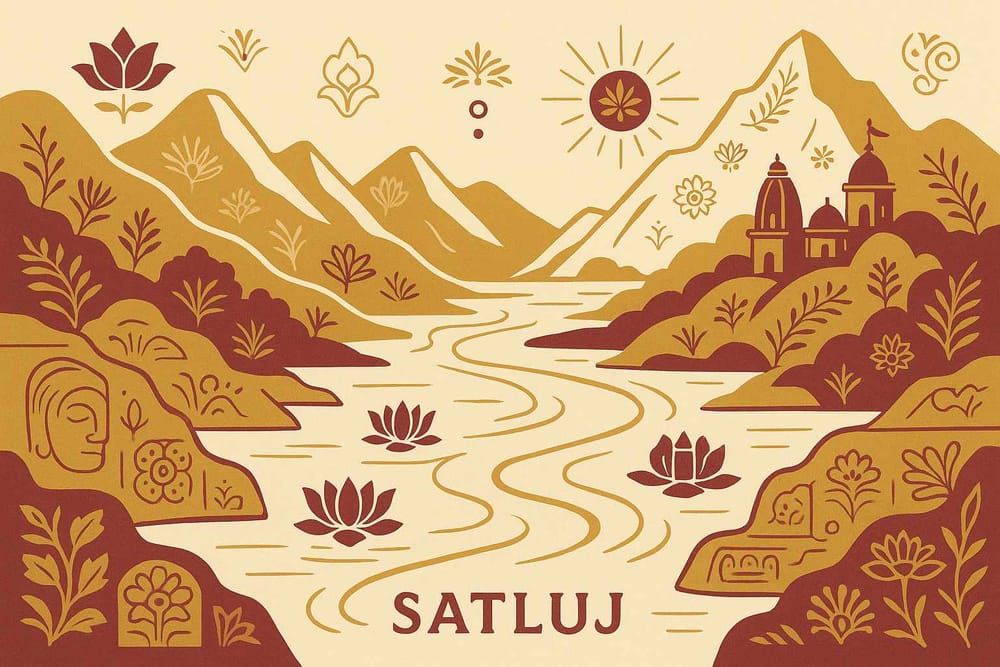
Sacred River of Many Names: Satluj's Ancient Identity Explained
Some rivers are just bodies of water, but in India, some rivers are living stories. They are the arteries of our culture, carrying memories, prayers, and the wisdom of our ancestors in their currents. One such magnificent river is the Satluj, a lifeline of Northern India that has witnessed the rise and fall of civilizations. To understand the Satluj is to listen to the whispers of our own history, from the chants of Vedic rishis to the vibrant spirit of modern-day Punjab.
Let's embark on a journey to uncover the many names and ancient soul of this remarkable river, a stream that begins its life near the holy Mount Kailash, the abode of Lord Shiva himself.
The Vedic Heartbeat: When Satluj was Shutudri
In the oldest of our sacred texts, the Rigveda, the Satluj is not known by its current name. It is celebrated as the Shutudri, meaning the "swift-flowing one." Imagine the awe our ancestors must have felt, seeing this powerful river rushing down from the Himalayas! It was one of the seven sacred rivers of the Sapta Sindhu region, the very cradle where Vedic culture blossomed. The hymns describe it as a divine force, a mother that nourished the land and purified the soul.
Geological tales and ancient texts suggest that the mighty Shutudri was once a tributary of the legendary Saraswati River. When the Saraswati began to disappear, the Shutudri carved its own path, a poignant reminder of nature's power and the unstoppable flow of time. This deep connection to the Saraswati adds another layer of sacredness to its identity, making it a living link to a hallowed past.
From the Abode of Gods: Its Tibetan Identity
Every sacred river has a divine origin story, and the Satluj's begins at one of the most spiritually charged places on Earth. It originates near Rakshastal Lake, a stone's throw from the divine Mount Kailash. In Tibet, it is known as Langqên Zangbo, the "Elephant River." This name is wonderfully evocative, suggesting a river with the strength, grace, and majesty of a great elephant carving its path through the rugged mountains.
For Tibetans, rivers are sacred lifelines connecting the heavens and the earth. The Langqên Zangbo, born in the shadow of Kailash, carries with it an aura of immense purity and spiritual power. As it flows from Tibet into India, it doesn't just bring water; it brings blessings from the roof of the world.
A River of Many Names, One Sacred Soul
As the river journeyed through different eras and regions, it gathered new names, each a reflection of its importance. This multiplicity of names is a testament to its vast cultural footprint, much like the great Goddess Ganga, whose own story is filled with divine mysteries and sacred significance.
- Satadru of the Puranas: In epics like the Mahabharata and the Puranas, the river is called Satadru, a name derived from Sanskrit that means "flowing in a hundred channels." This beautifully captures the image of a vast river system with countless streams branching out to nurture the plains, symbolizing abundance and life.
- Lifeline of Punjab: For the land of Punjab, the Satluj is more than a river; it's a part of its very identity. The name "Punjab" means "The Land of Five Waters," and the Satluj is the largest of these five rivers. It has irrigated fields, sustained communities, and been a silent witness to centuries of Punjabi history and resilience.
Exploring these names feels like uncovering layers of our own heritage. At Bhaktilipi.in, we believe in this journey of discovery, bringing you stories that connect you to the roots of our timeless traditions.
The Satluj Today: A Legacy Flowing Forward
Today, the Satluj continues to be a vital force. The monumental Bhakra-Nangal Dam stands as a testament to its power, transforming agriculture and bringing light to millions. Yet, this ancient river also faces modern challenges like pollution and climate change, reminding us of our duty to protect our sacred natural heritage.
Honouring the Satluj is not just about remembering its glorious past. It is about preserving its purity for future generations, ensuring that its waters continue to flow with the same life-giving energy that our ancestors revered. The river's journey mirrors our own—a continuous flow through challenges, carrying a legacy of strength and spirituality. The reverence for our sacred waters is a common thread in our culture, a sentiment we also explore when discussing the mysteries of the holy Ganga.
Frequently Asked Questions about the Satluj River
What did our ancestors call the Satluj in Vedic times?
In the Rigveda, one of our most ancient texts, the Satluj River is lovingly referred to as Shatadru. This name beautifully highlights its sacred and central role in the lives of the people of that era.
What is the river's name in Tibet, near its source?
In Tibet, where the river begins its incredible journey near Mount Kailash, it is known as Langchen Khambab, which poetically translates to "The Elephant River," signifying its immense power and gentle majesty.
Does the Satluj River have any mythological importance?
Absolutely! Its origins near Mount Kailash link it directly to Lord Shiva. Furthermore, its mention in Vedic texts and its historical connection to the revered Saraswati River give it a profound mythological and spiritual significance that has been cherished for millennia.
Why does the Satluj have so many different names?
The river flows through diverse landscapes and cultures, from the serene mountains of Tibet to the vibrant plains of Punjab. Each culture that thrived along its banks gave it a name that reflected their own language, beliefs, and relationship with the river, creating a beautiful tapestry of identities for this single, sacred entity.
Honoring Our Living Heritage with Bhaktilipi
The story of the Satluj is a powerful reminder that our traditions are not relics of the past; they are living, breathing streams of wisdom. At Bhaktilipi, our mission is to be a bridge to this heritage. We are a digital space dedicated to preserving and sharing the timeless devotional literature and stories that shape our culture.
We bring you these tales in a way that is authentic, inspiring, and easy to connect with in today's busy world. If you wish to deepen your understanding of India's spiritual rivers and other cultural treasures, we invite you to explore our platform.
Stay connected with us on this beautiful journey of faith and discovery!
Subscribe to our newsletter for a regular dose of devotional wisdom delivered right to your inbox!
A passionate group of people dedicated to preserving India's knowledge of Dharma, Karma, and Bhakti for ourselves and the world 🙏.
Comments
Related in
The Divine Journey: Goddess Ganga's Sacred Path Unfolds
Have you ever stood by a riverbank at dusk, watching countless tiny lamps float away on the water, each one carrying a prayer, a hope, a dream? In India, this isn't just a beautiful sight; it's a conversation with the divine. It's our way
Embrace the Divine- Ganga's Significance in Hindu Culture
Have you ever stood by a river and felt a presence? A feeling that you are standing before something more than just flowing water? For millions of us in India, this feeling is a reality. We have a river that is not just a source of water, but a mother,