
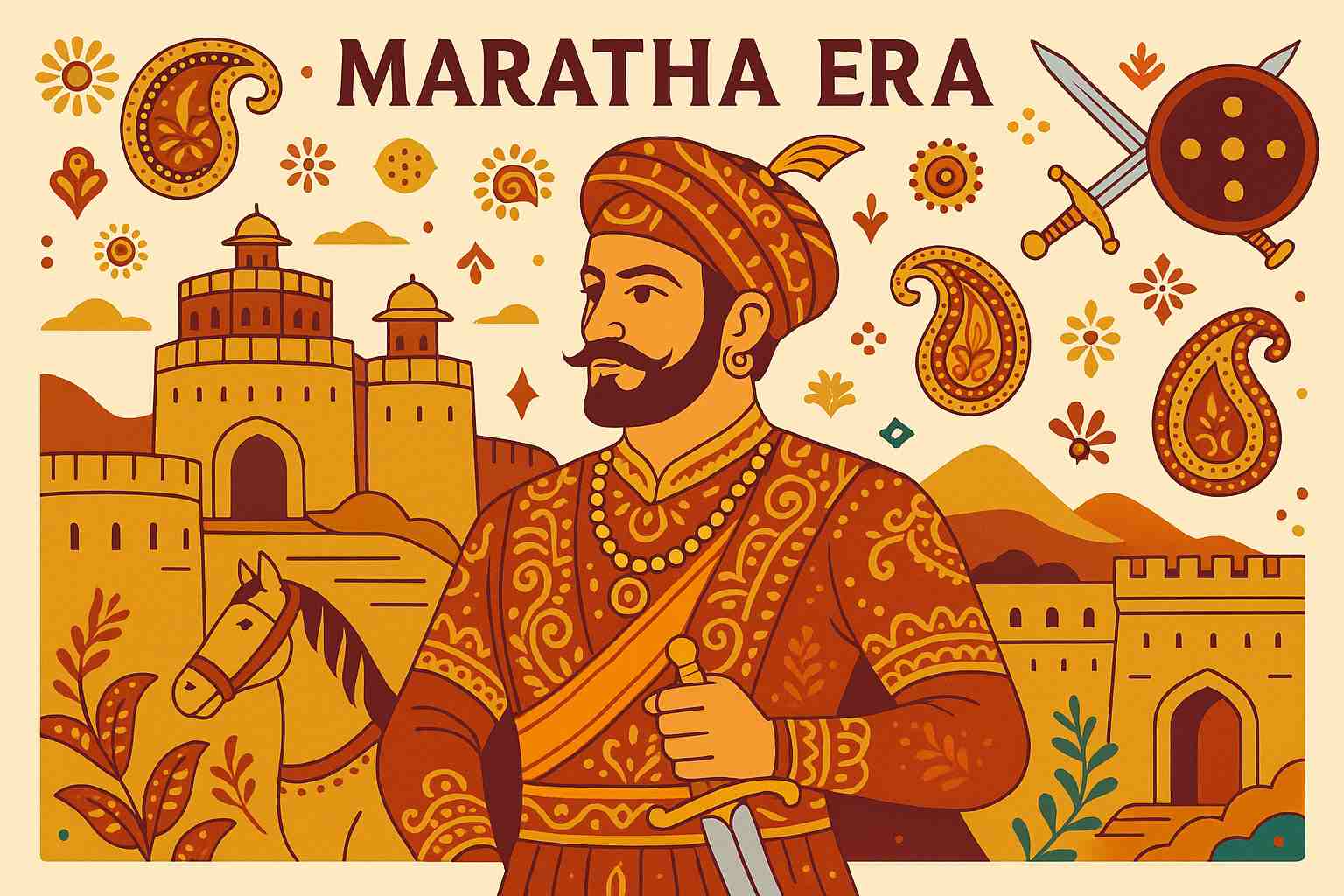
Revisit the Maratha Era: History's Forgotten Chapter
In the grand and complex story of India, some chapters resonate with a power that can still give us goosebumps. The saga of the Maratha Empire is one such chapter. It’s a tale not just of kings and battles, but of a burning desire for self-rule, of incredible courage that blossomed in the rugged Sahyadri mountains, and of a legacy that quietly shaped the India we know today. This isn't just history; it's a part of our collective soul, a story of how a warrior clan from Maharashtra rose to challenge the mighty Mughals and paint a vast swathe of the subcontinent in the colour of saffron.
The Dawn of Swarajya: The Vision of Chhatrapati Shivaji Maharaj
Every great movement begins with a dream. The Maratha Empire began with the dream of 'Hindavi Swarajya'—a self-governing nation—a dream nurtured and brought to life by the visionary Chhatrapati Shivaji Maharaj. In the 17th century, when Mughal dominance seemed absolute, Shivaji Maharaj ignited a spark of rebellion that would soon become a roaring fire. He wasn't just a king; he was a master strategist and a people's leader.
So, how did the Marathas stand up to the colossal Mughal army? They used their land as their greatest ally. Shivaji Maharaj perfected the art of guerrilla warfare, a style of fighting we fondly call 'Shivshahi'. His brave soldiers, known as Mavlas, would appear as if from thin air, strike with lightning speed, and disappear back into the hills, leaving the enemy bewildered. This wasn't just about fighting; it was about outthinking the opponent.
Governance from the Forts
Shivaji Maharaj's genius wasn't limited to the battlefield. He knew that to build a lasting empire, you need strong governance. He established the 'Ashta Pradhan,' a council of eight ministers, each with a specific role, ensuring the administration ran like a well-oiled machine. This system was a masterclass in efficient and decentralised governance.
And then there are the forts. Standing tall and proud even today, forts like Raigad, Pratapgad, and Sinhagad are not just stone structures. They are the silent storytellers of Maratha valour. Raigad, the capital, was where Shivaji Maharaj was crowned, a moment that symbolised the birth of a new sovereign power. These forts were the heart of the empire—centres of military strategy, administration, and the very spirit of Maratha independence.
The Empire Expands: The Era of the Peshwas
The flame ignited by Shivaji Maharaj was carried forward by his worthy successors. His son, Sambhaji Maharaj, displayed incredible bravery, continuing the fight against Aurangzeb's relentless Deccan campaign. After him, the power shifted to the Peshwas, the prime ministers, who became the de facto rulers and took the Maratha flag far beyond Maharashtra's borders.
Among them, Peshwa Baji Rao I was a military genius, said to have never lost a battle. Under his leadership, the Maratha influence spread like wildfire across North India, reaching the very gates of Delhi. The empire evolved into a confederacy, with powerful Maratha families like the Scindias, Holkars, Gaekwads, and Bhonsles ruling different regions but united under the Peshwa. This was a crucial period of growth and consolidation. To truly grasp the dynamics of this time, exploring key events and figures of the Maratha Era from 1718-1819 offers fascinating insights into their administration and influence.
Defining Moments: The Battles that Forged a Legacy
The journey of the Marathas is marked by several pivotal events that tested their strength and resolve. These weren't just clashes of armies; they were moments that shaped the destiny of India.
- The Battle of Pratapgad (1659): This was a defining moment of sheer brilliance and courage. When faced with the formidable Afzal Khan, Shivaji Maharaj used his sharp intellect and iconic 'wagh nakh' (tiger claws) to emerge victorious against all odds, establishing himself as an undeniable power.
- The long struggle against Aurangzeb: The Marathas' persistent resistance in the Deccan was a major factor that drained the Mughal Empire's resources and spirit. Their refusal to bow down for over two decades ultimately contributed to the decline of Mughal authority in the region.
- The Third Battle of Panipat (1761): This was a heartbreaking yet monumental clash against the Afghan invader Ahmad Shah Abdali. Though the Marathas faced a devastating loss, the battle showcased their immense courage and ambition to protect the subcontinent from foreign invaders. It was a tragic day, but their bravery is still sung in folklores.
- The Anglo-Maratha Wars (1775-1818): This series of wars against the British East India Company marked the final chapter of the empire. Though they fought fiercely, internal conflicts and the superior diplomacy of the British eventually led to the end of Maratha dominance.
A Rich Cultural Weave
The Maratha Empire was not just about military might; it was also a cradle of culture and tradition. Marathi literature, especially devotional poetry by saints like Samarth Ramdas, flourished and filled the air with spirituality and patriotism. The grand 'wadas' like Shaniwar Wada in Pune stand as beautiful examples of Maratha architecture.
Art forms like Lavani and Tamasha, with their vibrant energy, were patronised and became an integral part of Maharashtra's cultural identity. The Marathas were devout Hindus who protected temples and celebrated festivals with great fervour, but they also maintained a culture of inclusivity. Even our food has a touch of their legacy—delicious dishes like puran poli and shrikhand became popular during this era and continue to delight our taste buds today!
If you're fascinated by this journey, you can get a complete overview by exploring this historical journey of the Maratha era, which covers their rise, impact, and legacy in wonderful detail.
Why is This Glorious Chapter Often Overlooked?
It’s a question many of us ask. Despite their monumental impact on India, why does the Maratha Empire's story sometimes feel like a forgotten chapter in our history books? Often, historical narratives written during the colonial era focused more on the Mughals they replaced and the British who succeeded them, pushing powerful regional forces like the Marathas to the side. This has created a gap in our understanding of our own past.
But today, there's a growing passion to rediscover and celebrate this legacy. By visiting the forts, reading the stories of their heroes, and sharing this knowledge, we can ensure that the sacrifices and achievements of the Marathas are given the respect they deserve. Their story teaches us the timeless values of courage, strategic thinking, and an undying love for one's motherland.
Honouring a Timeless Legacy
The Maratha Empire is a powerful testament to the Indian spirit of resilience. From Shivaji Maharaj's fight for Swarajya to the Peshwas' expansive vision, their journey is filled with lessons that are relevant even today. By remembering their story, we honour the spirit that has defined India for centuries—a spirit of fighting for what is right, of building a nation with vision, and of cherishing our rich cultural roots.
About Bhaktilipi
At Bhaktilipi, we believe that stories like these are the soul of our nation. We are a platform dedicated to preserving and sharing the timeless devotional literature and rich historical narratives of India. Our goal is to connect you with your roots in a way that feels authentic, inspiring, and beautiful.
By exploring Bhaktilipi, you can uncover more forgotten chapters of our history and dive deep into the wisdom of our traditions. We bring these stories to you with the respect and love they deserve.
Stay connected with our community for more inspiring content:
Let's continue this journey of discovery together and keep the flame of our heritage burning bright.
A passionate group of people dedicated to preserving India's knowledge of Dharma, Karma, and Bhakti for ourselves and the world 🙏.
Comments
Related in
The Legend of the Lion Fighter: Sambhaji Maharaj's Bravery Inspires
In the heartlands of Maharashtra, stories are not just told; they are lived and breathed. They are passed down from generation to generation, each retelling adding a little more awe, a little more pride. One such story that still gives us goosebumps is that of a king who was as
Chimaji Appa's Personal Life: Family Beyond the Battlefield
In the grand tapestry of Maratha history, the name Chimaji Appa shines brightly, often associated with the thunder of cannons and the brilliant capture of the Vasai fort. We remember the warrior, the strategist, the brother of the great Bajirao I. But behind every formidable warrior is a human being,
Maratha Legacy: Historic Era-Exploration
Sometimes, when you stand on the ramparts of an old fort in Maharashtra, the wind seems to whisper tales of valour. It speaks of a time when a dream of freedom, of Hindavi Swarajya, was kindled in the heart of a young king. This isn't just history; it&