
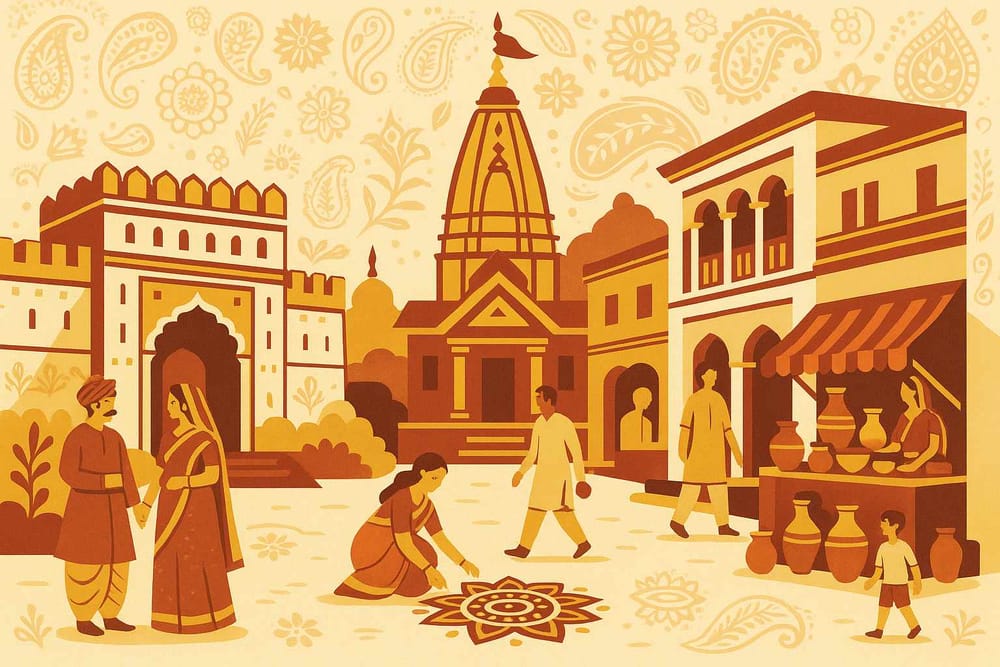
Maratha Era Influences Bulandshahr's Cultural Landscape
Have you ever walked through the lanes of an old city and felt the weight of history in the air? In the heart of Uttar Pradesh, Bulandshahr is one such place. Its story isn't just written in books; it's etched into the very fabric of its culture. While many empires have left their mark, there's a particularly fascinating chapter penned by the Marathas. It’s a tale not just of conquests, but of a beautiful cultural exchange that subtly shaped the city's soul, leaving behind whispers of their traditions that still resonate today.
When Empires Shifted: The Marathas in Northern India
To truly understand this influence, we need to travel back to a time when the grand Mughal Empire was fading. In this vacuum of power, the formidable Marathas, under visionary leaders, expanded from the Deccan right into the heart of northern India. This wasn't just a military campaign; it was a strategic move to stabilise the region. Leaders like the great Mahadji Shinde were not just warriors but brilliant administrators who established a strong presence in areas like Bulandshahr. They didn't just rule; they governed with an aim to integrate and protect.
The Peshwas, acting as the empire's prime ministers, guided this expansion with a focus on community welfare and building alliances. Their governance in Bulandshahr wasn't about erasing the local identity but about strengthening it. They worked alongside local chieftains, including the influential Gurjar clans of the time, creating a unique administrative and social blend. To dive deeper into this fascinating period, you can explore more about the key events and figures of the Maratha Era.
The Cultural Tapestry Woven by the Marathas
When a new power arrives, it brings with it its own colours, threads, and patterns. The Marathas wove their cultural threads into the existing tapestry of Bulandshahr, creating something richer and more vibrant. This influence wasn't always in grand, obvious monuments but in the subtle, everyday aspects of life.
Spiritual and Festive Echoes
The Marathas were deeply devout, and their Bhakti traditions travelled with them. They championed Hindu traditions and rituals, which found a welcoming home in Bulandshahr. For instance, the celebration of Ganesh Chaturthi, a festival so central to Maharashtrian culture, gained significant prominence in the region during their time. Small temples dedicated to Lord Shiva and Ganpati, built with a blend of local and Maratha architectural styles, became community hubs. These weren't just places of worship; they were centres for social harmony and cultural exchange, where local customs and Maratha rituals beautifully merged.
Architectural Whispers
While Bulandshahr may not have sprawling Maratha forts like those in the Deccan, their architectural influence can be seen in the details. The use of intricate carvings, specific motifs on older buildings, and the layout of administrative structures from that era carry a hint of Maratha craftsmanship. These buildings were constructed to last, using sturdy materials like stone and lime plaster, and many stand today as silent witnesses to a bygone era. They remind us that influence isn't always about scale; sometimes, it's about the enduring spirit embedded in stone.
A Blend of Words and Traditions
Language and literature are the soul of a culture. The Marathas brought with them Marathi and a deep respect for Sanskrit. These languages influenced the administrative and literary circles of the time. This linguistic exchange enriched the local dialect and storytelling traditions, creating a unique fusion of narratives that captured the spirit of the age. It was a time of great cultural synthesis, much like what was seen in other princely states, such as the diverse heritage of Mayurbhanj, where different influences came together to create a unique identity.
Keeping Our Heritage Alive
Stories like these, of cultural confluence and shared history, are the bedrock of our identity. They teach us about unity, respect, and the beautiful ways in which India has always absorbed and integrated diverse traditions. In a world that's moving so fast, taking a moment to connect with these roots is more important than ever. It’s what keeps our traditions alive and meaningful for generations to come.
At Bhaktilipi, we believe that these stories of our past are sacred treasures. We are dedicated to preserving and sharing the timeless devotional literature and cultural histories that define us. By making these texts and stories accessible, we hope to help you reconnect with your spiritual heritage. Exploring how the Maratha legacy influenced Bulandshahr's cultural landscape is just one way to understand the deeper connections that bind us.
Follow us on Facebook, Instagram, and YouTube to continue this beautiful journey into our shared bhakti and culture.
Common Questions About the Maratha Legacy in Bulandshahr
What is the most significant Maratha contribution to Bulandshahr's identity?
The Maratha era was crucial in shaping Bulandshahr's cultural and social identity. Their most significant contribution was not just one thing, but a holistic blend of traditions, administrative stability, and religious practices. This fusion enriched the local culture, creating a heritage that is unique to the region and carries the imprints of that historical period.
Are there specific festivals in Bulandshahr that show Maratha influence?
Absolutely. While many local festivals existed, the way certain Hindu festivals are celebrated in Bulandshahr today carries the flavour of Maratha customs. The increased prominence of Ganesh Chaturthi is a prime example. The traditions and rituals they introduced blended seamlessly with local practices, enriching the festive calendar of the region.
How can we see the Maratha influence in Bulandshahr today?
The legacy is visible if you know where to look! It's in the architectural details of older structures, in certain linguistic nuances, in the vibrancy of specific festivals, and even in some local culinary traditions. These elements together paint a picture of the deep cultural connections forged during the Maratha period. It’s a living history, present in the everyday life of the city.
Why is it important to remember the Maratha era in Bulandshahr's history?
Remembering this era is about more than just history; it’s about understanding our roots. This period was a time of significant cultural exchange and social transformation. The Marathas' contributions to art, religion, and governance helped shape Bulandshahr's resilient and rich identity. Honouring this past gives us a deeper appreciation for the culturally diverse nation we are today.
A passionate group of people dedicated to preserving India's knowledge of Dharma, Karma, and Bhakti for ourselves and the world 🙏.
Comments
Related in

The Maratha Era 1718-1819: Explore Key Events-Figures-Legacy
Close your eyes for a moment and listen. Can you hear the thunder of hooves galloping across the Deccan? The spirited cry of 'Har Har Mahadev' echoing through the misty Sahyadri valleys? This isn't just a story from a textbook; it's the living, breathing