

Maratha Era: A Historical Overview
Close your eyes for a moment and picture a saffron flag, the Bhagwa Dhwaj, flying high against the vast Indian sky, casting its shadow over the rugged hills of the Sahyadri. This wasn't just a piece of cloth; it was the symbol of a dream—a dream of Swarajya, or self-rule. This was the dream that gave birth to the Maratha Empire, a chapter in our history that fills our hearts with pride and teaches us about resilience, strategy, and an unbreakable spirit.
The story of the Marathas is not just a tale of kings and battles; it’s the story of a people who rose from their land to redefine the destiny of a subcontinent. It’s a feeling, an emotion that still echoes in the valleys and forts of Maharashtra and beyond.
The Dawn of an Era: The Vision of Chhatrapati Shivaji Maharaj
Every great story has a hero, and for the Marathas, that hero was the incomparable Chhatrapati Shivaji Maharaj. In the 17th century, when much of India was under the mighty Mughal rule, Shivaji Maharaj dared to envision an independent kingdom—'Hindavi Swarajya'. This wasn't just about political freedom; it was about restoring dharma, protecting local culture, and giving people a sense of dignity and self-respect.
He was a master strategist, introducing brilliant military tactics like guerrilla warfare, which allowed his smaller, agile army to outsmart much larger forces. The majestic forts he built, like Raigad and Pratapgad, weren't just defensive structures; they were the very heart of his kingdom, standing tall as symbols of Maratha pride and resistance.
The Rise of the Peshwas and an Empire's Golden Age
After Shivaji Maharaj, the torch of leadership was carried forward, and a new system of governance emerged under his grandson, Chhatrapati Shahu Maharaj. This was the era of the Peshwas, who served as the prime ministers of the empire. Starting with the able Balaji Vishwanath, the Peshwas became the de facto rulers, and under their leadership, the empire expanded at an incredible pace.
It was a sight to behold! The Maratha influence spread like wildfire, stretching from Gujarat and Malwa to the very gates of Delhi by the 1730s. At its peak, the empire controlled a vast expanse of the subcontinent, its reach extending all the way to Peshawar in the north-west. This period saw some of the most dynamic leaders and events, a story worth diving into. To understand more about this fascinating time, you can explore the key events and figures of the Maratha era.
More Than Just Warriors: The Soul of Maratha Governance
It’s easy to remember the Marathas only for their military might, but their true genius lay in their administration. They were brilliant builders and governors who knew how to manage a vast and diverse empire.
- A Focus on the People: The Maratha administration was efficient and people-centric. They encouraged agriculture and trade, ensuring that the common folk could prosper. This focus on public welfare created a strong and loyal foundation for the empire.
- Guardians of the Seas: Understanding the importance of coastal security, the Marathas, under leaders like Kanhoji Angre, built a formidable navy. This naval force protected their trade routes and coastline, making them a power to be reckoned with both on land and at sea.
The Twilight Years and an Enduring Legacy
Like all great empires, the Maratha power eventually began to wane. Internal conflicts among chiefs after the death of the great Peshwa Madhavrao I weakened their unity. At the same time, a new power was rising on the horizon: the British East India Company. The Marathas were the last major Indian power to stand against the British, fighting a series of hard-fought wars.
The final defeat in the Third Anglo-Maratha War in 1818 marked the end of their rule, but not their legacy. The story of the Marathas is a powerful reminder of what can be achieved with unity and a shared vision. Their historical journey is a testament to their strength and spirit.
Just as the Marathas fought to preserve our dharma and culture, we at Bhaktilipi are dedicated to safeguarding this rich heritage in the digital age. Our platform is a space where these timeless stories of devotion, courage, and tradition are kept alive for today's generation. Exploring our history is a way of connecting with our roots, and we invite you to continue this journey with us.
Answering Your Curiosities About the Maratha Empire
Many of us have questions about this glorious period of our history. Let’s explore some of them together, just like we would while sitting with our elders and listening to their stories.
So, what exactly do we mean by the Maratha Era? Think of it as the time when the Maratha Empire became the most dominant power in India. This golden period, roughly between 1718 and 1819, was defined by incredible military expansion and brilliant administration that shaped the entire subcontinent.
And who was the great visionary who started it all? The foundation stone of this mighty empire was laid by the one and only Chhatrapati Shivaji Maharaj in the 17th century. He planted the seed of Swarajya, which later grew into a vast, sprawling tree under the Peshwas.
What made the Marathas so successful? Their success wasn't just due to their bravery on the battlefield. They were known for their highly efficient administrative systems and a unique decentralized form of governance that empowered local leaders. Most importantly, they stood as a formidable force that challenged and contained Mughal dominance for a long time.
Every empire has its sunset. What led to the decline of the Marathas? It was a combination of factors. Sadly, internal conflicts and rivalries among Maratha chiefs weakened them from within. This happened at the same time they were fighting relentless wars with the increasingly powerful British, ultimately leading to their defeat in the Third Anglo-Maratha War.
Why is this era so significant in our history? The Maratha Era is incredibly important because it represented a powerful assertion of regional pride and self-rule. They effectively ended the Mughal supremacy and, in doing so, lit a fire of independence that would inspire freedom movements for generations to come.
The Peshwas seem very important. What was their role? Indeed, they were. The Peshwas were the prime ministers who held immense authority, especially in the 18th century. They were the architects of the empire's expansion, leading armies and managing the vast administration with great skill and vision.
Did this era leave a cultural mark as well? Absolutely! The Marathas were great patrons of art, literature, and architecture. The magnificent forts, temples, and wadas (mansions) built during this time in Maharashtra and other regions are a beautiful reflection of their rich cultural and spiritual traditions.
A Final Word: The Echoes of Maratha Valour
The Maratha era is more than just a chapter in a history book. It is a saga of resilience, a testament to what a united people can achieve. The valour of their soldiers, the wisdom of their leaders, and their unwavering commitment to Swarajya continue to inspire us. When we look at the forts that still stand proudly on the hills, we don't just see stones and walls; we see the spirit of a people who dared to dream of freedom and fought to protect their heritage. Their legacy reminds us of the strength that lies within us and the importance of safeguarding our traditions for the future.
About Bhaktilipi
Bhaktilipi is your digital space to explore and preserve timeless devotional literature across regions and languages. We focus on making traditional bhakti stories, texts, and knowledge accessible for today’s readers.
Why Explore Bhaktilipi?
Discover historical insights like this exploration of the Maratha legacy and deepen your understanding of India’s rich devotional heritage. Our platform offers authentic content that connects you with traditions while keeping it relevant for modern life.
Stay updated with fresh content by subscribing to our newsletter or following us on social media:
Join us to learn, connect, and preserve the essence of devotion.
© 2025 Bhaktilipi – Crafted with devotion.
A passionate group of people dedicated to preserving India's knowledge of Dharma, Karma, and Bhakti for ourselves and the world 🙏.
Comments
Related in
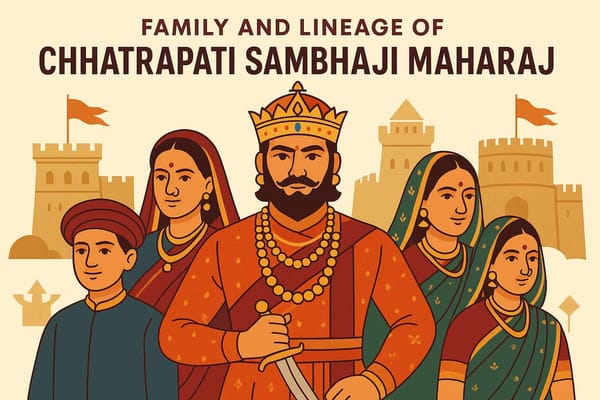
The Pillars of the Maratha Empire: Chhatrapati Sambhaji Maharaj's Family Explained
Whenever we hear the word ‘Swarajya,’ our hearts fill with a deep sense of pride. We imagine the glorious saffron flag, the ‘Bhagwa Dhwaj,’ flying high over the forts of the Sahyadris. We remember the unparalleled valour of Chhatrapati Shivaji Maharaj. But behind every great leader and every grand empire,
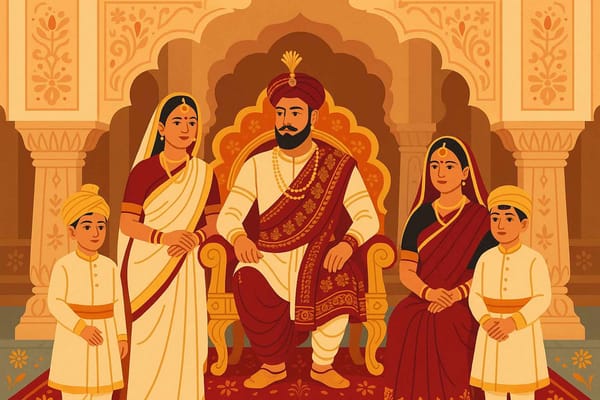
The Royal Lineage- Chhatrapati Sambhaji Maharaj's Family Explained
जब हम किसी विशाल, मजबूत पेड़ को देखते हैं, तो हमारा ध्यान अक्सर उसकी शाखाओं और पत्तों पर जाता है। लेकिन उस पेड़ की असली ताकत तो उसकी जड़ों में छिपी
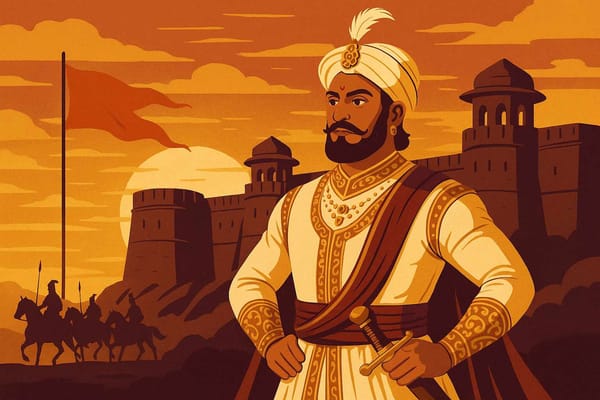
The Story of 'Chhava': Cinema Depicts Sambhaji Maharaj
In the grand tapestry of Bharat's history, some threads shine with a fire that time cannot dim. The story of Chhatrapati Sambhaji Maharaj, the valiant son of the great Chhatrapati Shivaji Maharaj, is one such thread. His name itself evokes a feeling of immense pride and deep sorrow.