
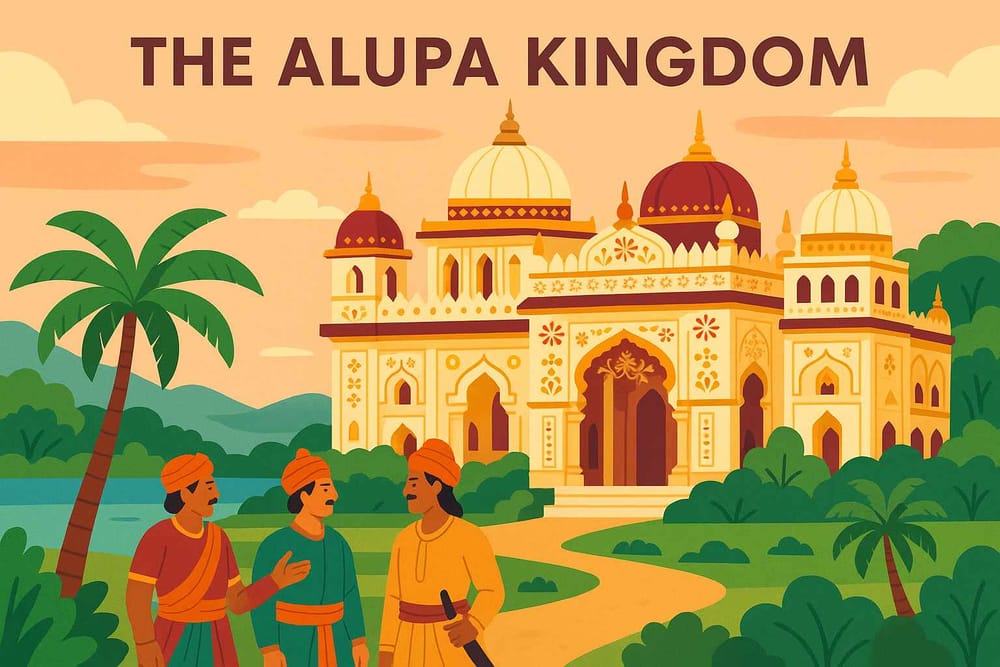
Mapping the Alupa Kingdom- Palaces & History Explained in Kannada
Have you ever walked along the coast of Karnataka, feeling the salty sea breeze, and wondered about the stories hidden in its sands? For nearly 1500 years, this very coastline was ruled by a remarkable dynasty, the Alupas. Their story isn't just a chapter in a history book; it's a living saga of trade, faith, and culture that shaped the heart of Tulu Nadu. Let's journey back in time and rediscover the almost-forgotten world of these coastal kings.
The Dawn of a Coastal Dynasty: Who Were the Alupas?
The Alupas, also known as Alvas or Alukas, were one of the longest-reigning dynasties in Indian history. Imagine, their rule began around the early Christian era and lasted all the way to the 15th century! Their kingdom, known as Alvakheda, stretched across the beautiful coastal lands of modern-day Dakshina Kannada and Udupi districts. At the peak of their power, their influence even touched parts of Uttara Kannada and Shimoga.
They weren't just some local chieftains; their presence was noted by the Greek geographer Ptolemy! Their legacy is etched in ancient inscriptions like the Halmidi inscription, which speaks volumes about their deep roots in this land. They proudly claimed lineage from the Soma Kula (lunar dynasty) and adopted the double-crested fish as their royal emblem—a perfect symbol for a dynasty that thrived on its connection to the sea.
Kings of the Sea and the Land
While mighty empires like the Badami Chalukyas rose and fell, the Alupas masterfully navigated the political landscape. They often served as trusted feudatories, even forming marital alliances with their overlords, but they always maintained a firm grip on their own domain: the sea trade. Their strategic location made their ports in Mangalore, Udyavara, and Barkur vital hubs for maritime commerce.
Their coins, bearing the title "Sri Pandya Dhananjaya," tell a story of pride and sovereignty. They were not just rulers; they were guardians of a prosperous land where Hinduism and Jainism flourished side-by-side. They understood that true strength lay not just in armies, but in a thriving, harmonious society. The story of these smaller, resilient kingdoms is a fascinating aspect of Indian history, much like the rich heritage of the princely state of Sandur, which also carved its own unique identity amidst larger powers.
Where Did the Alupa Kings Live? The Mystery of Their Palaces
One of the most intriguing questions is: where were the palaces of these ancient kings? While time has washed away grand structures, whispers of their royal residences remain. The area known as Alake in Mangalore is believed to have been the site of their palace or administrative headquarters. It's a place where history feels tantalizingly close, where one can almost imagine the royal court in session.
Today, you won't find towering forts, but the land itself holds the memory. Archaeological clues and place names guide us, pointing towards a past where kings and queens of the Alupa dynasty governed their coastal empire. It reminds us that a legacy isn't always about what's standing, but about the stories that endure.
A Legacy Carved in Stone: The Temples of the Alupas
If you truly want to see the soul of the Alupa kingdom, you must visit the temples they built. They were great patrons of art and architecture, and their temples are a beautiful testament to their faith and vision. The Sri Panchalingeshwara Temple in Vittla, dating back to the 7th century, is a stunning example of their early architectural style.
Their temple designs are a delightful blend of influences from the Chalukyas, Pallavas, and Cholas, creating something uniquely their own. In places like Barkur, which was a prominent Jain centre under their rule, you can find ancient Basadis that speak of their inclusive and tolerant rule. These sacred structures are not just stone and mortar; they are enduring symbols of a culture that valued devotion and beauty. Exploring the heritage of such dynasties, including those like the Mayurbhanj State with its unique cultural contributions, helps us appreciate the diverse tapestry of India's past.
Understanding these deep-rooted traditions is at the heart of what we do at Bhaktilipi.in. We believe that stories of dynasties like the Alupas are not just history; they are a living part of our spiritual heritage. Exploring these connections helps us find meaning in our own lives.
At Bhaktilipi, we strive to bring you these timeless stories and authentic devotional knowledge. We want to help you connect with India’s rich spiritual past in a way that feels personal and inspiring. For more such enlightening content, subscribe to our YouTube channel and follow us on Facebook and Instagram. Let's keep our traditions alive together!
Frequently Asked Questions about the Alupa Kingdom
Who exactly were the Alupas?
The Alupa dynasty was one of the most ancient and long-lasting royal families that ruled the coastal regions of Karnataka, primarily the area known as Tulu Nadu (modern Mangalore and Udupi). They are celebrated for their resilience, their patronage of Kannada culture, and their significant contributions to the region's maritime trade for over a millennium.
What was the Alupa territory like?
The heartland of the Alupa kingdom was a region they called Alvakheda. A map of their territory would prominently feature the western coast of India, centered around their various capitals like Mangalore, Udyavara, and Barkur. Their kingdom was a bustling hub of trade and culture, connecting South India to the rest of the world through its active sea ports.
What happened to their palaces?
While no complete Alupa palaces stand today, historical evidence and local traditions point to areas like Alake in Mangalore as the probable location of their royal court. The physical palaces may have vanished, but their existence is marked by ruins, inscriptions, and the enduring names of places, which are now preserved as heritage sites that historians continue to study.
Which language was spoken during their rule?
The Alupa rulers were great patrons of local culture and language. Kannada and Sanskrit were the prominent languages used in their administration and inscriptions. The numerous Kannada stone inscriptions they left behind are invaluable treasures that give us deep insights into the life, society, and governance of that era.
Why are they so significant to Karnataka's history?
The Alupa dynasty is immensely important because they were a foundational pillar of coastal Karnataka's culture and identity. They fostered Kannada literature, developed a unique style of temple architecture, and created a stable and prosperous society through their focus on trade and good governance. Their long and peaceful reign laid the groundwork for the region's cultural development for centuries to come.
Honoring the Enduring Legacy
The story of the Alupa Kingdom is a powerful reminder of the richness of our history. They were more than just rulers; they were custodians of a vibrant coastal culture. From their bustling ports to their serene temples, their legacy is woven into the very fabric of Karnataka.
Exploring their history doesn't just give us facts; it fills us with a sense of pride and connection to our roots. By remembering and celebrating the Alupas, we honor the timeless traditions and values that continue to shape and inspire our lives today.
A passionate group of people dedicated to preserving India's knowledge of Dharma, Karma, and Bhakti for ourselves and the world 🙏.