
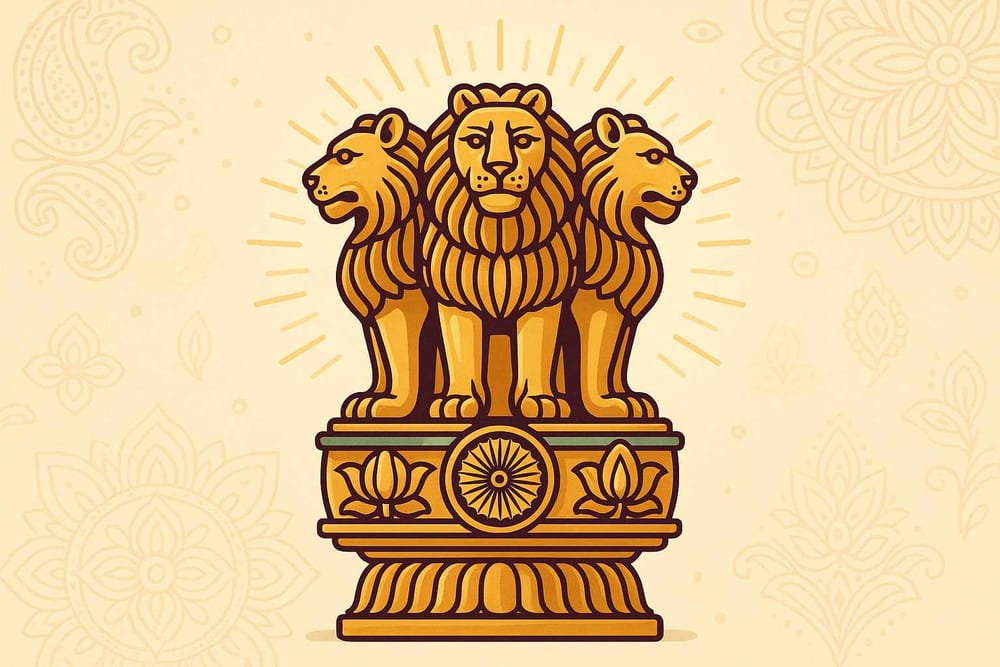
Lion Capital of Ashoka - Symbolism and Significance Explained
How many times have you held a currency note or glanced at a government building and seen it? That magnificent emblem of four lions, standing proud and powerful, looking out in all directions. It's a sight so familiar to us Indians, a part of our daily lives. But have you ever paused and wondered about its journey? This isn't just a design; it's a story carved in stone, a message from a great emperor that has echoed through centuries. This is the story of the Lion Capital of Ashoka, the very soul of our nation's identity.
This masterpiece is more than just India’s National Emblem. It's a profound symbol of our rich heritage, embodying the timeless principles of Dharma (righteousness), peace, and justice that have guided our land for millennia. Let's travel back in time together to discover its origins and the deep meaning it holds for every one of us.
A King's Promise: The Birth of a Timeless Symbol
The story begins over two thousand years ago, with one of the most powerful emperors in Indian history, Ashoka the Great. His life took a dramatic turn after the bloody Kalinga War. Witnessing the immense suffering, his heart was filled with remorse, and he transformed from a fierce conqueror to a devoted follower of Lord Buddha's teachings. This was not just a personal change; it was a shift that would shape the future of the subcontinent.
Emperor Ashoka dedicated his reign to spreading the message of peace, non-violence, and ethical governance. He erected magnificent stone pillars across his vast empire, each inscribed with his edicts—moral guidelines for his people. Atop one such pillar at Sarnath, the holy site where Lord Buddha delivered his very first sermon, he placed the stunning Lion Capital. To delve deeper into its past, you can explore the history and significance of the Lion Capital of Ashoka.
Crafted from a single block of polished sandstone by skilled Mauryan artisans, this sculpture was a beacon of Ashoka’s vision—a harmonious blend of imperial authority and spiritual enlightenment.
Unpacking the Symbolism: What Every Element Means
The Lion Capital is a treasure trove of meaning. It wasn’t just chosen as our national emblem for its beauty, but for the powerful ideals it represents. Many wonder where this incredible piece of history is kept today. The original capital is carefully preserved at the Sarnath Museum in Uttar Pradesh, near the very spot it was first erected.
Let's look closer at what each part of this iconic emblem tells us:
- The Four Majestic Lions: The most striking feature is the four lions standing back-to-back. They are not roaring aggressively, but have a calm, dignified expression. They symbolize strength, courage, confidence, and pride. Facing the four cardinal directions, they represent the spread of Dharma—the universal law of righteousness and truth—to every corner of the world. They are guardians of the nation, ever-vigilant and serene in their power.
- The Circular Abacus and its Animals: Below the lions is a circular drum, or abacus, which features four other animals carved in high relief: a galloping horse, a majestic elephant, a powerful bull, and a spirited lion, separated by wheels. These animals are believed to represent the four stages of Lord Buddha’s life or the four corners of Ashoka's vast empire, living in harmony. They represent the energy and vitality of our nation. For a more detailed breakdown, learn more about the symbolism and significance of the Lion Capital of Ashoka.
- The Dharma Chakra (The Wheel of Law): The wheel, known as the Dharma Chakra, is a central symbol in Buddhist philosophy and a potent element of the capital. It represents the eternal wheel of law, justice, and forward motion. It signifies that the nation is always moving forward, guided by righteous principles, and ready to embrace the future with an open mind. This very wheel proudly sits at the center of our national flag.
From an Ancient Pillar to a Modern Identity
On January 26, 1950, the day India became a republic, the Lion Capital of Ashoka was officially adopted as our National Emblem. It was a fitting choice, connecting the values of a newly independent nation to the profound wisdom of its ancient past. Below the abacus, the motto "Satyameva Jayate" (सत्यमेव जयते) was inscribed. Taken from the sacred Mundaka Upanishad, these words mean "Truth Alone Triumphs." This powerful phrase forms the very foundation of our national identity, reminding us that no matter the challenge, the path of truth is the ultimate victor.
Today, the Lion Capital stands as a constant reminder of our shared heritage. It adorns our government seals, currency, and official documents, representing the sovereignty, unity, and strength of the Republic of India. It’s a symbol that connects every Indian, a testament to our enduring culture and commitment to righteousness.
At Bhaktilipi, We Cherish Our Heritage
Exploring sacred symbols like the Lion Capital of Ashoka is at the heart of what we do at Bhaktilipi.in. We are dedicated to preserving the timeless devotional literature and stories that form the bedrock of our culture. Our mission is to reimagine these ancient works, making them accessible and inspiring for today’s generation, and to share this profound wisdom with authenticity and deep respect.
Stay connected with us for more insightful content that deepens your understanding of India's rich spiritual traditions. Follow our journey on Facebook, Instagram, and YouTube for daily inspiration.
Conclusion: A Timeless Emblem of Unity and Pride
The Lion Capital of Ashoka is far more than an ancient sculpture; it is a living symbol of India's story. It speaks of a leader's profound transformation, the eternal teachings of the Buddha, and the foundational values of a great nation. It reflects the vision of Emperor Ashoka, who chose compassion over conflict and ethical leadership over brute force.
As our national emblem, it continues to inspire unity, integrity, and immense pride in every Indian heart. The next time you see it, take a moment to remember its incredible journey and the powerful message it carries—a message of courage, truth, and the enduring spirit of India.
A passionate group of people dedicated to preserving India's knowledge of Dharma, Karma, and Bhakti for ourselves and the world 🙏.
Comments
Related in
Lion Capital of Ashoka-India's Heritage Explained
Have you ever held a coin in your hand or looked at your passport and truly seen the four lions seated majestically back-to-back? It’s a sight so familiar to us Indians, a part of our daily lives. But this isn't just a design; it's a
The Historical Significance of the Lion Capital of Ashoka: Understand its Enduring Legacy
There are some symbols that are etched into the very soul of a nation. For us in India, the Lion Capital of Ashoka is one such powerful emblem. We see it on our currency notes, on our passports, and on every official government letterhead. But have you ever paused to
The Significance of the Lion Capital of Ashoka: Explores Indian History
Have you ever paused for a moment, holding a currency note or looking at your passport, and truly looked at the four lions standing so majestically? That symbol, the Lion Capital of Ashoka, is something we see almost every day. But how often do we think about its story? It’