
Lakshmana Sena-Bengal's Last Ruler: History Reveals His Reign
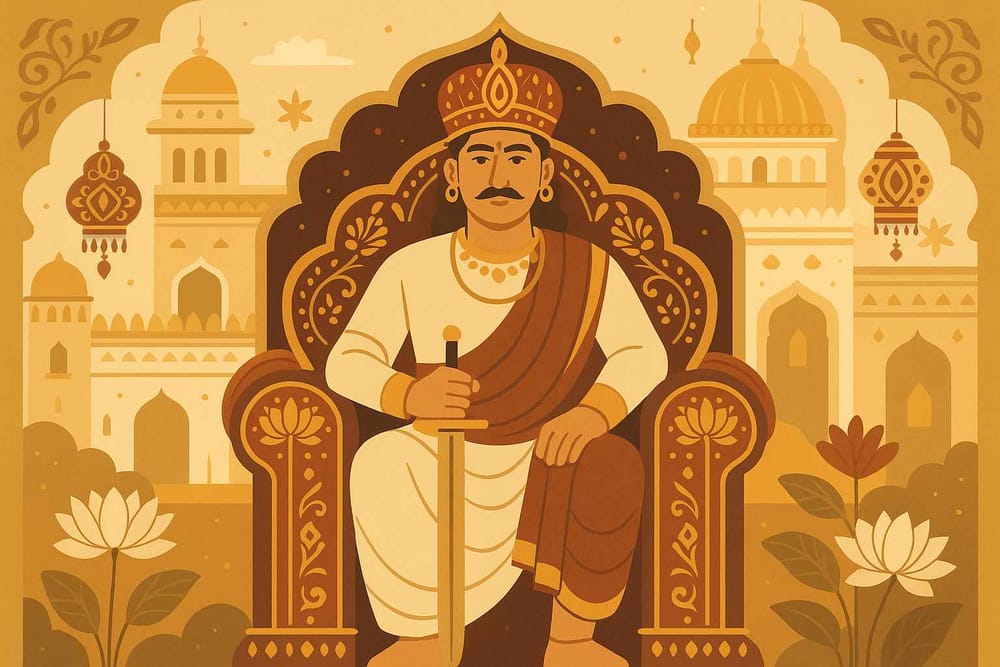
In the grand tapestry of Bharat's history, certain threads shimmer with tales of unparalleled glory, while others are tinged with the sadness of an era's end. The story of Lakshmana Sena, the last great ruler of the Sena dynasty, is one such poignant thread. His reign, from roughly 1178 to 1206 CE, wasn't just a chapter in a history book; it was the final, brilliant flare of a lamp before the winds of change swept through Bengal. It’s a story of art, conquest, devotion, and a heartbreaking decline.
Imagine a Bengal united, a land where culture and knowledge were treasured above all else. This was the kingdom Lakshmana Sena inherited from his father, the great Ballala Sena. The Senas themselves were not originally from Bengal; their roots traced back to Karnataka, a family of Brahmins who became formidable military leaders. They brought with them a unique blend of martial prowess and deep respect for tradition, which Lakshmana Sena embodied perfectly.
A Court That Breathed Poetry and Art
While many kings are remembered for their swords, Lakshmana Sena is most lovingly remembered for the poets he nurtured. His court in Nadia was a sanctuary for creativity, a place where Sanskrit literature reached new heights. It was in this very court that the immortal poet Jayadeva composed his masterpiece, the Gītagovinda, a divine love song of Radha and Krishna that still echoes in temples and hearts across India.
Lakshmana Sena wasn't just a patron; he was a man of letters himself. He had a deep love for literature and even completed an astronomical treatise, Adbhuta Sagara, which his father had started. His court was a constellation of literary stars like Jayadeva and Dhoyi, making it a vibrant center for intellectual and artistic pursuits that shaped Bengali culture for centuries to come.
The Sword of a Warrior King
Beyond the poetry and art, Lakshmana Sena was a formidable warrior. His reign was not just a peaceful one; it was marked by significant military campaigns that expanded the Sena empire. He was not a king who simply sat on his throne. Inscriptions and historical accounts speak of his victories and the strength he commanded.
- Expansion of the Empire: Lakshmana Sena led successful campaigns against the kingdoms of Gaur, Kamrupa (Assam), Kalinga (Odisha), and even Kashi (Varanasi). He was the first Bengali ruler to extend his influence beyond Benaras, a testament to his ambition and military skill.
- Monuments of Victory: To commemorate his military prowess, he erected pillars of victory in holy cities like Puri, Benares, and Allahabad. These were not just markers of conquest but symbols of the Sena dynasty's power and its role as a protector of Dharma in eastern India.
The Unforeseen Storm: Invasion and Decline
Every golden age, however, faces its twilight. For Lakshmana Sena, the challenge came from the west. The armies of Muhammad Bin Bakhtiyar Khalji, sweeping across northern India, arrived at the gates of Nadia around 1203-1204 AD. The accounts of Khalji’s capture of the capital are dramatic and mark a painful turning point in Bengal’s history.
Faced with this overwhelming force, the aging king withdrew to southeastern Bengal, a region that remained under Sena control for some time longer. He passed away in 1206 AD, his unified kingdom fractured. It was the end of an era, a transition that would reshape the political and cultural landscape of the region forever. His story serves as a powerful reminder of the impermanence of empires and the resilience of culture. You can read more about Bengal's forgotten ruler and his legacy here.
Connecting with Our Roots Through Stories
The tale of Lakshmana Sena is more than just history; it is a part of our heritage. It reminds us of a time when art flourished and traditions were held sacred. Preserving these stories is like keeping a sacred flame alive for future generations. It’s this very spirit that drives us at Bhaktilipi.
We believe that timeless devotional literature and stories of our past have the power to inspire and connect us today. If you feel a pull towards understanding our rich culture, from the divine verses of the Gita Govinda to the lives of kings who shaped our land, we invite you to explore Bhaktilipi. We are a digital space dedicated to sharing these treasures in a way that resonates with modern life. Discover more on Bhaktilipi.in and let’s keep our traditions vibrant together.
Frequently Asked Questions about Lakshmana Sena
Many people often have questions about this significant but sometimes overlooked ruler. Let's explore some common curiosities.
What is the main reason Lakshmana Sena is so significant in Indian history?
Lakshmana Sena holds a crucial place as the last powerful Hindu king of a unified Bengal under the Sena dynasty. His reign represents the pinnacle of the dynasty's cultural contributions and military reach before the beginning of a new political era in Bengal. He is celebrated as a great patron of arts and a symbol of Bengal's pre-medieval glory.
What were some of Lakshmana Sena's greatest achievements?
His achievements were twofold. Militarily, he expanded the Sena kingdom to its farthest extent, securing victories against neighbouring kings. Culturally, and perhaps more importantly, he fostered an environment where literature and art blossomed. His patronage of the poet Jayadeva, the author of Gita Govinda, is considered one of his most enduring legacies.
How exactly did he contribute to Bengali culture?
By making his court a hub for the finest poets, scholars, and artists of his time, he ensured that Bengal became a powerhouse of Sanskrit literature. This deep appreciation for language and art laid the groundwork for the rich literary traditions that Bengal is famous for today. His support enriched the intellectual and cultural heritage of the land immeasurably.
What led to the end of his powerful reign?
The primary challenge Lakshmana Sena faced was the invasion from the Ghurid empire's general, Bakhtiyar Khalji. The sudden and successful raid on his capital, Nadia, shattered the Sena power base and forced him to retreat, effectively marking the end of the Sena dynasty's dominance over the entirety of Bengal.
Why is Lakshmana Sena often called Bengal's last Hindu ruler?
While his sons ruled a smaller territory after him, Lakshmana Sena is often called this because his reign marked the end of the last major, independent Hindu dynasty to rule over a unified Bengal. His fall paved the way for the establishment of the Delhi Sultanate's rule in the region, marking a major political and historical shift.
A passionate group of people dedicated to preserving India's knowledge of Dharma, Karma, and Bhakti for ourselves and the world 🙏.
Comments
Related in
Lakshmana Sena-Examine the Reign of Ancient Bharatvarsh's Forgotten King
In the vast tapestry of Bharatvarsh's history, some threads shine brighter than others. We remember the great warriors and empire-builders, their stories echoing through generations. But what about the quiet patrons, the kings whose legacy isn't just in conquered lands but in the poetry, art, and
Lakshmana Sena's Legacy: History Reveals the Truth
Sometimes, history feels like a distant echo, a story written by others that we just read. But then, you come across a name, a figure so vibrant that the echo becomes a voice, and the story feels like your own. For me, and for many who cherish the soul of
Lakshmana Sena: Bengal's Forgotten Monarch and His Legacy
In the grand tapestry of Bharat's history, some threads shine brighter than others, while some, equally strong and vibrant, lie hidden, waiting to be rediscovered. The story of Lakshmana Sena is one such thread. We often hear about the great kings of the North and South, but the