
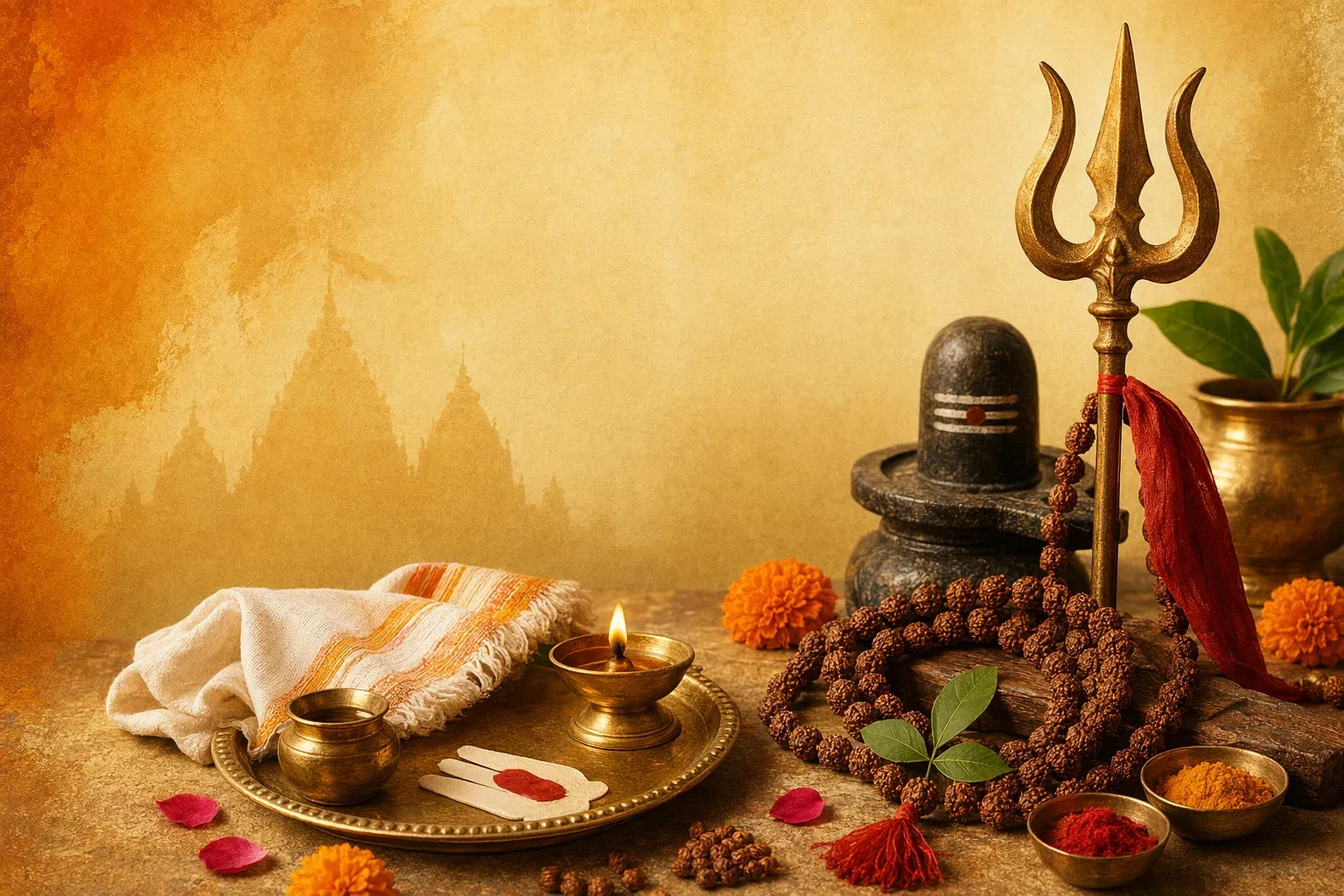
Hindu protection symbols are best understood as reminders of faith, discipline, identity, blessings, and sacred responsibility, not as magic shortcuts. A tilak, rudraksha, trishul, Om, yantra, or sacred thread can carry deep meaning when used with devotion and understanding. This guide explains common symbols without encouraging fear-based claims.
Simple answer
Protection symbols in Hindu life are best understood as reminders of faith, discipline, identity, and blessings, not as magic shortcuts.
In Hindu culture, a symbol is a visual doorway into a larger idea. A mark, sound, colour, object, animal, weapon, or gesture can remind a devotee of dharma, protection, knowledge, cosmic order, divine presence, or a family tradition.
Readers may search for this topic using phrases such as powerful hindu symbols, hindu religious symbols, what are the different types of Hindu symbols for protection, tilak. Those phrases are useful, but the real goal is to understand the meaning with context.
Why it matters
For young readers, symbols are easiest to understand as memory tools. They help people remember what matters even when a long philosophy book is not open in front of them.
Meanings are not always one-size-fits-all. A symbol may be used differently in Shaiva, Vaishnava, Shakta, Smarta, folk, regional, Jain, or Buddhist contexts, so a respectful explanation leaves room for living variation.
A tilak or bindi can show devotion, identity, blessing, sectarian belonging, or a sacred reminder placed on the body. Its meaning changes by shape, material, and tradition.
Rudraksha beads are especially associated with Shiva devotion and spiritual discipline. Many people wear them with rules or personal vows, while others treat them as a reminder to live more carefully.
The trishul, often linked with Shiva and Devi traditions, can represent protection, power, and the piercing of ignorance. None of these symbols should be sold as instant fear-removal objects.
Key ideas in this topic
- A symbol is a visual reminder, not just a design.
- Meaning changes by temple, family, sampradaya, region, and use.
- Sacred symbols deserve clean and thoughtful placement.
- Comparison with Jain or Buddhist contexts should be careful, not competitive.
What “protection” can mean in Hindu practice
A tilak or bindi can show devotion, identity, blessing, sectarian belonging, or a sacred reminder placed on the body. Its meaning changes by shape, material, and tradition.
The safest beginner rule is to ask what idea the symbol is trying to hold. Is it reminding people of wisdom, protection, purity, prosperity, devotion, self-control, or the presence of a deity?
A symbol can be sacred, cultural, artistic, and personal at the same time. The meaning depends on setting: temple, home, classroom, festival, jewellery, digital design, or casual conversation.
Tilak/bindi and daily identity/blessing
Rudraksha beads are especially associated with Shiva devotion and spiritual discipline. Many people wear them with rules or personal vows, while others treat them as a reminder to live more carefully.
The safest beginner rule is to ask what idea the symbol is trying to hold. Is it reminding people of wisdom, protection, purity, prosperity, devotion, self-control, or the presence of a deity?
A symbol can be sacred, cultural, artistic, and personal at the same time. The meaning depends on setting: temple, home, classroom, festival, jewellery, digital design, or casual conversation.
Rudraksha as devotion and discipline
The trishul, often linked with Shiva and Devi traditions, can represent protection, power, and the piercing of ignorance. None of these symbols should be sold as instant fear-removal objects.
The safest beginner rule is to ask what idea the symbol is trying to hold. Is it reminding people of wisdom, protection, purity, prosperity, devotion, self-control, or the presence of a deity?
A symbol can be sacred, cultural, artistic, and personal at the same time. The meaning depends on setting: temple, home, classroom, festival, jewellery, digital design, or casual conversation.
Trishul, Om, Swastika, and yantra as protective symbols
This part helps answer the reader’s main question about Hindu Symbols for Protection: Tilak, Rudraksha, Trishul, and More Explained. A beginner should connect the phrase “Trishul, Om, Swastika, and yantra as protective symbols” with meaning, lived practice, and respectful context.
The safest beginner rule is to ask what idea the symbol is trying to hold. Is it reminding people of wisdom, protection, purity, prosperity, devotion, self-control, or the presence of a deity?
A symbol can be sacred, cultural, artistic, and personal at the same time. The meaning depends on setting: temple, home, classroom, festival, jewellery, digital design, or casual conversation.
Respectful cautions: no miracle guarantees or fear marketing
This part helps answer the reader’s main question about Hindu Symbols for Protection: Tilak, Rudraksha, Trishul, and More Explained. A beginner should connect the phrase “Respectful cautions: no miracle guarantees or fear marketing” with meaning, lived practice, and respectful context.
The safest beginner rule is to ask what idea the symbol is trying to hold. Is it reminding people of wisdom, protection, purity, prosperity, devotion, self-control, or the presence of a deity?
A symbol can be sacred, cultural, artistic, and personal at the same time. The meaning depends on setting: temple, home, classroom, festival, jewellery, digital design, or casual conversation.
For a wider Shiva context behind the trishul and sacred symbols, read our Shiva Purana beginner guide.
Common misunderstandings
- Do not assume every Hindu symbol has only one meaning everywhere.
- Do not treat sacred signs as random aesthetic stickers.
- Do not explain Indic symbols only through modern Western assumptions.
- Do not compare traditions in a way that erases their differences.
Simple answers to common questions
What are Hindu symbols for protection?
Protection symbols in Hindu life are best understood as reminders of faith, discipline, identity, and blessings, not as magic shortcuts.
Why do people wear tilak or rudraksha?
For young readers, symbols are easiest to understand as memory tools. They help people remember what matters even when a long philosophy book is not open in front of them.
Are symbols like trishul or yantra used for protection?
Meanings are not always one-size-fits-all. A symbol may be used differently in Shaiva, Vaishnava, Shakta, Smarta, folk, regional, Jain, or Buddhist contexts, so a respectful explanation leaves room for living variation.
How should beginners understand protective symbols without fear?
Meanings are not always one-size-fits-all. A symbol may be used differently in Shaiva, Vaishnava, Shakta, Smarta, folk, regional, Jain, or Buddhist contexts, so a respectful explanation leaves room for living variation.