
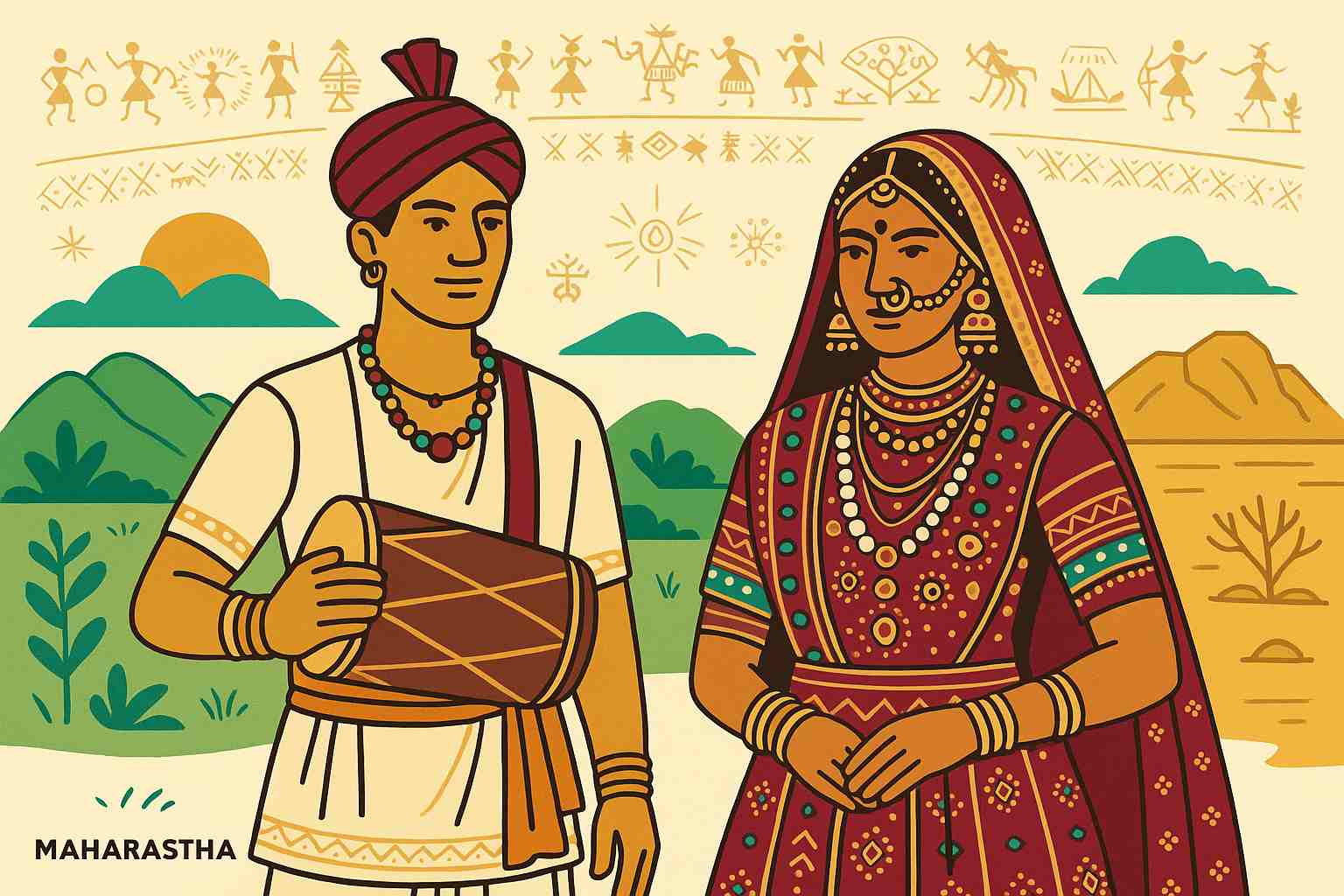
Guardians of the West: Tribes Shape Maharashtra and Gujarat
Ever felt a pull towards the stories our land holds in its very soil? Beyond the bustling cities and famous monuments, there's a deeper, more ancient heartbeat. It’s the rhythm of India's Adivasi communities, the original guardians of our forests, hills, and traditions. Today, let’s journey into the heartlands of Maharashtra and Gujarat, two states that are not just neighbours but are also cradles to some of our country's most vibrant indigenous cultures. This isn't just history; this is a living, breathing heritage that continues to shape our identity.
Maharashtra’s Tribal Heartbeat: A Tapestry of Tradition and Resilience
Long before maps were drawn, the lands of Maharashtra, especially the forested region once known as Dandakaranya, were home to incredible tribal communities. Their lives are a beautiful symphony of art, nature, and profound wisdom. Let's get to know some of these remarkable people.
The Bhil and Warli Communities: Artists of Life Itself
The Bhils are one of the largest and oldest tribal communities, with a spirit as resilient as the mountains they inhabit. Their connection with the Warli community, who live along the Maharashtra-Gujarat border, has given us one of India’s most cherished art forms. You've surely seen the beautiful, stick-figure paintings on earthy backgrounds – that’s Warli art. It’s more than just decoration; it’s a language that tells stories of farming, festivals, and the simple joys of life, connecting the human, natural, and spiritual worlds in a circle of harmony.
The Gond Community: Storytellers with a Divine Brush
Deep in the Vidarbha region, the Gond tribe once ruled kingdoms. Their legacy isn't just in forts, but in their breathtaking art. Gond art is a vibrant dreamscape filled with intricate patterns, where every dot and line tells a story from their rich folklore. Using natural colours, they paint tales of their deities, spirits of the forest, and the sacred bond between all living beings. It’s a spiritual practice, a way of passing down their ancestral knowledge from one generation to the next.
The Katkari and Korku Tribes: Guardians of the Forest
There are communities whose knowledge of the forest is so deep, it feels like magic. The Katkari tribe, known for their semi-nomadic lifestyle, holds an encyclopedic understanding of medicinal herbs and forest resources. Similarly, the Korku people are masters of agriculture, celebrating their bond with the earth through colourful festivals like the Korku Parab. These communities remind us of a sustainable way of living that the modern world is only now beginning to appreciate.
Gujarat’s Indigenous Tapestry: A Celebration of Colour and Spirit
The eastern belt of Gujarat, stretching from the Aravallis down to Maharashtra, is a vibrant corridor of tribal culture. This land has a story that goes back millennia, intertwined with the untold history of Gujarat's ancient civilizations. The Adivasi communities here have enriched the state with their unique arts, crafts, and unwavering spirit.
The Rathwas: Where Art is a Prayer
In the regions of Vadodara and Panchmahal, the Rathwa community practices a sacred art form known as Pithora painting. These are not mere wall decorations; they are elaborate rituals performed to seek blessings for peace and prosperity. The vibrant murals, teeming with horses, gods, and ancestral figures, are a spiritual offering, transforming a simple home into a sacred space.
The Rabaris and Garasias: Weavers of Tradition
The Rabari community, with their striking black attire and exquisite, colourful embroidery, are semi-nomadic herders whose lives revolve around their animals and their art. Their intricate needlework is legendary. The Garasia tribe, too, is known for its stunning silver jewellery and vibrant clothing. For them, folklore and storytelling are not pastimes; they are the threads that hold their community's history and values together.
The Siddis: An African Soul in an Indian Heart
One of the most unique stories is that of the Siddi community. Believed to be descendants of the Bantu people of East Africa, they have made the forests of Gir their home. Their culture is a beautiful blend of African and Indian traditions, most powerfully expressed in their energetic and spiritual Goma dance. Their presence is a living testament to the incredible and diverse history of our subcontinent.
The rich cultural fabric of this region is impossible to capture in a few words, with each district, like the Tapi district, holding its own unique history and tribal customs that add to the state's diversity.
Exploring these deep-rooted traditions and stories is a journey in itself. It connects us to the spiritual heart of India. At Bhaktilipi, we are dedicated to bringing such timeless devotional literature and cultural narratives to you, helping you discover the soul of our heritage. If these stories resonate with you, you'll feel right at home with our collection of hymns and tales.
Frequently Asked Questions About Our Tribal Heritage
What makes the indigenous art forms of this region so special?
Art forms like Warli and Pithora painting are not just for decoration; they are deeply spiritual and ritualistic. They are a form of visual storytelling and prayer, capturing the community's worldview, beliefs, and connection to nature. Each motif has a meaning, making the art a living language that communicates ancestral wisdom.
Are the Bhil tribes in Maharashtra and Gujarat the same?
Yes, the Bhil community is one of the largest tribal groups in India, and their population is spread across several states, including Maharashtra, Gujarat, Rajasthan, and Madhya Pradesh. While they share a common ancestral heritage, you will find beautiful local variations in their dialects, customs, and traditions from state to state, reflecting their adaptation to different environments.
How do these communities contribute to the wider culture?
Their contributions are immense! From sustainable agricultural practices and profound knowledge of forest ecology to enriching our culture with their unique music, dance, and art, their influence is everywhere. They are the guardians of traditions that teach harmony with nature, a lesson our modern world desperately needs. Many of their stories and beliefs have also subtly woven themselves into the larger tapestry of Indian folklore and spirituality.
What are the major challenges these communities face today?
Despite their rich heritage, many tribal communities face significant challenges. Modernisation, displacement from their ancestral lands, and economic hardships threaten their way of life. Preserving their unique languages, like Ahirani and Kokani, is also a continuous struggle. Supporting their art and respecting their traditions is one way we can help honour their legacy.
Honouring the Guardians of Our Heritage
The tribal communities of Maharashtra and Gujarat are not relics of the past; they are vibrant, living cultures that hold timeless wisdom. Their art, their festivals, and their deep reverence for nature are treasures that enrich us all. As we move forward, it is our collective responsibility to listen to their stories, support their crafts, and ensure that their legacy is honoured and protected for generations to come. They are the true "Guardians of the West," and their voices deserve to be heard.
To continue your journey into the heart of India's spiritual and cultural traditions, explore the world of Bhaktilipi.in. Let's celebrate and preserve these precious stories together. Don't forget to follow us on Facebook, Instagram, and YouTube for more inspiring content.
A passionate group of people dedicated to preserving India's knowledge of Dharma, Karma, and Bhakti for ourselves and the world 🙏.