
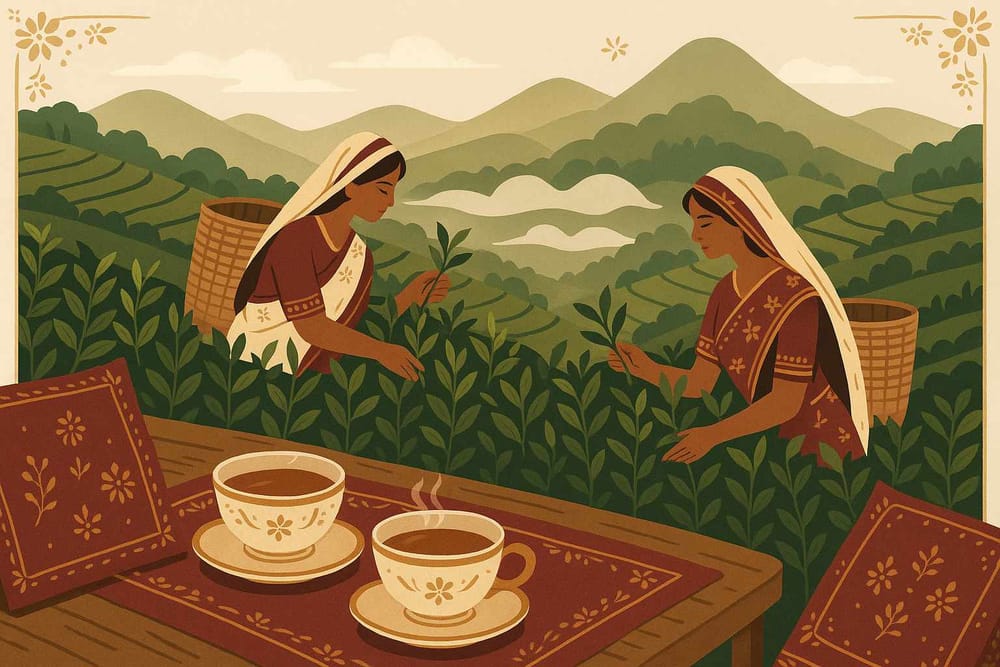
Exploring the Unique Flavors of Darjeeling Tea: A 2025 Guide
There's a certain magic that unfolds when you hold a warm cup of tea, especially when it’s from the misty slopes of Darjeeling. It’s more than just a drink; it feels like a heartfelt conversation with the mountains themselves. For many of us in India, a cup of tea is a moment of pause, a ritual that anchors our day. And when that tea is Darjeeling, it transforms into an experience of pure elegance and heritage. It’s no wonder they call it the "Champagne of Teas" – each sip is a celebration of a legacy nurtured in the Himalayan foothills.
This isn't just any tea. Its unique character is a beautiful blend of Chinese tea plant genetics flourishing in the Indian soil and climate, a combination that simply cannot be replicated anywhere else. Let’s journey together into the heart of Darjeeling's tea gardens and uncover the stories behind its ever-evolving, enchanting flavours for 2025.
The Rhythms of Nature: Understanding the Darjeeling Flushes
The secret to Darjeeling tea's diverse personality lies in its 'flushes', which are the different harvesting seasons. Each flush is a reflection of the time of year, capturing the essence of the mountain weather in its leaves. It’s like nature painting a different masterpiece with every season.
- First Flush (Spring’s Awakening): Harvested between March and April, this is the most prized and often the most expensive of the flushes. It’s like tasting the very first signs of spring – incredibly light, fresh, and floral with delicate fragrances of jasmine and magnolia. You'll also find subtle sweet hints of honey and fresh grass, making it a truly invigorating and lively brew with a beautiful light golden colour.
- Second Flush (Summer’s Golden Nectar): As summer arrives from May to June, the tea leaves mature, giving us the second flush. This harvest is famous for its full-bodied character and the legendary muscatel flavour – a distinct, fruity note that reminds one of sweet grapes and stone fruits like peaches and apricots. It’s a heartier, more robust tea that has a wonderful complexity and a deep, amber hue.
- Autumn Flush (The Mellow Goodbye): The year's final harvest, taking place between October and November, offers a beautifully smooth and mellow experience. As the air gets crisp, the tea leaves develop a rich, full flavour that is less sharp than the earlier flushes. This tea has a warm, amber-coloured infusion with a gentle fruity taste, making it the perfect comforting brew for a cool evening.
Beyond the Flushes: The Art of Crafting Darjeeling Tea
While the seasons play a huge role, the way the tea leaves are processed also brings out different facets of their character. The same Darjeeling leaf can offer a variety of experiences, each one unique and delightful.
- Classic Black Tea: Most Darjeeling tea is known as black tea, but it's typically less oxidized than its counterparts like Assam tea. This gives it a lighter body and a more complex, floral aroma, setting it apart from stronger, maltier black teas. It’s the perfect example of how Darjeeling balances strength with subtlety.
- Pristine White Tea: A true connoisseur's delight, Darjeeling white tea is one of the rarest and most premium varieties. It is minimally processed, with the young leaves and buds being carefully handpicked and gently sun-dried. This delicate handling results in a tea that is light, subtly sweet, and pale in colour, capturing the purest essence of the tea plant.
- Graceful Oolong Tea: Falling somewhere between green and black tea, Darjeeling Oolong is partially oxidized. This intricate process creates a tea with a wonderfully complex flavour profile. It often carries the floral and fruity notes characteristic of Darjeeling, but with an added layer of smoothness and a hint of creaminess, offering a truly unique tasting journey.
A Return to Roots: The Rise of Organic and Biodynamic Teas
In today's world, where we are all trying to make more mindful choices, the tea gardens of Darjeeling are also embracing a return to nature. Many estates are now cultivating organic and biodynamic teas, moving away from synthetic pesticides and fertilizers. This shift honours both the environment and the ancient wisdom of sustainable farming. For those of us who value purity and authenticity in our daily rituals, these teas offer a connection to the earth and a guarantee of unadulterated flavour. It’s a beautiful way to enjoy a tradition that is both timeless and thoughtfully modern.
Speaking of authenticity and tradition, finding genuine articles that honour our culture can be a challenge. At Bhaktilipi, we strive to bridge this gap by providing a space for sacred stories and devotional literature. If you appreciate the deep history behind a simple cup of tea, you might also enjoy exploring the rich tales from our heritage.
Bhaktilipi is your space for exploring sacred texts, devotional stories, and timeless poems. We carefully curate original and translated works to connect tradition with today’s readers. Dive into devotional literature that inspires bhakti while staying rooted in authenticity.
Discover articles like Exploring the Unique Flavors of Darjeeling Tea, where we share knowledge about culture and tradition. Stay informed, learn something new, and enrich your spiritual journey.
Subscribe to our newsletter for updates on new posts and features. Follow us on Facebook, Instagram, and YouTube for more inspiration.
© 2025 Bhaktilipi – Crafted with devotion.
Your Guide to Savouring Darjeeling Tea
As you begin to explore the rich flavors of Darjeeling tea, you might have a few questions. Let's clear some of them up so you can fully enjoy this wonderful brew.
What is the best way to brew this delicate tea?
To truly honour the delicate flavours of Darjeeling tea, use fresh, filtered water brought just to a boil. Pour it over the leaves and let it steep for about 2-4 minutes. Be careful not to over-steep, as it can make the tea bitter. The lighter first flush might need less time, while the robust second flush can handle a little more.
How can you tell if your Darjeeling tea is authentic?
Authenticity is key to the Darjeeling experience. Genuine Darjeeling tea will carry a special logo and certification from the Tea Board of India. To ensure you're getting the real deal, always purchase from reputable and trusted sellers who can trace the tea back to its estate. This way, you support the artisans and get the true taste of the Himalayas.
Can this tea be enjoyed cold?
Absolutely! The lighter varieties, especially the First Flush, make for a wonderfully refreshing iced tea. Its naturally floral and crisp notes are perfect for a cool beverage on a warm day. Just brew it a little stronger than usual and let it cool before pouring over ice.
A Treasure in Every Cup
Darjeeling tea is so much more than a beverage; it’s a living piece of our heritage, a testament to masterful craftsmanship, and a gift from nature. Each cup connects us to the serene hills and the dedicated people who cultivate this liquid gold. Whether you find comfort in the fresh notes of a spring harvest or the bold muscatel of summer, there is a Darjeeling tea for every moment and every mood.
As we continue to embrace sustainable practices, we ensure that the legacy of Darjeeling tea will be cherished for generations to come. It remains a symbol of India's cultural pride, a treasure that we can all savour, one sip at a time.
A passionate group of people dedicated to preserving India's knowledge of Dharma, Karma, and Bhakti for ourselves and the world 🙏.
Comments
Related in
Exploring the Essence of Darjeeling Tea: Taste Tradition-Define Quality
Have you ever held a warm cup, closed your eyes, and felt transported to another place? For me, that place is the misty, rolling hills of Darjeeling. There's a certain magic captured in a cup of its famous tea—a story of the mountains, the crisp air, and
The Rich Aroma: Darjeeling Tea Delivers a World of Flavor
I still remember the scent. The soft pitter-patter of monsoon rain outside, a cool breeze wafting through the veranda, and my grandmother carefully brewing a pot of tea. It wasn’t just any chai; it was her special Darjeeling tea. The aroma that filled our home was delicate, almost like
Darjeeling Tea- Flavors and Rituals Define It
Have you ever held a cup of tea so fragrant that it transports you straight to the misty mountains? That’s the magic of Darjeeling tea for you. It’s more than just a morning beverage; it’s a feeling, a warm embrace from the Himalayas. For so many of