
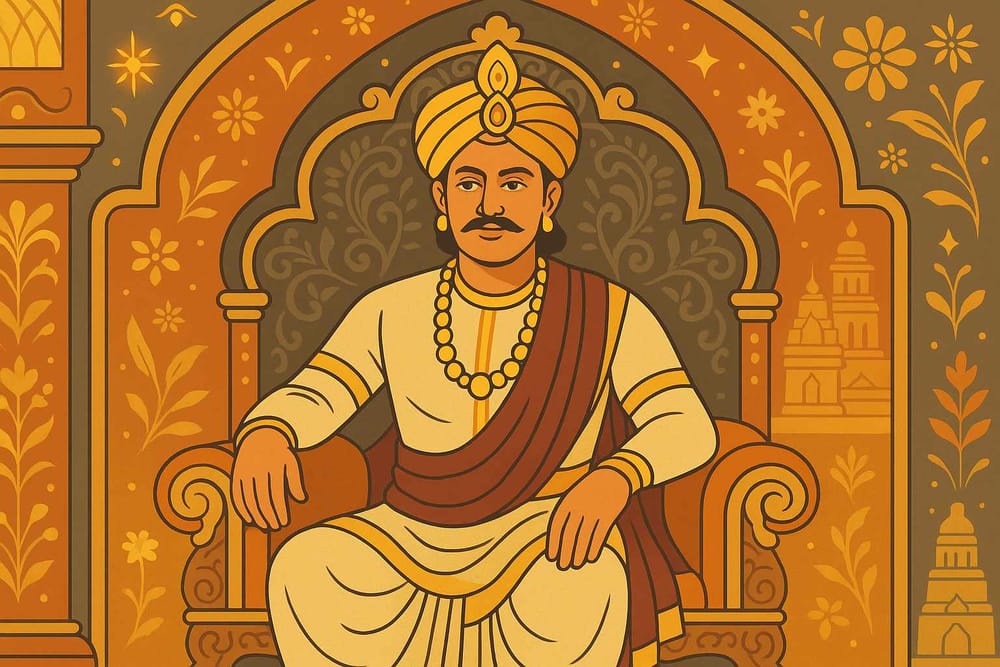
Exploring the Legacy of Hariraja: Understand History
The winds that sweep across the Aravalli hills near Ajmer often seem to whisper tales of valour and sacrifice. We all know the glorious saga of Prithviraja III, the brave Chahamana king. But history, like a deep river, holds many currents, and some stories, though powerful, flow just beneath the surface. One such story is that of Hariraja, the younger brother of Prithviraja III, a man whose brief, fiery reign was a desperate and valiant attempt to reclaim his ancestral home and honour.
His is not a story of a long and prosperous rule, but of a spark that refused to be extinguished in the face of an overwhelming storm. It’s a tale that speaks directly to the heart of what it means to fight for one's dharma and motherland.
The Aftermath of a Great Battle: The Rise of Hariraja
To understand Hariraja, we must first go back to the year 1192 CE. After the tragic defeat of Prithviraja III in the Second Battle of Tarain, the Ghurid forces had taken control. They appointed Prithviraja's son, Govindaraja IV, as a vassal ruler in Ajmer. For many proud Rajputs, this was an unbearable situation—seeing their kingdom ruled under the shadow of a foreign power.
It was in this atmosphere of simmering resentment that Hariraja stepped forward. He couldn't bear to see the Chahamana flag lowered. Gathering the support of his brother's loyal generals, like the fierce Skanda, he ignited a rebellion. In 1193 CE, he did the unthinkable: he drove out his own nephew, Govindaraja, and reclaimed the throne of Ajmer. For a fleeting moment, the capital was free once more.
A Short-Lived Reign of Defiance
Hariraja's rule was like a brilliant flash of lightning in a dark night. It was short, lasting only about a year, but it was filled with purpose. He even sent a force to recapture Delhi, showing his ambition to restore the Chahamana empire to its former glory. Though his army had to retreat from Delhi, the message was clear: the spirit of resistance was very much alive.
However, the Ghurid empire was a formidable force. They could not let this rebellion stand. A large army was sent to crush Hariraja, leading to the decisive Battle of Ajmer. Despite fighting with immense bravery, Hariraja's forces were defeated.
Realizing that further resistance was impossible and unwilling to suffer the humiliation of capture, Hariraja made the ultimate sacrifice. Along with his queen, Pratapadevi, and the remaining members of his family, he committed self-immolation (jauhar). It was a heart-breaking end, but one that cemented his legacy as a king who chose honour over life itself.
What Hariraja's Legacy Teaches Us
Though his reign was just a brief chapter, the impact of Hariraja’s defiance echoes through history. His story isn't just a footnote; it's a powerful reminder of unyielding courage.
- A Symbol of Unyielding Resistance
Hariraja’s rebellion, even in the face of certain defeat, was a powerful statement. It demonstrated that the pride and spirit of the Chahamanas could not be easily broken. He became a symbol for all who believe in fighting for their homeland, no matter the odds. His story is a testament to the idea that the fight itself is a victory for the spirit. - The End of an Era in Ajmer
His defeat and tragic death marked the final and definitive end of Chahamana rule from their illustrious capital, Ajmer. This event was a turning point, solidifying Ghurid control over the heart of Rajasthan and changing the political landscape of Northern India forever. It closed one chapter of history and began another. - The Seeds of a New Beginning
Interestingly, Hariraja's actions had an unintended consequence. Forced to flee Ajmer, his nephew Govindaraja established a new Chahamana kingdom at Ranastambhapura, now known as Ranthambore. In a way, Hariraja’s resistance ensured that the Chahamana lineage would survive and continue to flourish in a new home.
Stories like Hariraja's are the soul of our culture, reminding us of the deep-rooted values of dharma, sacrifice, and love for our land. Preserving and sharing these timeless tales is a sacred duty. At Bhaktilipi, we are committed to keeping these narratives alive, offering a space where you can connect with the profound wisdom of our past. To delve deeper into such historical accounts, you can explore our analysis of Hariraja's legacy and its impact today.
Answering Your Curiosities about this Forgotten Hero
Many people who hear Hariraja's name for the first time have questions about his place in history. Let's explore some of them.
You might wonder about Hariraja's exact connection to the famous Prithviraja III. He was indeed Prithviraja's younger brother, which makes his rebellion a direct continuation of his family's struggle against the Ghurid invaders. He wasn't just a random chieftain; he was royalty trying to reclaim his ancestral throne.
What did Hariraja truly achieve in his brief time as king? His greatest achievement was the recapture of Ajmer in 1193 CE. This act, though temporary, was a massive morale booster for his people and a significant act of defiance. It showed that the will to fight for freedom was still burning brightly in the hearts of the Rajputs.
Why is his story so important if his reign was so short? His legacy is important not because of its length, but because of what it represents. It signifies the immense value placed on honour and self-respect in our culture. His choice of self-immolation over surrender is a powerful, albeit tragic, example of this principle, and it marks a pivotal moment when the rule of a great dynasty in its capital city came to a definitive end. A deeper dive into this can be found in our historical perspective on Hariraja's legacy.
So, how should we remember Hariraja? He should be remembered not as a defeated king, but as a patriot and a symbol of unwavering courage. He is a testament to the idea that even in the darkest of times, a single flame of resistance can light up the path of honour.
Exploring the life and sacrifice of Hariraja enriches our understanding of our own heritage. It reminds us that our history is woven with countless threads of bravery and principle.
At Bhaktilipi.in, we believe these stories are our greatest treasure. They connect us to our roots and inspire us to live with courage and integrity. We invite you to explore our digital library, a space dedicated to the timeless devotional literature and sagas that have shaped our culture.
Subscribe to our newsletter for regular updates, and follow us on Facebook, Instagram, and YouTube to continue your journey into the heart of our traditions.
A passionate group of people dedicated to preserving India's knowledge of Dharma, Karma, and Bhakti for ourselves and the world 🙏.