

Exploring the Historical Significance of the Tomb of Shah Rukn-e-Alam - A Detailed Analysis
In the heart of Pakistan's ancient city of Multan, often called the “City of Saints,” stands a monument that feels like a prayer turned into brick and tile. I'm talking about the Tomb of Shah Rukn-e-Alam. Seeing it for the first time, you realise it isn't just a historical structure; it's a place with a soul, a spiritual beacon that has drawn people for centuries. It stands tall, not just as an architectural wonder, but as a testament to a legacy of faith, love, and unity that feels more important today than ever.
A Story of a Gift: The Tomb's Surprising Origins
The story behind this magnificent mausoleum is as fascinating as its design. It was built between 1320 and 1324, during the reign of the Tughlaq dynasty. Interestingly, the ruler Ghiyas-ud-Din Tughlaq originally built this grand structure for himself. But destiny, as it often does, had other plans. In a gesture of immense respect, he gifted this architectural gem to the family of the revered Sufi saint, Shah Rukn-e-Alam. When the saint passed away in 1335, this place became his final, eternal home.
This was a time when Multan was a bustling crossroads of culture, trade, and spirituality. Shrines like this weren't just tombs; they were the very heart of the community, where people gathered for spiritual guidance, solace, and celebration. This sacred resting place perfectly captures that era's blend of devotion and royal patronage.
An Architectural Marvel That Speaks to the Heavens
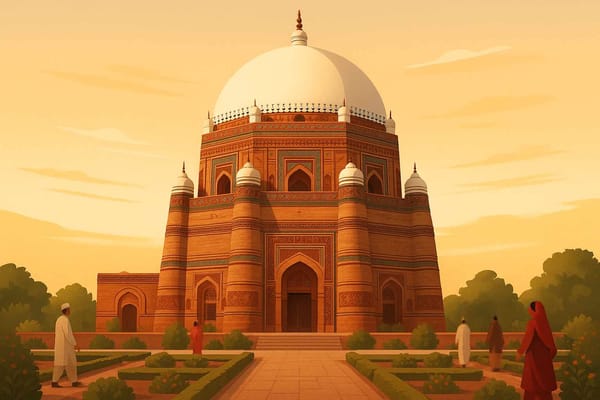
What truly takes your breath away is the tomb's design. It is celebrated as the earliest and most stunning example of Tughluq architecture, even predating similar monuments in Delhi. Its design was revolutionary for its time and influenced countless shrines across South Asia.
- A Unique Octagonal Design: The mausoleum is believed to be the very first octagonal tomb on the Indian subcontinent. This eight-sided structure, representing a perfect balance, rises towards a massive, majestic dome that was once among the largest in the world. It’s a sight that makes you feel both grounded and connected to the divine.
- The Dance of Red and Blue: The walls are built with sturdy red bricks, beautifully contrasted with glazed tiles in shades of brilliant blue and white. This intricate tile work, a hallmark of Multani craftsmanship, creates patterns that seem to shimmer in the sunlight. It's a visual poetry of colour and geometry.
The thick, sloping walls and detailed woodwork are a beautiful fusion of Persian, Central Asian, and Indian artistic traditions. To truly appreciate its grandeur, you can explore the magnificence of Shah Rukn-e-Alam's tomb and its intricate details, which have inspired architects for generations.
The Heartbeat of Faith: A Centre of Spiritual Energy
Beyond its architectural beauty, the tomb is a living centre of faith. Shah Rukn-e-Alam, whose name means 'Pillar of the World', was a beloved saint of the Suhrawardi Sufi order. He dedicated his life to spreading messages of love, harmony, and tolerance—teachings that continue to resonate with every person who walks through its doors.
Every year, the shrine comes alive during the 'Urs' festival, commemorating the saint's death anniversary. Over 100,000 devotees gather here, their prayers and songs filling the air, creating an atmosphere of pure devotion. It’s a powerful reminder of how deeply Sufi traditions are woven into the cultural fabric of our land. The enduring power of his teachings is a core part of exploring the legacy of Shah Rukn-e-Alam and his impact on history.
A Treasure for the World
Recognising its immense historical and cultural value, the Tomb of Shah Rukn-e-Alam has been on the UNESCO Tentative World Heritage Site list since 2004. This acknowledgment highlights its importance not just to Pakistan, but to the entire world, as a symbol of shared human heritage and spiritual artistry that must be preserved for all time.
About Bhaktilipi: Preserving Our Spiritual Virasat
Just as it's vital to protect physical treasures like this sacred tomb, at Bhaktilipi, we feel a similar duty to preserve our rich literary and spiritual heritage in the digital world. We are dedicated to safeguarding timeless bhakti literature, ensuring these profound stories and devotional works are not lost to time.
We don't just archive these texts; we reimagine them so they can inspire and connect with you today, right where you are. We believe the wisdom of bhakti is timeless, and our mission is to share it in a way that enriches your life.
How You Can Connect with Our Heritage
On our platform, you can explore the deep historical significance of stories, saints, and sacred places, much like the Tomb of Shah Rukn-e-Alam. This journey into our past helps us connect with the values and traditions that shape our present. For more stories that touch the soul, you can explore Bhaktilipi.in.
Subscribe to our newsletter for regular updates and insights. Stay connected with our community on social media:
- Facebook: BhaktilipiOfficial
- Instagram: bhakti_lipi
- YouTube: @Bhaktilipi
Let the beauty of bhakti inspire you every single day!
Your Questions Answered about this Sacred Shrine
Many who hear about this marvel have questions that come from the heart. Here are some answers to what people often wonder.
A common question is about the historical importance of the Tomb of Shah Rukn-e-Alam. It’s much more than an old building; it is a living symbol of Sufi heritage and devotion. It stands as a powerful testament to the rich spiritual history of Multan and the enduring teachings of the great saint it honours.
But who was the man at the centre of this reverence? Shah Rukn-e-Alam was a highly respected Sufi saint and spiritual guide of the Suhrawardi order. He was known far and wide for his profound wisdom and his life's work in spreading the message of Sufism across the region.
People are always mesmerised by its architecture, and for good reason. The tomb is a masterclass in early Indo-Islamic design. Its one-of-a-kind octagonal form, combined with breathtaking tile work and a dome that seems to command the sky, showcases an exceptional level of artistry and skill.
Its construction dates back to between 1320 and 1324. It was built by Ghiyas-ud-Din Tughlaq, who originally planned it as his own mausoleum. However, in a beautiful twist of fate, it was later dedicated to Shah Rukn-e-Alam, becoming his eternal resting place.
Why is it a potential UNESCO World Heritage Site? The tomb is recognised globally for its unique architectural innovation, its deep cultural value, and its historical significance. It beautifully represents the legacy of Sufism and the dawn of a new architectural era in South Asia.
The materials used also tell a story. The tomb was built primarily with red brick, which was then adorned with shimmering blue and white glazed tiles. This combination gives it not only its stunning aesthetic but also the durability to have stood strong for nearly 700 years.
And yes, you can visit this spiritual sanctuary today. The tomb is open to everyone and is a major pilgrimage site and historical attraction. It welcomes people from all corners of the globe to experience its serene atmosphere and connect with its profound spiritual energy.
Finally, its importance to Sufism cannot be overstated. This tomb is not just the final resting place of a great saint; it remains a vibrant centre for spiritual learning. It continues to inspire millions with the timeless Sufi teachings of love, peace, and universal harmony.
A Timeless Symbol of Devotion
The Tomb of Shah Rukn-e-Alam is more than just a destination; it's an experience. It stands as an enduring symbol of spiritual devotion, architectural genius, and a rich cultural heritage that belongs to all of us. It reminds us that some things are truly timeless—faith, art, and the human spirit's quest for connection.
Whether you get the chance to visit in person or simply explore its story from afar, this remarkable structure invites you to pause, reflect, and connect with a history that is both grand and deeply personal.
A passionate group of people dedicated to preserving India's knowledge of Dharma, Karma, and Bhakti for ourselves and the world 🙏.
Comments
Related in
Tomb of Shah Rukn-e-Alam: Architecture, History, and Legacy
Some places in the world aren't just made of bricks and mortar; they are built from faith, stories, and centuries of devotion. In the heart of Multan, a city lovingly called the "City of Saints," stands one such marvel—the Tomb of Shah Rukn-e-Alam. Seeing it