
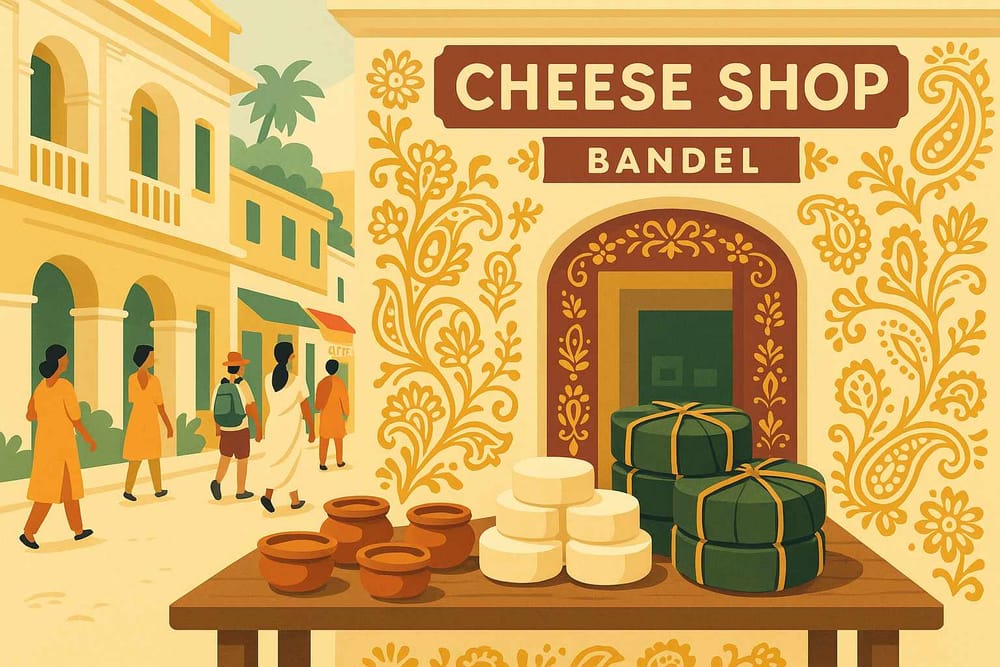
Exploring Bandel: Unearth This Cheese Hidden Gem
Some stories aren't found in books; they live on in flavours, in aromas that transport you to a different time. Imagine a taste so unique, it carries whispers of colonial ships, the humidity of the Bengal coast, and the ingenuity of our ancestors. That, my friends, is the story of Bandel Cheese, a true hidden gem that is slowly finding its way back to our tables and into our hearts.
This isn't just about cheese. It's about rediscovering a part of our heritage that was almost lost, a culinary heirloom wrapped in a bold, smoky flavour and an intense saltiness that wakes up your senses. It’s a taste that connects us to the very soil and history of Bengal.
A Journey Back in Time: The Portuguese Gift to Bengal
The story of Bandel cheese begins in the 16th century. When Portuguese traders and settlers arrived on the shores of Bengal, they brought with them their culture, their faith, and their love for cheese. In the bustling town of Bandel, about 50 kilometres from present-day Kolkata, they started making a simple cheese from cow's milk. But the hot, humid climate of Bengal posed a challenge – how to make it last?
The answer was a stroke of genius born from necessity. They began salting the cheese discs heavily and then smoking them over fires. This not only preserved the cheese for longer but also gave it a wonderfully earthy, smoky aroma and a deep, complex flavour. This process created something entirely new, a fusion of European technique and Indian context. It was no longer just a Portuguese cheese; it became Bengal’s very own Bandel cheese. If you're fascinated by the history of this region, you can dive deeper into exploring Bandel and its rich past.
So, What Makes This Cheese So Special?
If you're thinking of paneer, think again. Bandel cheese is like paneer's bold, world-travelled cousin. It’s dry, crumbly, and comes in two main forms:
- The Plain Variety: This is the paler, off-white version. It is salty and crumbly, offering a direct, pungent taste that is wonderfully sharp and addictive.
- The Smoked Variety: This is the more famous brown version. The smoking process gives it a beautiful dark exterior and an unmistakable smoky flavour that permeates the entire cheese. It’s robust, flavourful, and truly unforgettable.
One of its most interesting qualities is that it doesn't melt in the heat. Instead, it holds its shape, making it incredibly versatile in the kitchen. This isn't a cheese you melt over a pizza; it's a flavour bomb you crumble for texture and taste.
Bringing a Piece of History to Your Table
The strong, salty punch of Bandel cheese might seem intimidating at first, but it's surprisingly easy to fall in love with. For generations, Bengalis have known the secret: to tone down the saltiness, you simply soak it in water for a little while before using it. Once it's ready, a world of culinary possibilities opens up.
- Crumble it over salads or pasta: It adds a smoky, salty kick that can replace Parmesan cheese and give your dish a unique Indian twist.
- Serve it on a cheese board: Paired with crackers and some sweet chutney, it makes for a fantastic conversation starter at any gathering.
- Add it to traditional dishes: A little bit of crumbled Bandel cheese can elevate a simple curry or a vegetable stir-fry, adding a layer of umami and smokiness.
A Legacy Reborn: The Return of a Forgotten Gem
For a long time, Bandel cheese was a secret known only to a few, mainly found in the historic New Market of Kolkata at shops like J. Johnson. The original production in Bandel had ceased, and only a handful of families in places like Tarakeshwar and Bishnupur kept the tradition alive. But now, things are changing.
Food historians, chefs, and a new generation of food lovers are rediscovering this artisanal cheese. The West Bengal government is even promoting it through its Biswa Bangla outlets, bringing it to a wider audience. There is a growing movement to get a Geographical Indication (GI) tag for Bandel cheese, which would be a wonderful recognition of its unique history and taste. The journey of this cheese reminds us that every region in India has its own culinary treasures waiting to be explored, much like the hidden food gems of Bhavnagar.
Preserving More Than Just Cheese
The revival of Bandel cheese is about more than just food. It’s about honouring our history, supporting local artisans, and keeping a unique cultural story alive. It’s a beautiful reminder that our traditions are not static relics of the past but are living, breathing legacies that can be cherished and adapted for today.
This belief in preserving and sharing our heritage is at the very core of what we do at Bhaktilipi. We strive to be a space where timeless devotional stories, rituals, and cultural knowledge are shared with care and respect. By understanding traditions, whether it's an age-old recipe or a sacred verse, we connect more deeply with our roots. Explore our world of timeless wisdom at Bhaktilipi.in.
Common Curiosities About Bandel Cheese
Many people wonder how this cheese is different from what they already know. Well, Bandel cheese is fundamentally different from paneer. While both start with curdling milk, paneer is a fresh, unsalted cheese. Bandel cheese, on the other hand, is pressed, brined in salt, and then smoked, a process that completely transforms its texture and flavour, and also acts as a natural preservative.
As for its storage, it's quite simple. To maintain its unique character, just keep it in an airtight container in the refrigerator. It's a robust cheese, but enjoying it within a few days ensures you get the best of its smoky, salty flavour.
So, the next time you are in Kolkata or see Bandel cheese at a specialty store, don't hesitate. Pick up a piece. As you unwrap it, know that you are not just holding a piece of cheese, but a delicious slice of history, a story of cultural fusion, and a taste of Bengal's enduring spirit.
A passionate group of people dedicated to preserving India's knowledge of Dharma, Karma, and Bhakti for ourselves and the world 🙏.