
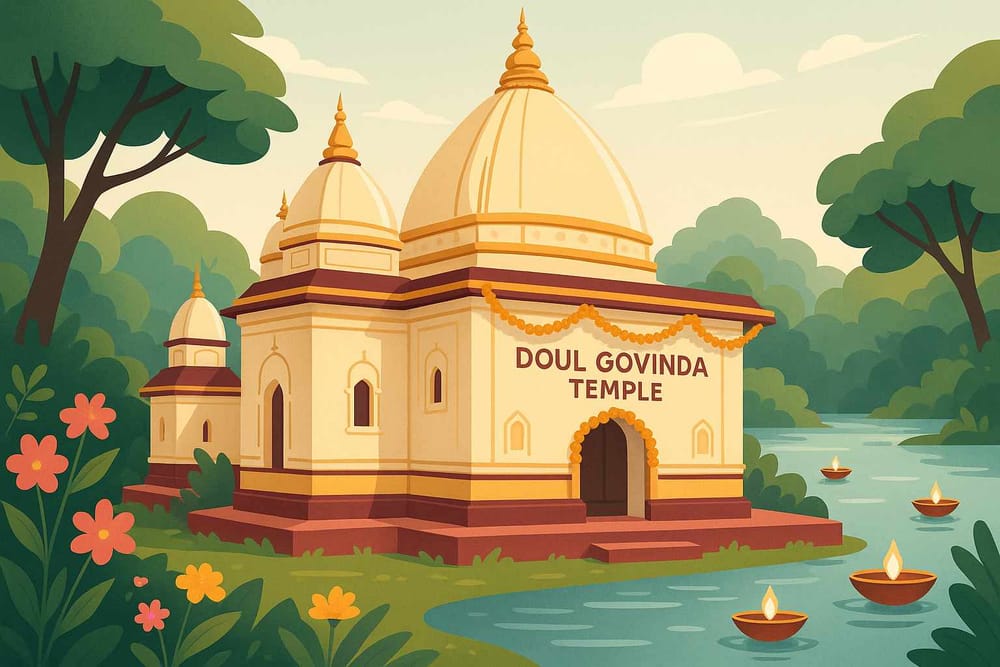
Doul Govinda Temple: History and Architecture Define Sacred Site
Imagine standing on a gentle hill, with the mighty Brahmaputra river flowing serenely below. A soft breeze carries the faint sound of temple bells, and a feeling of profound peace settles in your heart. This isn't just a dream; it's the everyday reality at the Doul Govinda Temple in North Guwahati, Assam. This sacred place isn't just a building of brick and mortar; it's a living, breathing heart of Vaishnavite faith, a place where history, legend, and devotion meet.
For generations, this temple has been more than just a place of worship. It's a spiritual anchor for the people of Assam, a place where stories of Lord Krishna come alive, and where faith finds its truest expression. Let's take a journey together to understand the soul of this divine abode.
The Miraculous Tale of Govinda's Arrival
Every sacred place has a story, a divine leela that marks its beginning. The story of Doul Govinda Temple is one that fills the heart with wonder. It doesn't begin with kings or grand plans, but with a simple cow and a devout Brahmin. As legend has it, a local Brahmin noticed that his cow would wander off to a specific patch of birina grass in the Sandhyasar forest and miraculously pour her milk over it every single day.
Curiosity and a sense of divine mystery led the villagers to dig at that very spot. What they unearthed was not treasure, but something far more precious: a breathtakingly beautiful idol of Lord Krishna. This divine discovery was seen as a sign, a direct blessing from the Lord himself. It was Ganga Ram Barooah who then enshrined this sacred idol at its present location on the foothills of the Chandra Bharati hill, laying the foundation for the temple we know today.
This history, rooted in a divine miracle, is why the temple is considered so sacred. It's believed that Lord Govinda himself chose this spot to reside, making it a powerful centre of spiritual energy where prayers are answered and souls find solace.
Architecture: A Blend of Simplicity and Spirituality
The beauty of the Doul Govinda Temple lies in its elegant simplicity, which reflects the core tenets of Assamese Vaishnavism. The architecture is reminiscent of a traditional Assamese Namghar (prayer hall), designed to make everyone feel welcome and connected to the divine.
Though the first structure was built over 150 years ago, it was thoughtfully renovated in 1966, blending traditional design with modern elements without losing its serene essence. The temple complex is a complete spiritual ecosystem:
- The Sanctum Sanctorum (Monikut): This is the heart of the temple where the mesmerising idol of Lord Krishna resides. It's a space charged with devotion, where you can feel an immediate connection to the divine presence.
- The Main Prayer Hall: A large, open hall where devotees gather for prayers, kirtans, and bhajans. Its design fosters a sense of community, allowing everyone to participate in the collective worship and feel the unified energy of devotion.
- The Doul: A distinct feature from which the temple gets part of its name, this structure is central to the vibrant Holi celebrations, creating a stage for the divine play of colours.
The temple’s location on Chandra Bharati hill is no accident. The elevated perch offers stunning panoramic views of the Brahmaputra, creating a tranquil backdrop for prayer and meditation. Using locally sourced stone and wood, the structure feels like a natural extension of the landscape, perfectly harmonising man-made devotion with nature's beauty.
A Celebration of Faith: Doul Utsav and Daily Rituals
If you wish to see the Doul Govinda Temple in its full glory, you must visit during Holi, known here as Doul Utsav. For five joyous days, the temple grounds transform into a carnival of faith and colour. The air fills with the sounds of devotional songs (borgeet), the rhythmic beats of drums, and the cheerful laughter of devotees celebrating Lord Krishna's divine play.
But the temple's spiritual life isn't limited to festivals. Every single day is a celebration of devotion. The daily rituals begin early in the morning with the ceremonial opening of the temple doors, followed by the sacred bathing of the idol, and the offering of prayers (Archana). A special part of the day is the distribution of Bhog (prasad) to all devotees, a beautiful custom that fosters a sense of community and shared blessings.
Assam's spiritual landscape is incredibly rich and diverse. While Doul Govinda Temple is a beacon of Vaishnavite devotion, the state is also home to powerful Shakti traditions. For instance, the revered Ugro Tara Temple showcases a different, yet equally profound, aspect of Assam's spiritual heritage, making the region a true melting pot of divine energy.
A Living Heritage for Today and Tomorrow
The Doul Govinda Temple is not just a relic of the past; it's a living, thriving centre of faith. Thanks to the tireless efforts of temple authorities and the local community, the sanctity and structure of the temple are meticulously maintained. This sacred site beautifully bridges generations, serving as a source of spiritual guidance and cultural pride for all.
In our fast-paced modern lives, places like Doul Govinda Temple remind us of the importance of pausing, reflecting, and connecting with something greater than ourselves. It stands as a timeless symbol of devotion, proving that faith and tradition can continue to inspire and unite us.
For those of us who cherish these traditions, finding ways to keep them alive in our daily lives is essential. Sometimes, it’s through stories and scriptures that we feel most connected. At Bhaktilipi, we strive to bring these timeless tales of devotion to you. If you are moved by the stories of our sacred temples, you will love exploring the devotional literature we have curated.
Dive into a world of spiritual stories and poems on Bhaktilipi.in, where tradition meets modern readership, creating a space for Bhakti & beyond.
Frequently Asked Questions about Doul Govinda Temple
What is the main legend behind the temple's origin?
The most cherished story is about a cow that would mysteriously offer its milk over a specific patch of grass. This divine sign led villagers to dig and find the idol of Lord Krishna, which was then enshrined in the temple. This beautiful legend underscores the belief that the temple's location was chosen by the Lord himself.
Who were the key figures and patrons in the temple's history?
While the temple’s foundation is rooted in a miraculous discovery by common people, its growth was nurtured by spiritual leaders and royal patrons. The vision of Vaishnavite scholars like Chandra Bharati and the support from dynasties like the Koch and Ahom were instrumental in establishing it as a prominent spiritual centre in Assam.
How can one reach the Doul Govinda Temple?
The temple is very accessible, located in North Guwahati. It is just a short drive from the main city of Guwahati. Many visitors enjoy taking a ferry or a boat across the Brahmaputra River, which adds a scenic and peaceful dimension to the pilgrimage.
What makes the temple's architecture unique?
Its architecture is a beautiful example of traditional Assamese style, similar to a Namghar. It avoids overwhelming grandeur for a more intimate and welcoming design. Key features include the serene sanctum (Monikut), a spacious prayer hall, and its harmonious integration with the natural beauty of Chandra Bharati Hill overlooking the river.
A passionate group of people dedicated to preserving India's knowledge of Dharma, Karma, and Bhakti for ourselves and the world 🙏.
Comments
Related in
Doul Govinda Temple FAQs: Get Answers Now
There are some places where you don't just go, you arrive. The journey itself becomes a part of the darshan. Imagine a gentle ferry ride, the vast, calming expanse of the Brahmaputra River around you, and the first glimpse of a serene temple nestled on the northern bank.

Holi 2025 at Doul Govinda Temple-Guwahati: Your Complete Guide
There's a certain magic that fills the air in Assam as spring arrives. The gentle breeze carries the sweet scent of new blossoms and the faint, rhythmic sound of the khol and taal. On the northern bank of the mighty Brahmaputra, nestled on the Chandra Bharati Hill, lies

Experience Divine Bliss: Holi Festival 2025 at Doul Govinda Temple
There are some places where festivals are not just celebrated; they are lived. The air itself seems to hum with a different energy, a blend of ancient chants and pure, unadulterated joy. The Doul Govinda Temple in North Guwahati, Assam, is one such sacred space. As Holi approaches, this revered