
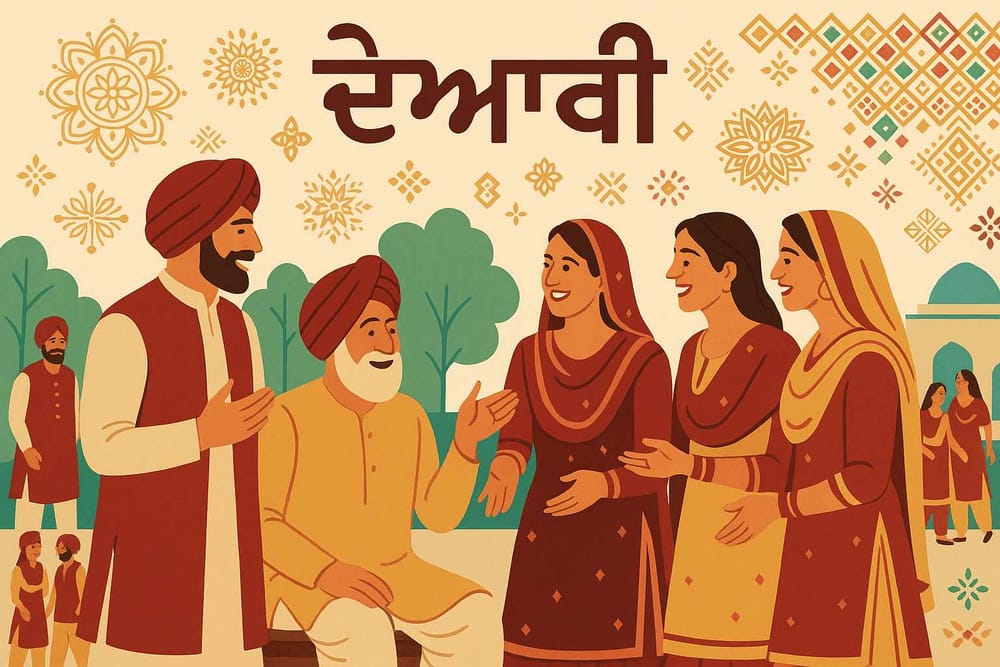
Doabi Language in Punjab - Explores Cultural Significance
Have you ever paused to listen to the way your grandparents or elders speak? The unique words they use, the gentle rhythm in their sentences... it’s like listening to a song from a time gone by. For so many of us with roots in Punjab's Doaba region, that sweet melody is the sound of our mother tongue, the Doabi dialect. It's more than just a way of speaking; it's the voice of our history, our culture, and our identity, echoing through the fertile plains between the Beas and Sutlej rivers.
This land, known as "Doab" or the "land of two waters," has nurtured a unique way of life, and its language is the purest reflection of that. Understanding Doabi isn't just about linguistics; it's about connecting with the very soul of Punjab.
The Journey of a Language: Where Doabi Comes From
The story of Doabi is as ancient and flowing as the rivers that define its home. Its roots dig deep into languages like Sanskrit and Prakrit, evolving over centuries into a distinct dialect of Punjabi. It developed its own musicality and grammar, setting it apart from its sister dialects like Malwai and Majhi. Historic events, especially the heart-wrenching partition of 1947, also left their mark, scattering speakers but strengthening the language's role as a marker of identity for those who moved to places like Faisalabad in Pakistani Punjab.
This deep connection between language and place is a beautiful part of our heritage, something you can feel when you explore the history of other Punjabi regions like Moron. Each town and village has its own story, often told in its unique local tongue.
What Makes Doabi So Special?
If you listen closely, you'll notice the distinct features that give Doabi its charm. It’s not just about different words; it’s a whole different feeling.
- A Musical Tone: The sound of Doabi is often described as being softer and more melodious. It possesses its own unique rhythm with three main tones—a default, a rising, and a falling tone—that turn a simple conversation into something truly expressive and full of emotion.
- Words from the Soil: Doabi is a treasure chest of words you won't find in standard Punjabi textbooks. These words are born from the land itself, reflecting the folklore, farming traditions, and daily lives of people in districts like Jalandhar, Hoshiarpur, Kapurthala, and Shaheed Bhagat Singh Nagar.
- A Living Tradition: The true spirit of Doabi thrives not in books, but in oral traditions. It lives in the spirited folk songs (boliyan) sung at weddings, the wise proverbs shared by elders, and the heartfelt stories passed down from one generation to the next, keeping our connection to our roots strong and vibrant.
Our Zubaan Across the Seas
As people from Doaba migrated to countries like Canada, the UK, and the USA, they carried this precious language with them. It became a piece of home in a foreign land, a way to keep their identity alive. Even as English words blend into daily speech, the core of Doabi remains strong within families, a comforting reminder of where they come from.
This effort to preserve our heritage, whether through language or stories of devotion, is a beautiful and necessary act. At Bhaktilipi, we share this passion. We believe every dialect is a sacred vessel for faith and culture. Our mission is to digitally preserve timeless bhakti literature, making these profound traditions accessible and inspiring for today's generation.
Let's Keep the Melody Alive
In a world that's rapidly globalizing, nurturing regional languages like Doabi is more important than ever. It’s a thread that connects us to our ancestors and our values. Every conversation in Doabi with an elder, every folk song taught to a child, is an act of preservation. By celebrating and speaking our regional tongue, we keep the vibrant spirit of Punjab alive in our hearts and our homes, ensuring its melody never fades away.
Exploring the richness of our culture is a journey of discovery. Just as language shapes identity, so do the unique traditions that blend with modernity across Punjab, creating a beautiful and resilient heritage.
Curious Minds Often Ask About Doabi
Many people are keen to understand more about this unique dialect. For instance, people often ask, what exactly is the Doabi language? Simply put, it's a prominent dialect of Punjabi, primarily spoken in the Doaba region of Punjab, the land nestled between the Beas and Sutlej rivers. Its unique vocabulary and pronunciation beautifully reflect the local culture.
Another common question is about its cultural significance. The Doabi dialect is a living museum of the region's heritage. It carries the folklore, traditions, and collective memory of the Doaba people. You can hear its influence everywhere, from folk music and poetry to modern Punjabi cinema, where its dialogues add a touch of authenticity and connect with audiences on a deeper level.
People also wonder if it's very different from standard Punjabi. Yes, while they are mutually intelligible, Doabi has its own distinct flavour with unique words, softer phonetic sounds, and expressions that set it apart from other dialects like Majhi or Malwai. It's this uniqueness that makes it a crucial part of Punjabi identity, fostering a sense of regional pride and community. And yes, it is still widely spoken today, not just in Doaba but across the global Punjabi diaspora, a testament to its enduring strength.
Stay Connected with Our Heritage
At Bhaktilipi, we are dedicated to bringing you closer to these cultural and devotional roots. Discover the rich world of bhakti literature and stories on our platform.
For insightful videos, subscribe to our YouTube channel. Follow us on Instagram for daily inspiration, and join our vibrant community on Facebook to stay updated. Don't miss out on exploring devotion in a meaningful way—sign up for our newsletter today!
A passionate group of people dedicated to preserving India's knowledge of Dharma, Karma, and Bhakti for ourselves and the world 🙏.