
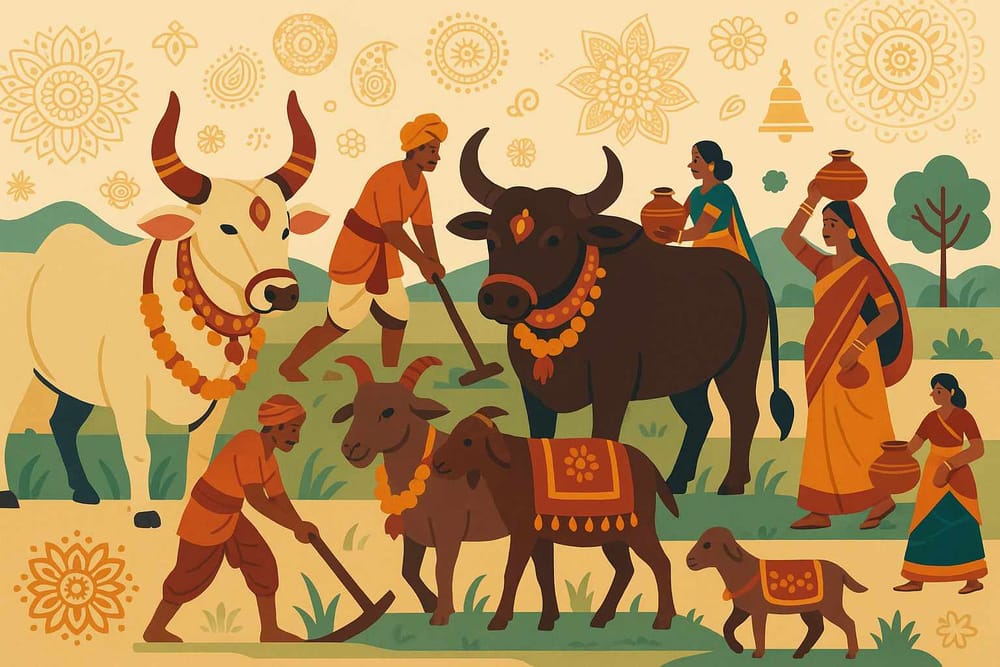
Dhor Animals: Cultural Significance in Indian History
Have you ever paused during a busy day, amidst the city's hustle, at the sight of a cow calmly chewing her cud on the roadside? For many of us in India, this isn't an unusual sight. It's a quiet, living reminder of a bond that runs deeper than our roads and buildings. This connection is with our "dhor animals" – a term of endearment and familiarity for the cattle, the cows, bulls, and buffaloes that have walked alongside us through the pages of history. They aren't just livestock; they are family, a part of our spiritual landscape, and the silent keepers of our traditions.
More Than Just Livestock: The Heartbeat of Bharat's Fields
Long before tractors roared to life, the rhythm of Indian agriculture was set by the steady footsteps of bulls and oxen. These magnificent creatures were the backbone of our farming communities. They ploughed our fields with unwavering strength, helped us sow the seeds of prosperity, and transported goods from one village to another, weaving the economic fabric of ancient India. Owning cattle was a sign of wealth and respect, a blessing that ensured a family never went hungry.
But their importance went far beyond the fields. The gentle cow, lovingly called Gau Mata or the mother cow, became the centre of every household. Her milk nourished generations, forming the base of our diet with essentials like ghee, curd, and butter. These weren't just food items; they were, and still are, vital offerings in pujas and rituals, symbolising purity and abundance. This deep-rooted dependency and reverence explain why dhor animals are so crucial to our Indian heritage.
Nandi and Kamadhenu: A Divine Connection
In Indian traditions, the line between the physical and the spiritual is often beautifully blurred, and nowhere is this more evident than in our reverence for cattle. They are not just animals; they are seen as sacred beings with a divine spark.
- The Sacred Cow: The cow is revered as a symbol of selflessness, fertility, and life-sustaining nature. She is deeply associated with Lord Krishna, the divine cowherd of Vrindavan, whose tales are filled with love and affection for his cows. The celestial cow, Kamadhenu, is believed to grant all wishes, further elevating the status of cows to that of divine beings. This is why they are worshipped in festivals like Gopashtami and are considered sacred in our religious practices.
- The Devoted Bull: Similarly, the bull holds a place of immense respect. Think of Nandi, the steadfast mount (vahana) and devoted follower of Lord Shiva. He sits eternally at the entrance of every Shiva temple, a symbol of immense strength, faith, and devotion. Worshippers often whisper their prayers into Nandi's ear, believing he will carry their message directly to Mahadev. This beautiful tradition showcases the bull not as a beast of burden, but as a divine messenger.
Echoes in Art, Culture, and Timeless Stories
The influence of dhor animals isn't confined to our fields and temples; it's etched into our art and woven into our folklore. From the ancient seals of the Indus Valley Civilization depicting majestic bulls to the intricate carvings on temple walls, their presence is a constant theme. Folk tales passed down by our grandmothers often feature wise cows and strong bulls, teaching us lessons about dharma, compassion, and sacrifice.
This celebration of animal symbolism in our culture is a vast and beautiful subject. Just as the terracotta Bankura horse tells a story of rural craftsmanship and devotion, the motifs of cows and bulls in our art speak volumes about our agricultural roots and spiritual beliefs. They are a powerful representation of strength and divinity in countless traditional paintings and sculptures, showcasing the rich artistic heritage that defines our culture.
At Bhaktilipi, we believe in sharing these timeless stories that form the soul of our identity. Understanding the sacredness of a cow or the devotion of Nandi helps us connect more deeply with our roots. We are dedicated to preserving and sharing this devotional literature for today's generation.
To explore more such stories and teachings that inspire and guide, we invite you to join our community. Stay connected with the heart of bhakti by subscribing to our newsletter and following us on social media.
A Legacy to Cherish in Modern India
So, are dhor animals still relevant in our modern, fast-paced world? Absolutely. While their role in urban agriculture has diminished, their cultural and spiritual significance has not faded. They continue to be a vital part of rural economies and a central feature in our festivals and rituals. The introduction of cattle protection laws in India is a reflection of this enduring reverence, a collective effort to safeguard these gentle beings who are so deeply tied to our cultural identity.
The next time you see a cow on the street, perhaps you'll see more than just an animal. You'll see a living symbol of a tradition that honours harmony with nature, a silent reminder of the values of patience, nurturing, and devotion. By understanding and respecting their place in our history, we ensure that this sacred legacy continues to inspire generations to come, keeping the soul of Bharat alive in our hearts.
A passionate group of people dedicated to preserving India's knowledge of Dharma, Karma, and Bhakti for ourselves and the world 🙏.