

Dharmarajika Stupa - A Time Traveler's Exploration
Some places in the world don't just exist in space and time; they hold time within them. Standing before the great Dharmarajika Stupa in Taxila, Pakistan, you can feel the centuries fold into one another. It's as if the air itself is thick with ancient chants and the quiet footsteps of countless pilgrims. This isn't just a structure of brick and stone; it’s a living testament to an emperor's change of heart and the eternal message of peace that followed. As a UNESCO World Heritage site, its story is not just history, but a lesson for all of us today.
A Journey Back in Time: The Stupa's Sacred Origins
The story of Dharmarajika begins with a powerful emperor, Ashoka, in the 3rd century BCE. After the brutal Kalinga war, his heart was transformed, and he turned to the gentle path of the Buddha. To spread the message of Dharma, he commissioned stupas across his vast empire, and Dharmarajika is believed to be one of the most special ones, built to house the sacred relics of the Buddha himself. Imagine the devotion that went into building such a monumental place of worship!
The very name, Dharmarajika, is deeply meaningful. It comes from 'Dharmaraja', a title for the Buddha as the Lord of Law, and a name Ashoka himself adopted. It ties the structure forever to the concept of righteous living. Interestingly, the locals also call it Chir Tope, or the "Scarred Hill," a name that hints at the wounds of time it has endured, including destruction by the Huns in the 5th century, only to be lovingly restored for future generations.
The Soul of the Stupa: An Architectural Marvel
The architecture of Dharmarajika is a lesson in philosophy. Its large, hemispherical dome, known as the anda, represents the vastness of the universe and the boundless nature of the Buddha's teachings. At its core, a sacred chamber was built, a sanctum believed to hold the very essence of the Enlightened One. This stupa wasn’t just built to be admired from afar; it was designed for spiritual practice.
A pathway encircles the main dome, inviting pilgrims to perform pradakshina or circumambulation. As you walk this path, it’s a moving meditation, a way to physically and spiritually align yourself with the centre of peace. But what truly makes Dharmarajika breathtaking is its art. Being in the Gandhara region, a true melting pot of cultures, the stupa showcases a beautiful jugalbandi of Greek, Persian, and Indian artistic styles. You can see delicate Greek vine patterns flowing into classic Indian motifs, creating a visual story of a world connected by art and faith. For more insights into this incredible site's past, you can delve into the Dharmarajika Stupa's history and its profound significance.
A Living Sanctuary of Faith and Learning
For centuries, this stupa was more than a monument; it was a vibrant centre of spiritual life. Monks gathered here for their sadhana, meditating in its peaceful aura and studying the profound teachings of compassion and mindfulness. Taxila was like a great university, and Dharmarajika was one of its most important campuses, attracting seekers of truth from all over Asia.
It played a crucial role in the dialogue between different cultures. The ideas and philosophies that were exchanged here enriched Buddhist thought and practice for generations. The stupa reminds us that greatness lies not in walls that divide, but in bridges that connect. Even today, it stands as a powerful symbol of non-violence and universal love—values our modern world desperately needs. Pilgrims and visitors still come, seeking a moment of shanti and a connection to something deeper than their everyday lives.
Whispers from the Earth: What Archaeologists Found
The earth around Dharmarajika has held its secrets for millennia. Excavations led by archaeologists like Sir John Marshall have unearthed treasures that paint a vivid picture of its glorious past. These discoveries help us understand just how important this place was.
- Votive Stupas and Sculptures: Many smaller stupas have been found around the main one. These were built by devotees as acts of prayer and offerings, showing how deeply personal and widespread the worship here was. Exquisite Gandharan sculptures depicting scenes from the Buddha's life have also been found, their lifelike expressions telling stories in stone.
- Relics and Inscriptions: The most significant finds are, of course, the relics. A silver casket was discovered with an inscription in the ancient Kharosthi script. This inscription from 78 CE states that sacred bone relics of the Buddha were placed in a chapel at Dharmarajika, confirming its holy status and deep connection to the Enlightened One. You can learn more about how Dharmarajika Stupa's history reveals its significance through these amazing findings.
Dharmarajika Today: A Timeless Beacon
Today, as a protected UNESCO World Heritage Site, Dharmarajika continues to inspire awe and reverence. Yes, its ancient grounds are open to all who wish to walk them—be they historians, archaeologists, spiritual seekers, or curious travellers. Restoration efforts are ongoing to ensure this priceless piece of our shared heritage is preserved against the ravages of time.
Many who visit describe the experience as transformative. In the quiet hum of the wind blowing across the stupa, you find a moment to pause, to breathe, and to connect with the timeless truths of compassion and humanity embedded in its very stones. It’s a bridge that connects our chaotic present to a more peaceful, contemplative past.
Stories like the one of Dharmarajika connect us to our roots and remind us of the enduring power of faith. Sharing these timeless tales is the very heart of what we do at Bhaktilipi.
About Bhaktilipi
Bhaktilipi is your digital sanctuary for exploring and preserving the vast ocean of bhakti literature. We bring you devotional stories, teachings, and rituals from every corner of India, reimagined for today's reader. Whether you want to deepen your spiritual knowledge or simply feel the beauty of our ancient traditions, Bhaktilipi offers authentic resources in a simple, modern format.
Stay connected with us on our journey by subscribing to our newsletter and following us on social media for content that will truly enrich your spiritual life.
Follow us:
Facebook
Instagram
YouTube
A Final Thought
The Dharmarajika Stupa is far more than an archaeological site; it's a timeless symbol of peace. Its majestic dome, shaped by the unique Gandharan touch, speaks of balance and harmony. From its meditative pathways to its intricate carvings that tell tales of cultural unity, the stupa embodies the spirit of finding oneness in diversity. It invites every visitor to reflect, to learn, and to connect with the eternal truths it so gracefully represents.
A passionate group of people dedicated to preserving India's knowledge of Dharma, Karma, and Bhakti for ourselves and the world 🙏.
Comments
Related in
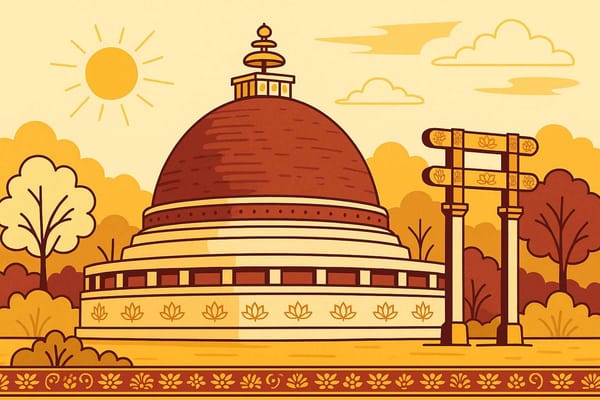
Dharmarajika Stupa: Journey Through History
Some places in the world feel like they hold time within their very stones. Standing before them, you can almost hear the whispers of centuries past, the footsteps of pilgrims, and the chants of monks. The great Dharmarajika Stupa in Taxila is one such place. It’s more than just
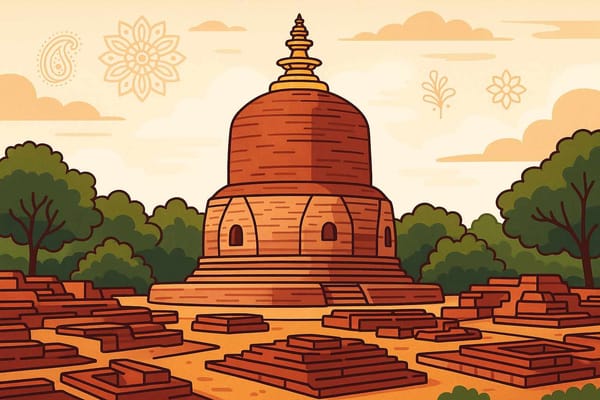
The Mystical Aura of Dharmarajika- Time Reveals its Secrets
Some places in the world feel like they hold time within their very stones. They are not just historical sites; they are living testaments to faith, art, and human devotion. Imagine standing in the ancient city of Taxila, in present-day Pakistan, where the air itself seems to hum with stories
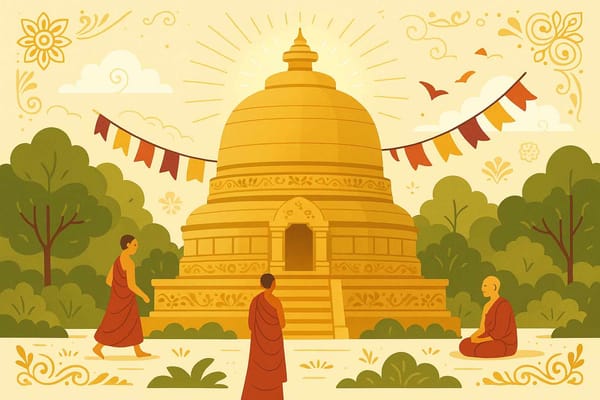
Dharmarajika Stupa: Uncover Historical Significance
Have you ever felt the presence of history so strongly that it feels like the ancient stones around you are whispering tales from a bygone era? There are places on Earth that hold the echoes of devotion, centuries of prayers, and the footsteps of countless seekers. One such monumental place