
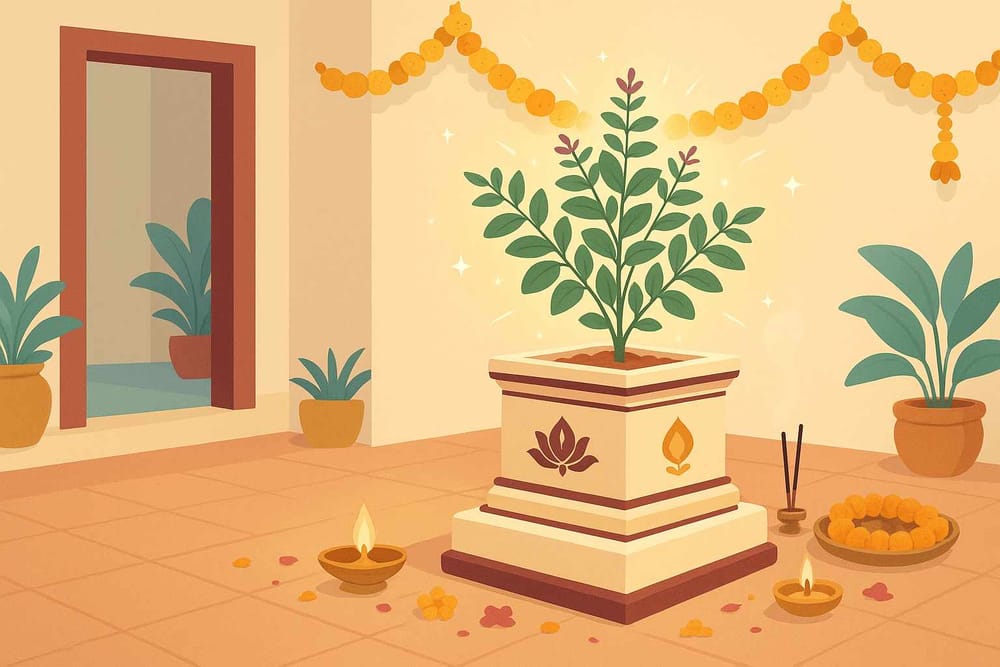
Cultivate Peace: Tulsi Plant & Daily Puja Offer Spiritual Benefits
There's a certain fragrance that takes many of us back to our childhood homes – the gentle, earthy scent of Tulsi leaves mingling with the morning air. I remember my grandmother, every single day without fail, lighting a small diya near the Tulsi plant in our courtyard. It wasn't a grand ceremony, but it was a moment of pure, quiet devotion that seemed to set a peaceful tone for the entire day. That simple act was a lesson in itself: that peace isn't something you find, but something you cultivate. The Tulsi plant, or Holy Basil, is more than just a herb; it's a living, breathing symbol of divinity and well-being, a gentle companion on our spiritual journey.
Why Tulsi is the Heart of a Devotional Home
In our traditions, the Tulsi plant is revered as a manifestation of Goddess Lakshmi herself, the consort of Lord Vishnu. It's no wonder she is called the "Queen of Herbs." Having her presence in your home is like inviting divinity to reside with you. The spiritual energy of Tulsi is truly profound and transformative.
- A Shield of Positive Energy: Think of the Tulsi plant as a spiritual guardian for your home. It is believed to radiate positive vibrations that cleanse the environment, pushing away negativity and creating a peaceful, harmonious atmosphere. This is why you'll often find it placed in the central courtyard or near the entrance, where it can protect the entire household.
- Deepening Your Divine Connection: The simple act of caring for a Tulsi plant—watering it, offering a prayer—is a form of worship that strengthens your devotion. Offering a Tulsi leaf during prayers is considered incredibly auspicious, believed to amplify your blessings and bring you closer to Lord Vishnu and Krishna. Ancient texts even suggest that a single Tulsi leaf offered with faith can help cleanse past karmas.
- An Invitation to Prosperity and Fortune: Since Tulsi is considered a form of Goddess Lakshmi, her presence is naturally associated with attracting prosperity, good fortune, and abundance. It's a beautiful belief that by nurturing this sacred plant, you are also nurturing the well-being and success of your family.
More Than Just Spiritual: The Everyday Gifts of Tulsi
While its spiritual significance is immense, the Holy Basil offers so many practical benefits that our ancestors understood well. It's a powerhouse of wellness, making it a wonderful addition to any modern home.
- A Natural Air Purifier: In our crowded cities, clean air is a luxury. The Tulsi plant works silently, absorbing harmful toxins from the environment and releasing fresh oxygen. Keeping a pot of Tulsi on your balcony or near a window is a simple way to make the air in your home a little healthier for your loved ones.
- A Gentle Healer from Ayurveda: For generations, Indian mothers have turned to Tulsi for common ailments. A warm cup of Tulsi tea can work wonders for a cough or cold, boost immunity, and its calming properties are known to help reduce stress. Chewing a few raw leaves in the morning is a practice many follow for its antibacterial and antifungal benefits.
- A Lesson in Mindfulness: In our busy lives, caring for a living thing connects us back to nature. The daily ritual of watering your Tulsi, checking its leaves, and ensuring it gets enough sunlight is a meditative practice. It teaches responsibility and encourages a moment of quiet mindfulness each day.
A Simple Daily Puja with Tulsi: Your Morning Ritual for Peace
You don't need elaborate arrangements to connect with the divine. A simple, heartfelt Tulsi puja can become the most peaceful part of your day.
- Start by cleaning the area around your Tulsi plant. A clean space invites positive energy.
- Light a small oil lamp or a stick of incense. The gentle light and fragrance immediately create a serene atmosphere.
- Offer fresh water to the plant, expressing gratitude for its presence.
- You can offer a pinch of kumkum (vermilion) and haldi (turmeric), along with a flower, as a sign of respect.
- With folded hands, chant a simple mantra like "Om Namo Bhagavate Vasudevaya" or simply say a personal prayer.
- Perform a brief aarti by circling the lamp in front of the plant.
- Finally, circumambulate (walk around) the plant three times. This simple act signifies that the divine is the center of your life.
This entire ritual takes just a few minutes, but its effects—a calm mind, a centered heart, and a positive start to the day—last much longer. For those looking to understand these rituals more deeply, Bhaktilipi offers an authentic puja guide to help bring sacred rituals home, making ancient practices accessible for today's life.
Finding Your Own Spiritual Rhythm
Every person's spiritual journey is unique. While traditions offer a beautiful framework, it's the personal connection that truly matters. Making your daily rituals meaningful to you is key. If you're exploring how to create a practice that fits your modern life, you might find inspiration in our thoughts on personalized poojan rituals for modern life. At Bhaktilipi, we believe in preserving the essence of devotion while making it relevant for you.
Common Questions about Tulsi and Daily Puja
What makes the Tulsi plant so sacred in our culture?
Tulsi is considered sacred because she is believed to be the earthly form of Goddess Tulsi, a great devotee who was granted the boon of becoming the consort of Lord Vishnu. Because of this divine connection, she symbolizes purity, devotion, protection, and is seen as the gateway to the divine realm, or Vaikuntha.
How can a daily puja ritual truly bring peace?
A daily puja is a form of mindfulness. By setting aside a few moments each day for this sacred routine, you are consciously stepping away from the stress and noise of the world. This focus helps calm the mind, regulate breathing, and create a sense of discipline and stability. Over time, this practice builds a reserve of inner peace that you can draw upon during challenging times.
Where is the ideal place to keep a Tulsi plant in my home?
Traditionally, the Tulsi plant thrives in a spot with ample sunlight, often in the courtyard (aangan), on a balcony, or near a window, preferably in the north, east, or northeast direction. The most important thing is to keep the area clean and treat it as a sacred space.
Are there any psychological benefits to performing puja every day?
Absolutely. Beyond the spiritual aspects, daily rituals have been shown to reduce anxiety and stress. The repetitive, focused actions of a puja can have a meditative effect, promoting a positive mindset. It fosters a sense of gratitude and connection, which are known to improve overall emotional well-being and help us navigate life's challenges with a more balanced perspective.
Embracing a Life of Harmony with Tulsi
Bringing a Tulsi plant into your home and incorporating it into a daily ritual is a simple yet incredibly powerful step towards a more harmonious life. It's a way of weaving together ancient wisdom with our modern needs for peace and well-being. This sacred plant reminds us that devotion is not about grand gestures, but about the small, consistent acts of love and care that transform our homes into true sanctuaries of positivity and peace.
A passionate group of people dedicated to preserving India's knowledge of Dharma, Karma, and Bhakti for ourselves and the world 🙏.